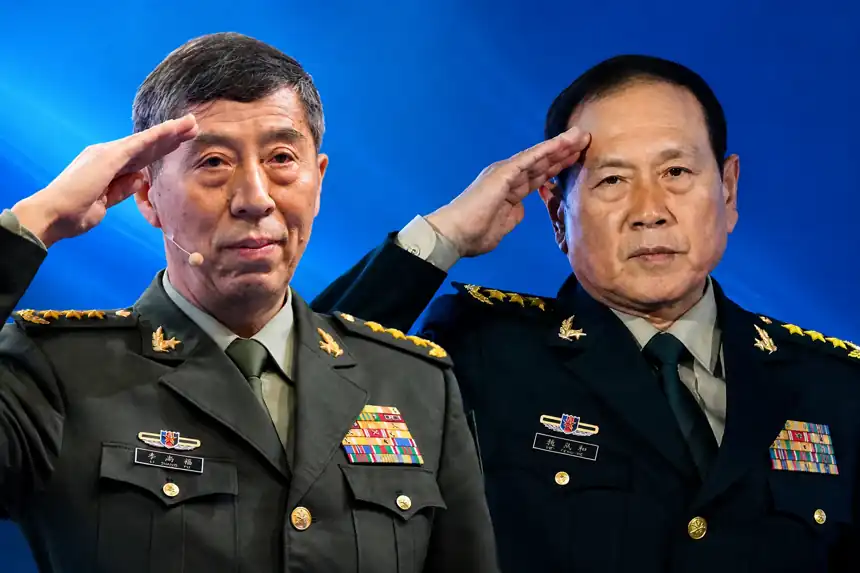
China has handed suspended death sentences to two former defense ministers in one of the most severe military corruption crackdowns under President Xi Jinping, signaling deepening political scrutiny inside the country’s armed forces as Beijing seeks tighter control over military leadership and strategic modernization efforts.
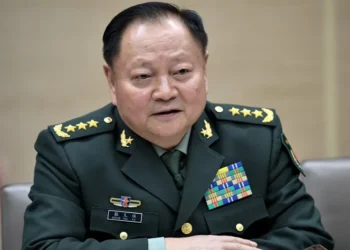
A Chinese military court sentenced former defense ministers Wei Fenghe and Li Shangfu to death with a two-year reprieve after convicting them of bribery-related offenses, according to state media reports cited by The Associated Press, Reuters and Xinhua. Wei was found guilty of accepting bribes, while Li was convicted of both taking and offering bribes.
Under Chinese law, suspended death sentences are commonly commuted to life imprisonment after two years if the individual commits no further serious offenses during the reprieve period. However, Chinese courts reportedly ruled that neither former minister would be eligible for parole or additional sentence reductions once their penalties convert to life terms.

The sentencing marks a dramatic escalation in Xi’s long-running anti-corruption campaign, which has increasingly targeted the People’s Liberation Army and senior defense procurement networks. Analysts say the purge reflects both efforts to combat entrenched corruption and attempts to reinforce political loyalty within China’s military hierarchy.
Xi Jinping Expands Grip Over Military Leadership
The convictions come amid a broader restructuring of China’s military leadership under Xi Jinping, who has steadily consolidated authority over the armed forces since taking power in 2012.
According to AP and Reuters reporting, China’s once-powerful Central Military Commission has been significantly reshaped following multiple purges, investigations and unexplained disappearances involving senior officers. Both Wei and Li previously served on the commission, the Communist Party body that oversees the military and answers directly to Xi.
Li’s downfall attracted particular international attention because he served as defense minister for only several months before disappearing from public view in 2023 and later being formally removed from office. Before becoming defense minister, Li oversaw military procurement and aerospace development programs and had previously been sanctioned by the United States over Chinese purchases of Russian military equipment.
Wei, who preceded Li as defense minister, was among China’s highest-ranking military officials and played a key role in overseeing the modernization of China’s missile and nuclear capabilities through the People’s Liberation Army Rocket Force.
■ Related News


Security analysts say the sentencing demonstrates Xi’s determination to remove officials suspected of disloyalty or corruption even at the highest levels of military command.
Military Readiness and Strategic Stability Under Scrutiny
The expanding purge has also fueled questions among foreign defense analysts about the operational impact on China’s military readiness and long-term strategic planning.
Reuters and the Financial Times reported that more than 100 senior military officials and defense-industry executives have reportedly been investigated, dismissed or removed since 2023, affecting key branches including the Rocket Force and procurement sectors central to China’s modernization goals.
Analysts interviewed by international outlets said repeated leadership removals could disrupt command continuity and weaken morale within the two-million-member People’s Liberation Army. Others argue the campaign may ultimately strengthen centralized discipline and improve accountability inside military procurement systems long viewed as vulnerable to corruption.
The purge comes as China continues expanding military pressure around Taiwan, increasing naval operations in the South China Sea and accelerating development of advanced missile, cyber and aerospace capabilities. Some Western analysts believe Beijing views internal discipline as essential to preparing the military for potential future regional crises.
International Implications Extend Beyond Corruption Cases
The sentencing of two former defense ministers also carries broader geopolitical significance as China seeks to project military strength while navigating growing strategic competition with the United States and its regional allies.
Foreign governments and defense observers have closely monitored the repeated disappearances and investigations involving senior Chinese military officials because the removals have created uncertainty over the stability of Beijing’s defense leadership structure. The rapid turnover has complicated military diplomacy and disrupted communication channels between China and Western defense officials.
At the same time, Chinese authorities continue portraying the anti-corruption campaign as evidence of institutional discipline and centralized party control. State media framed the convictions as proof that no military official is beyond accountability under Communist Party oversight.
The unusually harsh punishments are expected to reinforce Xi’s broader message that political loyalty, ideological discipline and centralized authority remain central priorities as China navigates intensifying regional tensions and a rapidly evolving global security environment.