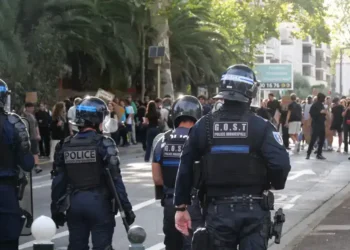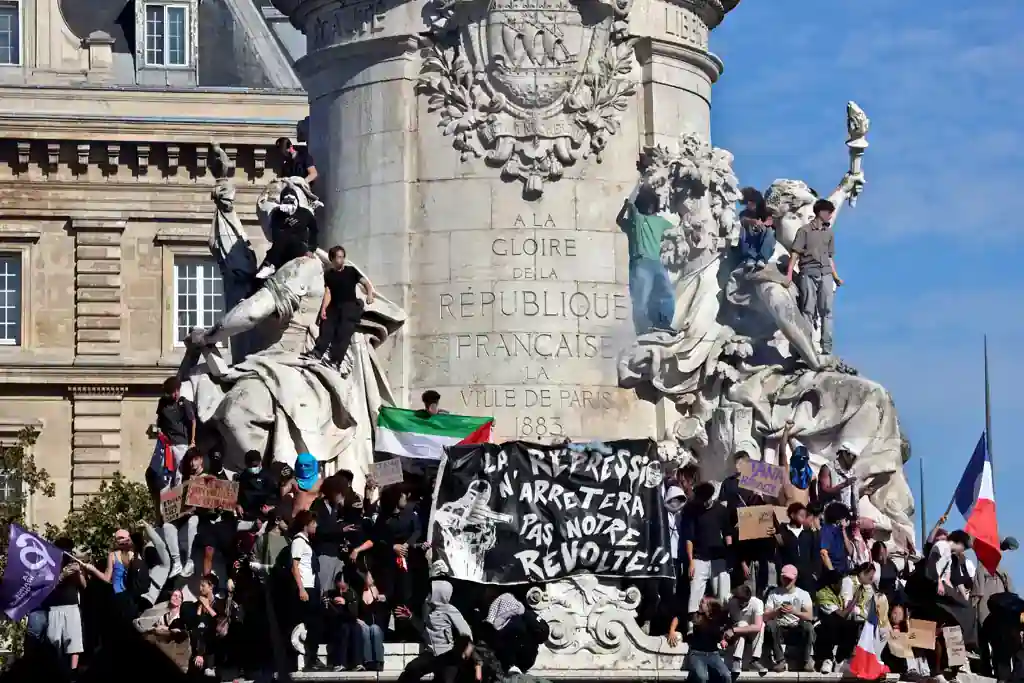
PARIS, France – France’s student protests have put police tactics under growing scrutiny after several teenagers suffered serious injuries during confrontations with law enforcement. The unrest began with demands for better schools, but questions about the use of force have become a major part of the dispute.
By October 8, authorities had placed 6,877 people in police custody since the unrest began, according to the Justice Ministry. Of those, 5,890 were minors. The ministry said prosecutors were pursuing cases against 2,376 people at that point.
The figures show the scale of the police response, but they do not represent convictions. Police custody, prosecution and guilt are separate stages of the justice process.

The most serious cases have drawn attention to the weapons officers use to control crowds. In Lens, a 15-year-old student lost a hand after a stun grenade exploded during a police intervention. The government later suspended the use of that grenade model at student protests while it examined the incident.
Interior Minister Laurent Nuñez said on October 13 that authorities were investigating 36 cases of alleged police misconduct. Those investigations do not establish that every officer involved broke the law. They do, however, show the scale of the questions facing the authorities.
Students began by demanding better schools
The protests grew from complaints about conditions in French high schools. Students have cited teacher shortages, overcrowded classrooms, deteriorating buildings and unequal access to educational opportunities.
The movement began in the Paris suburbs in late September and spread to cities and towns across France. Students blocked school entrances and joined marches to demand better learning conditions and challenge the government’s education policies.
Thousands took part in demonstrations during the first week of October. Some marches remained peaceful, while others ended in clashes, fires and property damage.
■ Related News


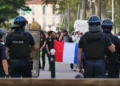
The government has faced pressure to respond to students’ concerns. Prime Minister Sébastien Lecornu announced plans for 3,000 additional substitute teachers as part of the response. However, the available reporting does not establish the full funding, timetable or implementation of that commitment.
For many demonstrators, the dispute has expanded beyond staffing and school buildings. Images of injured teenagers and forceful police interventions have also fuelled anger about how the authorities treat young protesters.
Serious injuries raise questions about police weapons
The injury in Lens became one of the most prominent cases. On October 5, a 15-year-old student lost his hand after an EF-SON stun grenade exploded during a police intervention near Béhal high school.
Le Monde reviewed several videos of the incident and interviewed a witness. Its reporting identified the device as an EF-SON grenade. Following the injury, the government temporarily suspended the grenade’s use at high-school protests while it investigated what happened.
The suspension applies to that device in the stated context. It does not amount to a blanket ban on every grenade or crowd-control weapon used by French police.
Other cases have raised separate concerns. In Saint-Ouen-l’Aumône, a 14-year-old identified by the first name Eden suffered a broken jaw and multiple damaged teeth after an encounter with police.
Reuters reported that the teenager’s family filed a complaint alleging attempted murder. The local prosecutor gave a different account of the confrontation, saying the boy had confronted officers before they tried to push him back.
An officer was placed under formal investigation over assault by a public official resulting in permanent disability or disfigurement. That is a formal investigative status, not a conviction.
A separate case involved a 16-year-old who suffered an eye injury after a police projectile struck him. Authorities also opened an investigation into that incident.
These cases involve different locations, weapons and circumstances. Investigators must assess each one on its own evidence rather than treat every injury as proof of the same pattern of misconduct.
Police defend their response to violence
Police and government officials say officers have faced serious violence during the unrest. Authorities have reported attacks involving fireworks and other projectiles, fires, vandalism and damage to school buildings.
The government has also reported injuries among officers and school staff. The Associated Press reported on October 17 that authorities had recorded injuries to more than 900 officers and more than 150 teachers and other school employees.
Those figures describe the wider unrest and should not be treated as a direct comparison with injuries among demonstrators. The available reports use different categories and do not provide a single, fully comparable count for every group.
Police representatives have argued that crowd-control weapons help officers keep attackers at a distance and protect public safety. Some have warned that removing these weapons could leave officers with fewer options when confrontations turn violent.
Nuñez has defended the rules governing police weapons. He said officers must use force when necessary and proportionately, and that they should avoid strikes above the neck.
However, the injuries have prompted criticism from rights advocates and calls to restrict or ban certain weapons. Critics argue that the risk of permanent harm to teenagers demands a closer review of how officers deploy them.
The central question is not whether police face risks during violent demonstrations. It is whether officers used force lawfully and proportionately in each incident under investigation.
What the official figures show
The Justice Ministry published its judicial figures on October 9, using data current to 5 p.m. on October 8.
The ministry reported that authorities had placed 6,877 people in police custody. Minors accounted for 5,890 of them, or about 86%.
By that cutoff, prosecutors were pursuing cases against 2,376 people. That group included 1,923 minors and 453 adults. The ministry also reported 21 orders for pretrial detention: 15 involving adults and six involving minors.
A further 1,897 people had received alternative measures instead of prosecution. These included warnings, restorative measures, restrictions on entering certain places and unpaid work.
The figures require careful interpretation. Being placed in police custody does not mean a person was charged, prosecuted or convicted. Likewise, a prosecution does not establish guilt.
The ministry’s release also does not provide a final count of convictions from the protests. Nor does it settle whether the force used in individual police encounters was lawful.
The cutoff matters, too. These figures cover the situation through October 8, not the full period of unrest through October 17. A fresh official update is needed before publication to establish the latest totals.
Thirty-six investigations examine alleged misconduct
On October 13, Nuñez said authorities were examining 36 cases of alleged police misconduct linked to the protests, according to the Associated Press.
The cases include incidents involving serious injuries, as well as allegations of blows, insults and other misconduct. The reported total reflects investigations, not findings that officers committed offences.
In some cases, prosecutors have taken formal steps against individual officers. In others, investigators still need to establish what happened, which weapons officers used and whether their actions complied with the rules.
Video footage can help answer those questions, but it needs context. Investigators must consider what happened before and after a recorded moment, whether the footage shows the relevant officers and whether other evidence supports the account.
The accounts of protesters, police and witnesses may differ. Authorities should assess those accounts alongside medical evidence, recordings, police reports and court documents.
The government has a responsibility to investigate credible allegations of excessive force. It must also examine violence against officers, school staff and other people caught up in the unrest.
Education demands remain unresolved
The protests began with students’ concerns about school conditions. Those concerns remain distinct from the allegations about police conduct, even as the two issues have become linked in public debate.
The promise of 3,000 additional substitute teachers is one government response. But the available information does not establish how many positions have been filled, where staff will be assigned or whether the measure will address the shortages students have described.
Students have also raised concerns about crowded classrooms, deteriorating facilities and unequal educational opportunities. Assessing the government’s response requires more than counting announcements. It requires evidence of funding, delivery and changes in school conditions.
The police controversy has added another demand for accountability. Students and their supporters want authorities to explain why officers used particular weapons and whether the response was proportionate.
The government must address both questions: how to improve schools and how to protect the rights and safety of people taking part in demonstrations.
The findings remain to be established
France’s response to the protests has produced mass police custody, serious injuries and dozens of investigations into alleged misconduct. The scale of those developments has intensified scrutiny of how authorities police student demonstrations.
But the evidence does not support treating every confrontation as proof of police abuse. Nor should officials’ accounts of violence by demonstrators settle questions about the conduct of individual officers.
The next steps depend on evidence. Investigators must establish the facts of each serious injury, prosecutors must assess whether charges are warranted, and courts must determine guilt where cases proceed to trial.
Authorities also need to publish updated figures with clear reporting dates and explain what action they have taken in response to the findings.
As President Emmanuel Macron approaches the end of his term in May 2027, the unrest adds to the political pressure on his government. The protests have exposed both longstanding complaints about school conditions and growing demands for police accountability in France.
The central test now is whether the government can address students’ concerns while ensuring that police use force lawfully, proportionately and with proper oversight.
Reporting Credit: The French Justice Ministry’s October 9 statement was consulted for judicial figures through October 8. Reuters reporting was used for documented injury cases, the police watchdog’s investigations and the positions of the families, prosecutors and police representatives. Le Monde’s reporting, including its review of video footage and witness interviews, was consulted for the Lens incident. The Associated Press’s October 17 report was used for the latest published accounts of police and school-staff injuries and the number of misconduct investigations. Direct interviews with affected families, student groups, school staff, police representatives and government officials remain outstanding for this JournosNews report.