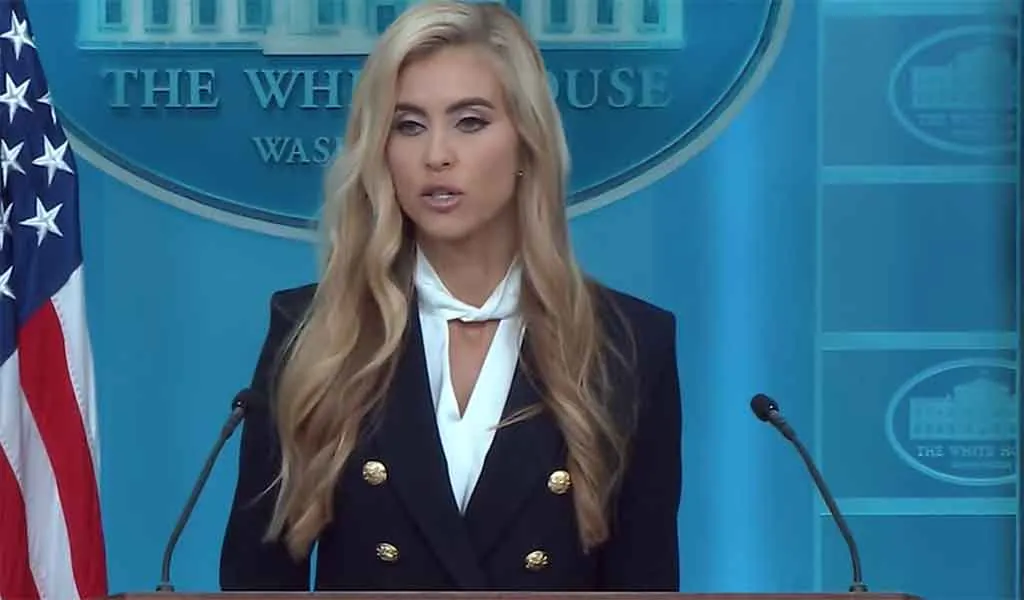
WASHINGTON, United States – White House Press Secretary Katie Zacharia deferred a question about US intelligence-sharing with Ukraine during her first briefing on October 13. President Donald Trump later told reporters that Washington was still sharing intelligence with Kyiv.
The exchange offered an early test of how the administration will address questions about its foreign policy. Zacharia, who recently took over as the White House spokesperson, told Fox News correspondent Peter Doocy that she would have to get back to him when he asked whether the United States had stopped sharing intelligence with Ukraine.
The question carried significance for Ukraine’s defense against Russia. Kyiv relies on US intelligence for missile warnings and other military information, making the status of that cooperation an important policy issue.

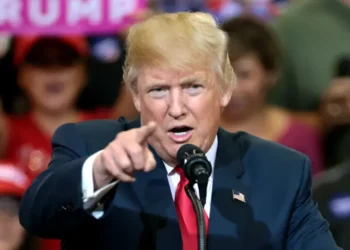
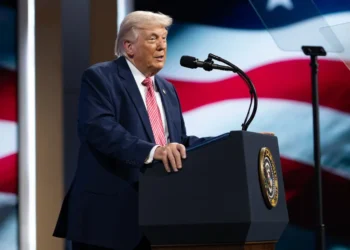
Later that day, Trump answered the same question when reporters spoke to him outside the White House.
“No, we haven’t,” he said when asked whether the United States had stopped sharing intelligence with Ukraine. He added that Washington was helping Ukraine and “sharing intel” as it worked toward ending the war.
Trump’s answer provided a public statement of the administration’s position. However, it did not detail the scope of intelligence-sharing, the types of information being provided or whether any restrictions remained in place.
Press Secretary Defers a Direct Policy Question
Zacharia’s first briefing lasted about 14 minutes, according to the Associated Press. She took questions from three media outlets: Breitbart, Fox News and the Daily Mail.
Much of her opening statement promoted the administration’s policies and Trump’s record. She described her role as an opportunity to amplify the president’s agenda.




Doocy then asked whether the United States had stopped sharing intelligence with Ukraine. Zacharia did not answer the question directly.
“I’ll have to get back to you on that,” she said before moving to another reporter.
Her response left the issue unresolved at the briefing. The available transcript does not show her providing a follow-up answer during that session.
A deferred answer does not, by itself, establish that the administration intended to withhold information. Press secretaries may need to check details with relevant agencies before responding. The important question is whether the administration subsequently supplies a clear and sufficiently detailed answer.
Trump Later Says Intelligence-Sharing Continues
Trump addressed the issue during a separate exchange with reporters as he prepared to leave the White House.
He said the United States continued to share intelligence with Ukraine and was working with both Kyiv and Moscow to end the war.
His statement contradicted any assumption that intelligence-sharing had stopped entirely. However, it did not resolve every question about the arrangement.
The president did not specify whether the United States had changed the type, timing or scope of intelligence it provides. Nor did he explain whether different rules applied to intelligence used for defensive purposes and information that could support Ukrainian military operations.
Those distinctions matter because a general assurance that intelligence-sharing continues does not establish that every form of cooperation remains unchanged.
The administration had not provided a detailed public explanation of the intelligence-sharing arrangement in the material reviewed for this report.
Why Intelligence-Sharing Matters to Ukraine
US intelligence can help Ukraine identify incoming missile threats, assess Russian military movements and support decisions about its defense.
The United States has played a significant role in providing intelligence to Ukraine since Russia launched its full-scale invasion in February 2022. The exact information shared and the conditions governing its use are not always made public.
Any change in the arrangement could therefore have practical consequences for Ukrainian forces. However, neither Zacharia’s deferred answer nor Trump’s later statement establishes that a new restriction or operational change had occurred.
The distinction between a policy announcement and a detailed operational account is important. Trump confirmed that intelligence-sharing continued, but he did not describe the arrangement in enough detail to determine whether its scope had changed.
First Briefing Also Produced a Diplomatic Announcement
Zacharia’s first appearance also produced a separate announcement concerning Kimberly Guilfoyle, the US ambassador to Greece.
A reporter asked whether the White House had a timeline for Guilfoyle’s departure and whether officials were considering potential replacements. Zacharia said the administration had asked Guilfoyle to resign and described her as an asset to the team.
The statement established the administration’s announced request. It did not, on its own, confirm when Guilfoyle would leave office or identify a successor.
The announcement was a substantive development from the briefing, distinct from commentary about Zacharia’s presentation or the limited number of questions she took.
A Question of Follow-Through, Not a Verdict on Performance
The first briefing provides a limited basis for judging Zacharia’s approach to press access. One deferred answer cannot establish a long-term pattern of avoiding difficult questions.
The more concrete accountability issue is whether the White House provides follow-up information when its press secretary cannot answer a substantive question at the podium.
In this case, Trump later stated that intelligence-sharing with Ukraine continued. Yet his response left important details about the policy unexplained.
JournosNews found no detailed public account in the reviewed material establishing whether the administration had changed the scope of intelligence-sharing or whether Zacharia subsequently provided the promised follow-up.
The episode therefore illustrates the difference between receiving an initial answer and obtaining a full explanation. For journalists and the public, the next step is to seek clarity on the policy itself rather than draw conclusions from the brevity of the briefing.
Reporting Credit: The White House.