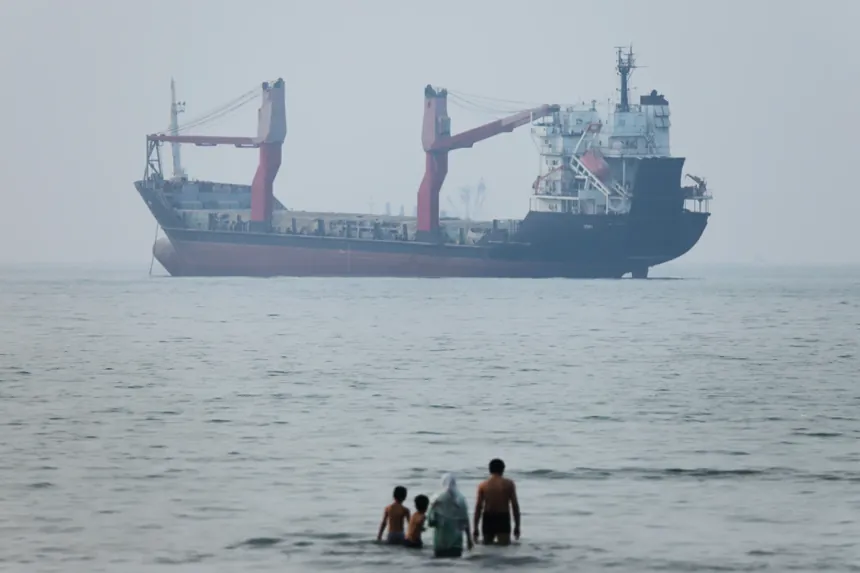
DUBAI, United Arab Emirates — Washington said it struck dozens of Iranian military targets on Monday after an attack on a container ship in the Strait of Hormuz, while Iran responded with missile strikes across the Middle East targeting countries that host U.S. forces.
The United States launched several waves of airstrikes overnight after Iran attacked a container ship in the Strait of Hormuz over the weekend. In response, Tehran fired missiles toward countries across the region that host American military forces.
The latest escalation comes despite an interim agreement between Washington and Tehran that was intended to pave the way for negotiations on a permanent settlement. Instead, the renewed fighting has raised concerns that the conflict could widen.

U.S. Targets Iranian Military Infrastructure
U.S. Central Command said American forces struck dozens of military targets across Iran early Monday. The targets included air defense systems, radar installations, missile and drone equipment, and small naval vessels.
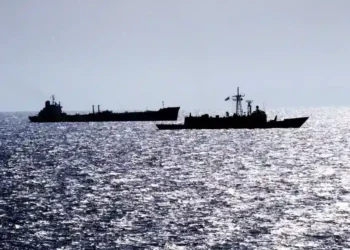
The strikes followed an Iranian attack on a container ship in the Strait of Hormuz that left the vessel on fire and one crew member missing.
Central Command also rejected Iran’s claim that it has exclusive control over the strategic waterway.
“The Strait of Hormuz is a vital maritime corridor for global trade,” the command said.
“Iran does not control it.”
■ Related News


The military said U.S. forces remain prepared to protect commercial shipping and ensure freedom of navigation despite what it described as continued Iranian threats and harassment.
Earlier Sunday, Central Command said U.S. forces had struck about 140 targets across Iran, including missile and drone launch sites, ammunition depots and communications facilities.
“We bombed the hell out of them last night,” President Donald Trump said during an interview on NBC’s Meet the Press.
Iran Expands Retaliation Across the Region
Iran responded by launching attacks against countries hosting U.S. military forces. Missile warning sirens sounded Monday morning in Bahrain, home to the U.S. Navy’s Fifth Fleet.
Authorities did not immediately report any damage in Bahrain.
Iranian state media confirmed fresh U.S. strikes on several locations inside Iran, reporting explosions and at least one death.
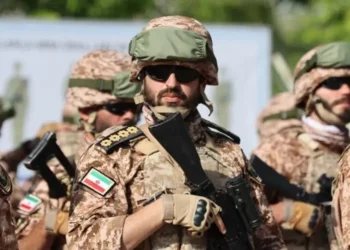
The Islamic Revolutionary Guard Corps said it had launched a new round of attacks across the Middle East.
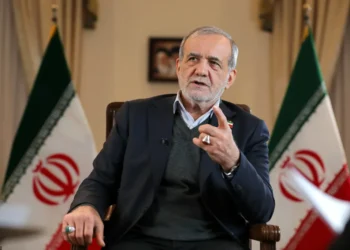
“The era of one-sided deals is OVER,” Iranian Parliament Speaker Mohammad Bagher Qalibaf wrote.
“We told you: keep your word or pay the price. Reality is knocking.”
Iran also launched attacks Sunday targeting Bahrain, Kuwait, Qatar, Jordan and Oman, whose territorial waters form part of the Strait of Hormuz.
Strait of Hormuz Remains at the Center of the Dispute
Control of the Strait of Hormuz has become the main issue threatening the interim agreement between Washington and Tehran.
Iran says it has sole authority over the waterway and has suggested charging vessels to pass through the strait.
The United States rejects that position and maintains the route must remain open to international shipping.
The Strait of Hormuz is one of the world’s most important maritime chokepoints. Before the conflict, about one-fifth of globally traded oil and natural gas passed through the waterway.
Since fighting began on Feb. 28 following the killing of Iran’s former Supreme Leader Ayatollah Ali Khamenei, Tehran has repeatedly targeted commercial vessels in the area.
In response, the United States has escorted commercial ships along a southern route through Omani waters. Iran has continued attacking vessels despite those measures.
Oil prices initially climbed above $120 per barrel after the conflict began but have since fallen significantly.
Diplomacy Continues Despite Renewed Fighting
The United States and Iran are nearing the midpoint of a 60-day interim agreement that was designed to support negotiations on a permanent settlement.
However, the dispute over the Strait of Hormuz has renewed military exchanges between the two sides.
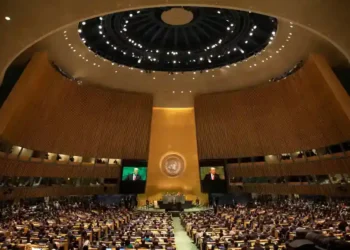
United Nations Secretary-General António Guterres warned that another full-scale conflict would have severe consequences.
“A return to full-scale hostilities would have catastrophic consequences,” Guterres said.
Meanwhile, Pakistan, Qatar and Egypt continued diplomatic efforts aimed at preserving the ceasefire framework.
A regional official involved in the negotiations said talks continued Sunday in an effort to prevent further escalation.
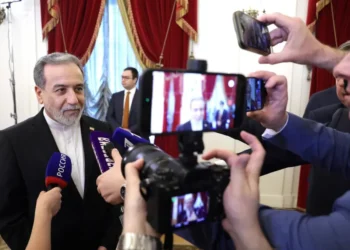
Pakistan also confirmed that its foreign minister spoke by telephone with Iran’s top diplomat and urged both sides to pursue de-escalation.
At the same time, Iran’s new Supreme Leader, Ayatollah Mojtaba Khamenei, issued his first public statement since his father’s funeral, vowing to avenge the killing of former Supreme Leader Ayatollah Ali Khamenei.
This report is based on reporting by The Associated Press.
Article Topics: Iran | United States | Strait of Hormuz | Middle East | Donald Trump | Military | Diplomacy | Global Security