BAMAKO, Mali – Mali’s military said Friday it had broken a rebel blockade around the strategic northern army base of Anéfis after reinforcements reached the installation following heavy fighting with separatist rebels and al-Qaida-linked militants.
The operation comes as Mali’s military government faces an intensified offensive by the separatist Azawad Liberation Front (FLA) and the al-Qaida-affiliated group Jama’at Nusrat al-Islam wal-Muslimin (JNIM), which have stepped up attacks across the country’s north.
Army says convoy reached Anéfis
Anéfis occupies a key position between the separatist-held town of Kidal and Gao, a major northern city controlled by Mali’s military government.

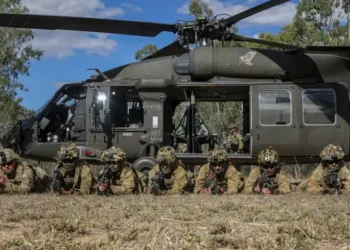
Late Thursday, the FLA said it had attacked a large convoy of Malian troops, fighters from Russia’s Africa Corps and allied local militias, claiming it had cut off the army base.
However, on Friday, the separatist group acknowledged it had withdrawn after intense fighting.
The Malian army said in a statement posted on social media that a large logistics convoy departed Gao and successfully reached Anéfis overnight.
“Operations from the air and on the ground allowed” the military to regain control of the area “despite several ambushes by the terrorist armed groups of the JNIM, the FLA and their affiliates,” the statement said.
Conflicting casualty claims
The military said its forces destroyed 12 combat vehicles and “neutralized” nearly 100 militants during the past 24 hours. It did not disclose military casualties or provide an updated toll for fighting around Anéfis.
Mohamed Elmaouloud Ramadane, spokesperson for the FLA, said the separatists had deliberately withdrawn from the area.
“Ultimately, we decided to withdraw so we could better organize ourselves,” Ramadane said.
He claimed the armed forces of neighboring Niger and Burkina Faso had assisted Mali’s military during the operation.
Ramadane said the FLA suffered five fatalities and about 10 wounded fighters while alleging that Malian forces and Russia’s Africa Corps also sustained heavy losses.
Neither side’s battlefield claims could be independently verified.
Northern offensive has intensified
The fighting follows renewed attacks launched by the FLA in recent weeks against several northern towns, including Gao, while rebels sought to isolate the military base at Anéfis.
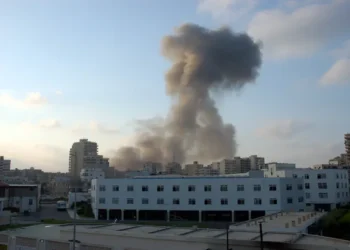
According to the separatist group, an earlier military convoy dispatched to relieve the base was ambushed last Sunday. Images circulating on social media purported to show a downed helicopter and destroyed military vehicles, although those images have not been independently verified.
The latest clashes reflect the increasingly complex conflict in northern Mali, where government forces are simultaneously confronting separatist groups and Islamist militants linked to al-Qaida and the Islamic State group.
The FLA has long sought an independent state in northern Mali.
Regional security challenges persist
In April, the FLA and JNIM carried out some of the most significant coordinated attacks in more than a decade, including an assault that killed Mali’s defense minister, Gen. Sadio Camara, at his home and enabled insurgents to seize several key northern towns.
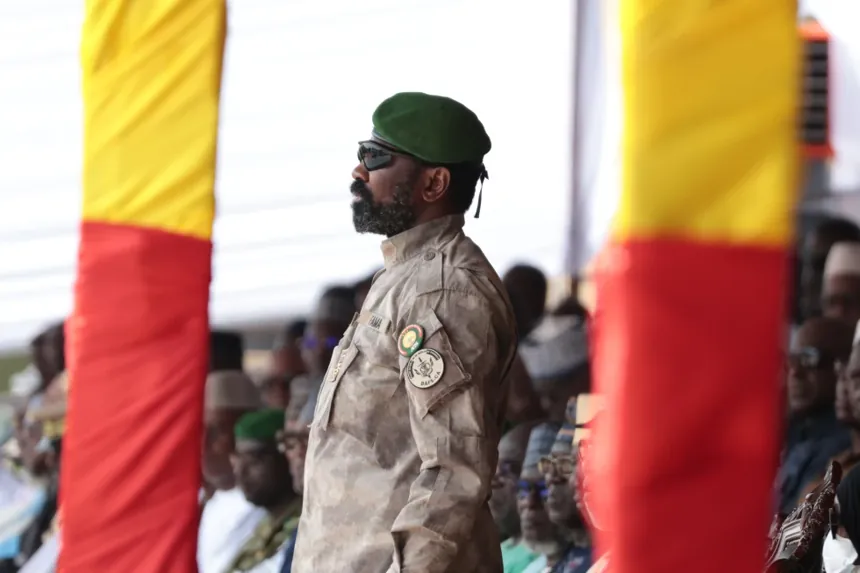
Mali has been governed by a military junta led by Gen. Assimi Goïta since successive coups.
Alongside neighboring Burkina Faso and Niger, Mali has shifted away from traditional Western security partners in favor of closer military cooperation with Russia following military takeovers in all three countries.
Despite that partnership, militant violence has continued to escalate across the region. Government forces and Russian fighters have also faced allegations of killing civilians suspected of supporting armed groups.
This report is based on reporting by The Associated Press.
Article Topics: Mali | Anéfis | Azawad Liberation Front | JNIM | Russia Africa Corps | Sahel | Security | West Africa