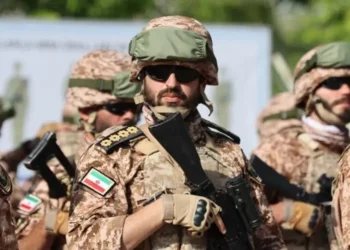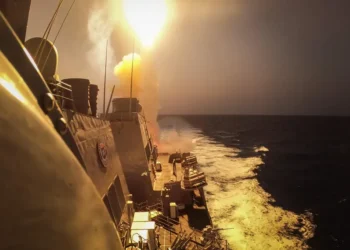
The officials, speaking on condition of anonymity to discuss ongoing diplomacy, said the renewed exchanges of fire this week followed actions by what they described as a rogue faction of Iranian hard-liners seeking to undermine the ceasefire between Washington and Tehran. They said the Trump administration considers maritime security in the Gulf a prerequisite for broader negotiations over Iran’s nuclear program.
President Donald Trump reinforced that position Friday, declaring on social media that the interim ceasefire was “OVER!” while also stating that the United States would continue pursuing negotiations aimed at reaching a permanent end to the conflict.
Maritime security becomes central to negotiations
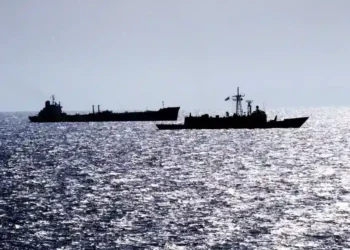
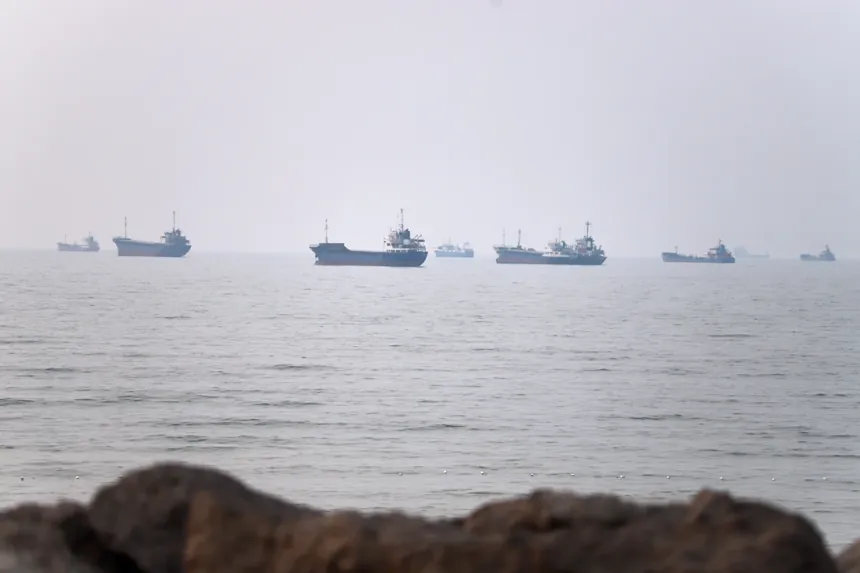
According to the U.S. officials, Washington is pressing Iran to issue a public commitment confirming that commercial shipping can safely pass through the Strait of Hormuz, one of the world’s most important energy corridors. The officials also said Iranian representatives indicated during discussions that recent attacks on commercial vessels had been a mistake and expressed a desire to continue negotiations despite the incidents.

The officials said Trump responded to the attacks with stronger military action regardless of which Iranian faction was responsible, intending to demonstrate that further disruptions to international shipping would carry consequences.
Iran, however, publicly maintained that authority over the strait rests solely with Tehran.
Speaking outside the United Nations Security Council, Iran’s ambassador to the U.N., Amir Saeid Iravani, said all activity in the Strait of Hormuz, including reopening navigation and conducting demining operations, “rests exclusively with Iran.”
He warned that attempts by outside powers to establish alternative security arrangements in the waterway would violate the interim agreement, delay the restoration of commercial shipping, undermine maritime safety and increase regional tensions.
Iran has also asserted that it should exercise exclusive control over the strait and require vessels using the passage to pay transit fees, despite the international community long treating the waterway as an international shipping route. Before the conflict, roughly one-fifth of globally traded oil and natural gas passed through the Strait of Hormuz.
■ Related News


Iran’s control of the passage during the war contributed to a sharp spike in global energy prices, although oil has since retreated significantly from wartime highs.
Nuclear agreement tied to enriched uranium
The U.S. officials said any future agreement over Iran’s nuclear program would require Tehran to surrender its stockpile of highly enriched uranium. They added that if negotiations fail to secure the transfer of that material, the United States retains military options to ensure it remains permanently inaccessible underground, although they did not elaborate.
The enriched uranium, which could potentially be used to produce a nuclear weapon, is believed to have been buried following U.S. strikes carried out last summer. Iran continues to insist its nuclear program is intended solely for peaceful purposes.
The officials also said Washington would not conclude a nuclear agreement unless Iran first fully complied with ceasefire commitments and halted renewed attacks on commercial shipping in the Strait of Hormuz.
Those conditions reflect broader challenges facing the Trump administration after launching military operations against Iran earlier this year. Trump ended previous nuclear talks in late February before authorizing strikes, arguing Tehran was rebuilding its nuclear capabilities and pursuing long-range missile development. He now faces domestic political pressure to conclude the conflict while avoiding a prolonged military engagement in the Middle East.
Unexplained strikes add uncertainty
Questions also remain over a series of airstrikes that hit Iran after the United States announced it had completed its military operations.
No group immediately claimed responsibility for the attacks, and U.S. Central Command spokesperson Capt. Tim Hawkins said there were “no operational updates” following Trump’s announcement regarding the ceasefire.
Iranian state media quoted Esmail Kousari, a member of parliament’s national security committee and a former commander in the Revolutionary Guard, as accusing the United Arab Emirates of covertly assisting the U.S. campaign and warning the country would “pay the price” for its alleged role.
Neither Gulf Arab states, which have repeatedly come under Iranian attack since fighting began on Feb. 28, nor Israel immediately commented on the latest strikes.
The attacks on Thursday struck several locations in southern Iran as preparations were underway for the burial of Iran’s longtime leader, Ayatollah Ali Khamenei. Iranian authorities stopped short of directly attributing responsibility, although one lawmaker also accused the UAE of supporting U.S. military operations.
Iran responded by launching a broader wave of missile attacks targeting Bahrain, Jordan, Kuwait and Qatar. Kuwaiti authorities reported that one person was injured as air defense systems intercepted incoming missiles across the region.
Regional diplomacy continues despite tensions
Diplomatic efforts are continuing alongside the military confrontation.
Iranian Foreign Minister Abbas Araghchi is scheduled to meet his Omani counterpart on Saturday, according to Iran’s state-run IRNA news agency, while Turkish Foreign Minister Hakan Fidan said he believed negotiations involving Iran and Oman could produce progress over the weekend.
The United States continues to advise commercial vessels to use a southern route through Oman’s territorial waters to reduce the risk of confrontation with Iranian forces.
Regional leaders also intensified diplomatic contacts following the latest attacks. United Arab Emirates President Sheikh Mohammed bin Zayed Al Nahyan traveled to Kuwait for talks with the country’s ruling emir after Iran’s missile strikes, while Gulf Arab governments held consultations with Qatar’s foreign minister, who has played a significant mediation role alongside Pakistan.
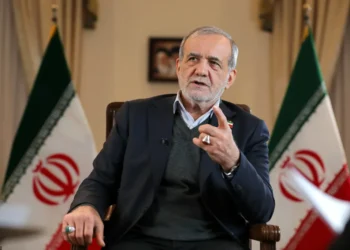
Pakistani Prime Minister Shehbaz Sharif separately spoke Friday with Iranian President Masoud Pezeshkian and Qatar’s Emir Sheikh Tamim bin Hamad Al Thani, urging restraint and a diplomatic resolution.
Israel’s government said Prime Minister Benjamin Netanyahu also spoke with Trump on Thursday evening, during which the U.S. president briefed him on American actions in the Gulf. Israeli Defense Minister Israel Katz reiterated that Israel remained prepared to resume military operations if necessary, saying, “If we will have to return, we will return with even greater force.”
This report is based on reporting by The Associated Press.
Article Topics: Iran | United States | Strait of Hormuz | Nuclear Talks | Middle East Conflict | Maritime Security | Gulf Diplomacy | Donald Trump