KYIV, Ukraine – Ukrainian drones struck additional Russian oil facilities and set two oil tankers ablaze in the Sea of Azov on Thursday, intensifying Kyiv’s campaign against Moscow’s energy infrastructure as the United States moved closer to allowing Ukraine to manufacture Patriot air defense systems.
The attacks came a day after U.S. President Donald Trump said Washington would grant Ukraine a license to produce Patriot air defense systems, though Ukrainian officials cautioned it could take a year or more before domestically manufactured interceptor missiles become available.
The Kremlin said the agreement reflected what it described as Washington’s “ambivalence” but welcomed Trump’s continued efforts to pursue a negotiated end to the war, which Russia launched with its full-scale invasion of Ukraine more than four years ago.

Ukraine expands campaign against Russian fuel network
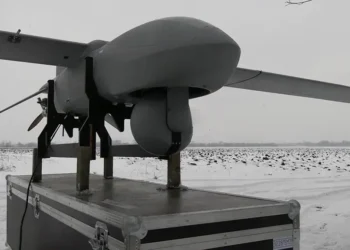
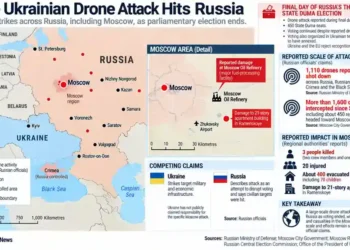
Ukraine’s long-range drone campaign has increasingly targeted Russian oil refineries, fuel depots and transport infrastructure, contributing to gasoline shortages, fuel rationing and long queues at filling stations in several Russian regions.
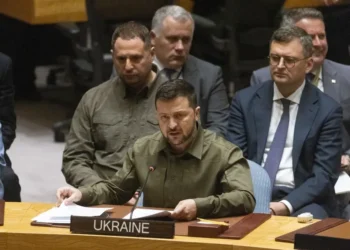
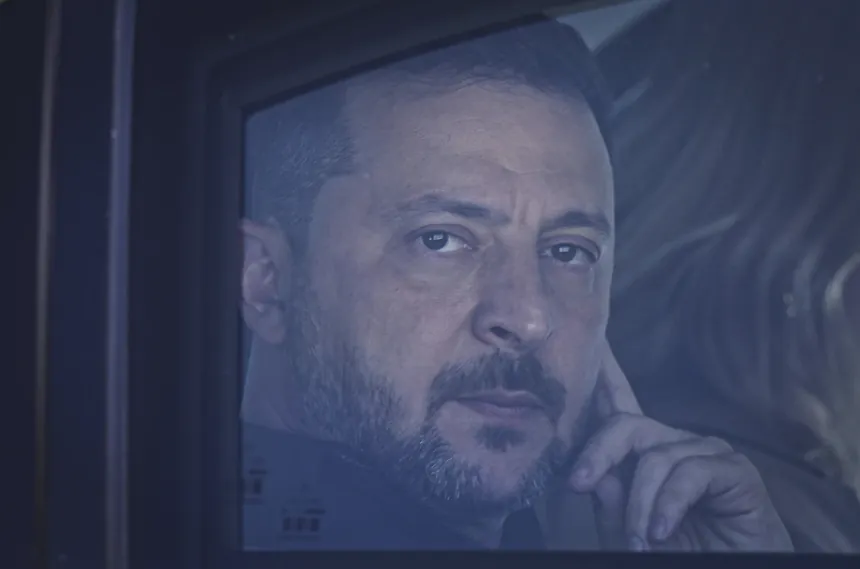
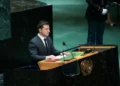
President Volodymyr Zelenskyy described the strikes as part of Ukraine’s strategy of imposing “long-range sanctions” on Russia in response to Moscow’s refusal to end the war.
“We have long proposed that Russia end this war, and every day of delay should bring the feeling of war to where it all began — to Russia,” Zelenskyy said.
Oil depots and tankers targeted
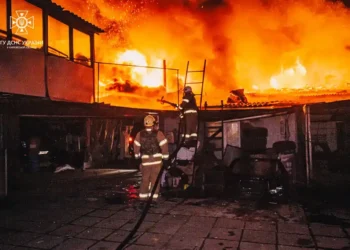
Russian officials said a Ukrainian drone attack ignited an oil depot in the western city of Tver, while another strike set oil storage reservoirs ablaze in Vyazniki in the Stavropol region, prompting evacuations of nearby apartment buildings.
In the Sea of Azov, drones struck two oil tankers, setting both on fire, according to Rostov regional Gov. Yuri Slusar. One vessel was still burning while its crew had been safely evacuated.

The attacks are part of Ukraine’s broader effort to disrupt fuel supplies to the Crimean Peninsula, which Russia illegally annexed in 2014.
Zelenskyy said Ukrainian forces also struck fuel infrastructure in Ufa and an oil-loading terminal in Russia’s Rostov region.
Russia’s Defense Ministry said its air defenses intercepted or destroyed 73 Ukrainian drones between late Wednesday and early Thursday.
Ukraine’s Air Force, meanwhile, said Russia launched 94 long-range drones and two ballistic missiles overnight. It reported intercepting or jamming 72 drones, but said 19 drones and both ballistic missiles struck 13 locations across Ukraine.
Patriot production expected to take time
Following Trump’s announcement at the NATO summit in Ankara, Ukrainian officials said establishing domestic Patriot missile production will require extensive technical preparation.
Serhii Beskrestnov, an adviser to Ukraine’s defense minister, said a production license would include manufacturing documentation, specialist training, supplier networks and assistance from foreign technical experts.
He said Ukraine possesses the technical capability to manufacture the systems, but production timelines remain the primary challenge.
According to Beskrestnov, some critical components require manufacturing cycles of 12 to 24 months, while limited global production capacity for parts supplied by companies including Boeing and L3Harris could slow deliveries.
Although the Pentagon has expanded production contracts, he said it remains uncertain when those investments will significantly increase output.
“America has recognized Ukraine as a country that is ready to do this,” Zelenskyy told reporters Thursday. He said negotiations are continuing between Ukrainian and U.S. officials to finalize the technical arrangements needed to begin production.
Germany also holds a license to manufacture Patriot systems. Raytheon and MBDA Deutschland announced plans in 2022 to produce Patriot GEM-T missiles in Germany, with the first deliveries expected next year and Ukraine anticipated to be the initial recipient.
Kremlin rejects claims strikes could speed peace
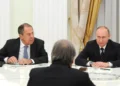
Kremlin spokesman Dmitry Peskov said Moscow views continued U.S. military support for Ukraine as contradictory to Washington’s stated goal of promoting peace.
He nevertheless said Russia welcomed Trump’s willingness to pursue negotiations after efforts related to Iran.
Responding to Trump’s suggestion that Ukrainian strikes inside Russia could encourage a peace settlement, Peskov rejected the idea, arguing that increased military pressure would instead force Russia to expand what it calls a security buffer inside Ukraine.
“It’s a mistake to think that escalation and military pressure could pave the way to a peaceful settlement,” Peskov said.
Ukraine continues to seek binding security guarantees from the United States and its allies as part of any future peace agreement, including proposals involving NATO participation.
Russia has repeatedly warned that any deployment of NATO forces in Ukraine would be considered a legitimate military target.
Trump said Wednesday he would consider enforcing a no-fly zone over Ukraine if necessary but suggested such measures may become unnecessary should a peace agreement be reached.
Peskov responded by warning that any NATO-enforced no-fly zone would amount to direct alliance involvement in the conflict.
He added that Russian President Vladimir Putin remains open to further dialogue with Trump as diplomatic contacts continue.
This report is based on reporting by The Associated Press.
Article Topics: Ukraine | Russia | Drone Strikes | Oil Facilities | Patriot Missile System | Donald Trump | Volodymyr Zelenskyy | Russia-Ukraine War