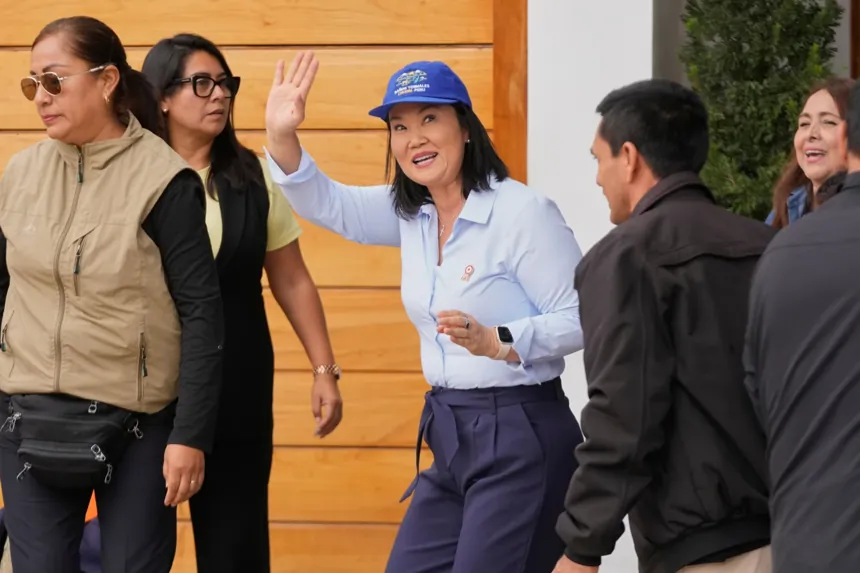
LIMA, Peru – Conservative politician Keiko Fujimori has been officially declared the winner of Peru’s presidential runoff election, securing the country’s highest office after a closely contested campaign centered on public security and rising crime.
According to the Associated Press, Peru’s electoral authority certified the results on Friday after completing the national vote count. Official figures showed Fujimori received approximately 9.223 million votes, or 50.135%, narrowly defeating nationalist congressman Roberto Sánchez, who secured about 9.173 million votes, or 49.865%.
Fujimori, 51, will become Peru’s ninth president in the past decade when she assumes office later this month, underscoring the country’s prolonged period of political instability and frequent leadership changes.

Security Emerged as the Defining Campaign Issue
The presidential race was shaped largely by public concern over worsening crime, particularly extortion and violence linked to organized criminal groups operating across parts of the country.
Throughout the campaign, Fujimori pledged tougher law enforcement measures, promising an “iron fist” approach against organized crime. Her proposals included constructing four new prisons, developing another high-security detention facility modeled on El Salvador’s Terrorism Confinement Center (CECOT), requiring prison inmates to work, strengthening border security and deporting undocumented migrants.
Following confirmation of her victory, Fujimori wrote on social media that the transition period would provide an opportunity to engage with different sectors of society before her administration takes office.
Narrow Victory Ends Competitive Election
Fujimori and Sánchez advanced to the June 7 runoff after emerging as the top two candidates from a crowded first-round election in April that featured 35 presidential contenders.
The narrow final margin reflected a highly competitive race in which voters weighed competing visions for addressing Peru’s economic and security challenges.
■ Related News



Election authorities confirmed the final results after all ballots had been counted, formally concluding the electoral process.
Political Legacy Remains Central to Fujimori’s Public Profile
Fujimori’s election marks her fourth attempt to win Peru’s presidency. She is the daughter of former President Alberto Fujimori, whose administration in the 1990s defeated the Shining Path insurgency but was later criticized for authoritarian practices.
Alberto Fujimori was convicted in 2009 on human rights charges related to counterinsurgency operations and was later found guilty in corruption cases.
His political legacy has remained a defining feature of Keiko Fujimori’s public career, with supporters crediting the former administration for restoring security while critics continue to raise concerns over its human rights record.
Regional Political Landscape
Fujimori’s victory follows recent conservative electoral successes elsewhere in Latin America, including the elections of Abelardo de la Espriella in Colombia and José Antonio Kast in Chile, reflecting broader political shifts in parts of the region.
The results contrast with earlier periods when left-leaning governments gained prominence across Latin America, illustrating the evolving political landscape as voters increasingly prioritize issues such as public safety, governance and economic stability.
Fujimori is expected to begin the transition process ahead of taking office later this month as her incoming administration prepares to implement its domestic policy agenda.
Tags: Peru, Keiko Fujimori, Roberto Sánchez, Presidential Election, Lima, Crime, Public Security, Alberto Fujimori, Latin America, Politics, Elections, Americas