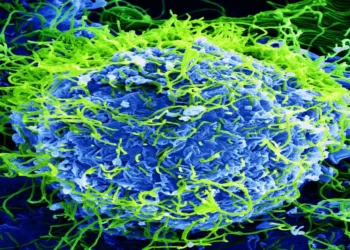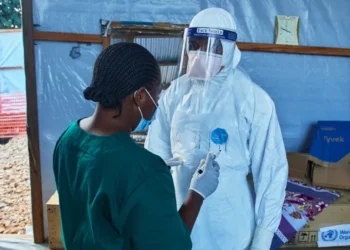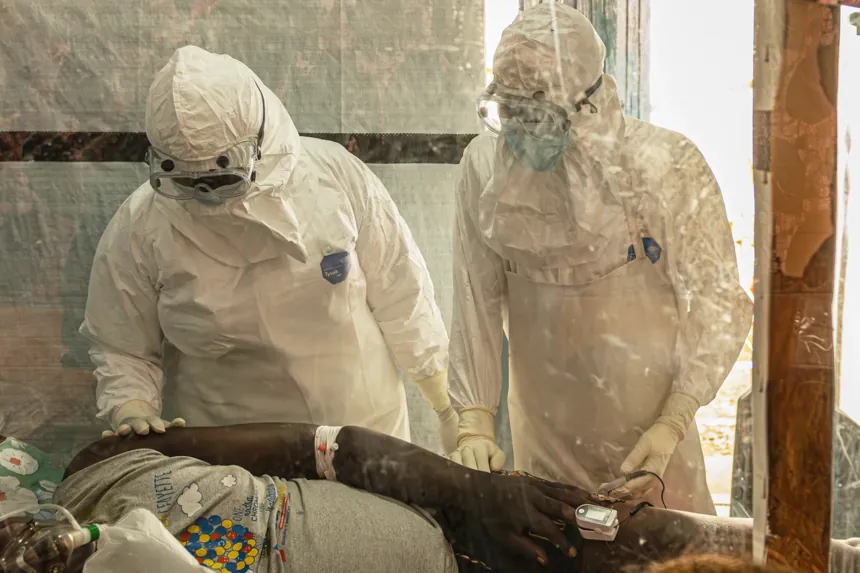
The World Health Organization (WHO) has launched a clinical trial in the Democratic Republic of Congo to evaluate two potential treatments for Ebola as the country continues to battle a growing outbreak caused by the less common Bundibugyo strain of the virus.
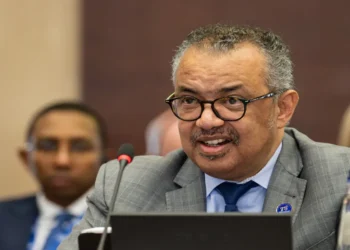
WHO Director-General Tedros Adhanom Ghebreyesus announced Thursday that the first participant has been enrolled in the study, marking the start of a closely watched effort to identify therapies that could improve patient survival.
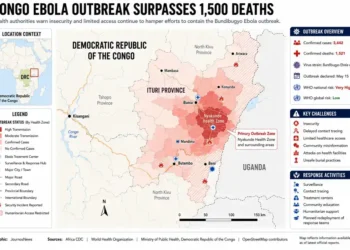
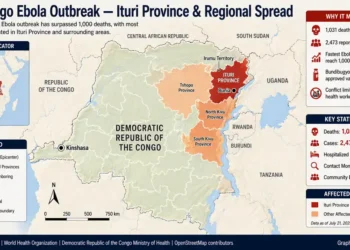
The Bundibugyo virus is one of several viruses capable of causing Ebola disease, but unlike some other Ebola strains, it currently has no approved vaccine or treatment specifically designed for it. According to WHO, more than 1,400 people have been diagnosed during the outbreak, while 438 have died. More than 200 patients have recovered after receiving supportive medical care, particularly when treatment began early.

Tedros said the trial represents an important opportunity to generate evidence while responding to the outbreak.
“The trial offers real hope that we can deliver concrete results for – and with – the communities at the heart of the outbreak,” he said in a statement.
Two Treatments Under Evaluation
Researchers will investigate whether either of two therapies can improve survival among Ebola patients.
One treatment is remdesivir, an antiviral drug developed by Gilead Sciences that is approved for treating COVID-19. Laboratory studies have suggested it may have activity against the Bundibugyo virus, although its effectiveness against this outbreak remains unproven.
The second treatment is MBP134, an experimental antibody therapy developed by Mapp Biopharmaceutical. The engineered antibodies are designed to target multiple Ebola viruses, including the Bundibugyo strain.
Under the study design, every participant will receive the current standard supportive care. Patients will then be randomly assigned to receive remdesivir, MBP134, both treatments together, or supportive care alone.
■ Related News
Dr. Vasee Moorthy, a WHO research adviser, said researchers will monitor survival for 28 days after treatment begins.
Trial Could Take Months
Health officials cautioned that determining whether either therapy is effective will require time.
Moorthy said the study could take several months and may require as many as 1,000 participants before researchers can determine whether one or both treatments improve outcomes. However, if either therapy demonstrates a particularly strong benefit, meaningful results could emerge sooner with fewer participants.
The trial is currently operating at a single Ebola treatment center in Congo’s Ituri province.
Security Challenges Continue
Expanding the study may depend on improving security conditions in eastern Congo, where armed violence has repeatedly disrupted healthcare operations.
The affected region has experienced attacks involving healthcare workers responding to the outbreak, complicating efforts to diagnose patients, provide treatment, and contain transmission of the virus, which spreads through direct contact with the bodily fluids of infected individuals.
Officials said they intend to extend the study to additional treatment centers once conditions allow.
International Collaboration Supports Research
WHO said sufficient supplies of both treatments have been donated for the trial. Gilead Sciences provided remdesivir, while doses of MBP134 are owned by the U.S. government, which funded research into the experimental therapy.
If either treatment proves effective, researchers said the next challenge will be ensuring patients can continue receiving the therapy beyond the clinical trial.
The study is supported by WHO and conducted through a partnership involving Congo’s National Institute for Biomedical Research (INRB), the University of Oxford, the Institute of Tropical Medicine in Antwerp, and other international health organizations.
Tags: Ebola, Bundibugyo Virus, Democratic Republic of Congo, World Health Organization, Clinical Trial, Remdesivir, MBP134, Infectious Diseases, Public Health, Ebola Treatment, Ituri Province, Medical Research