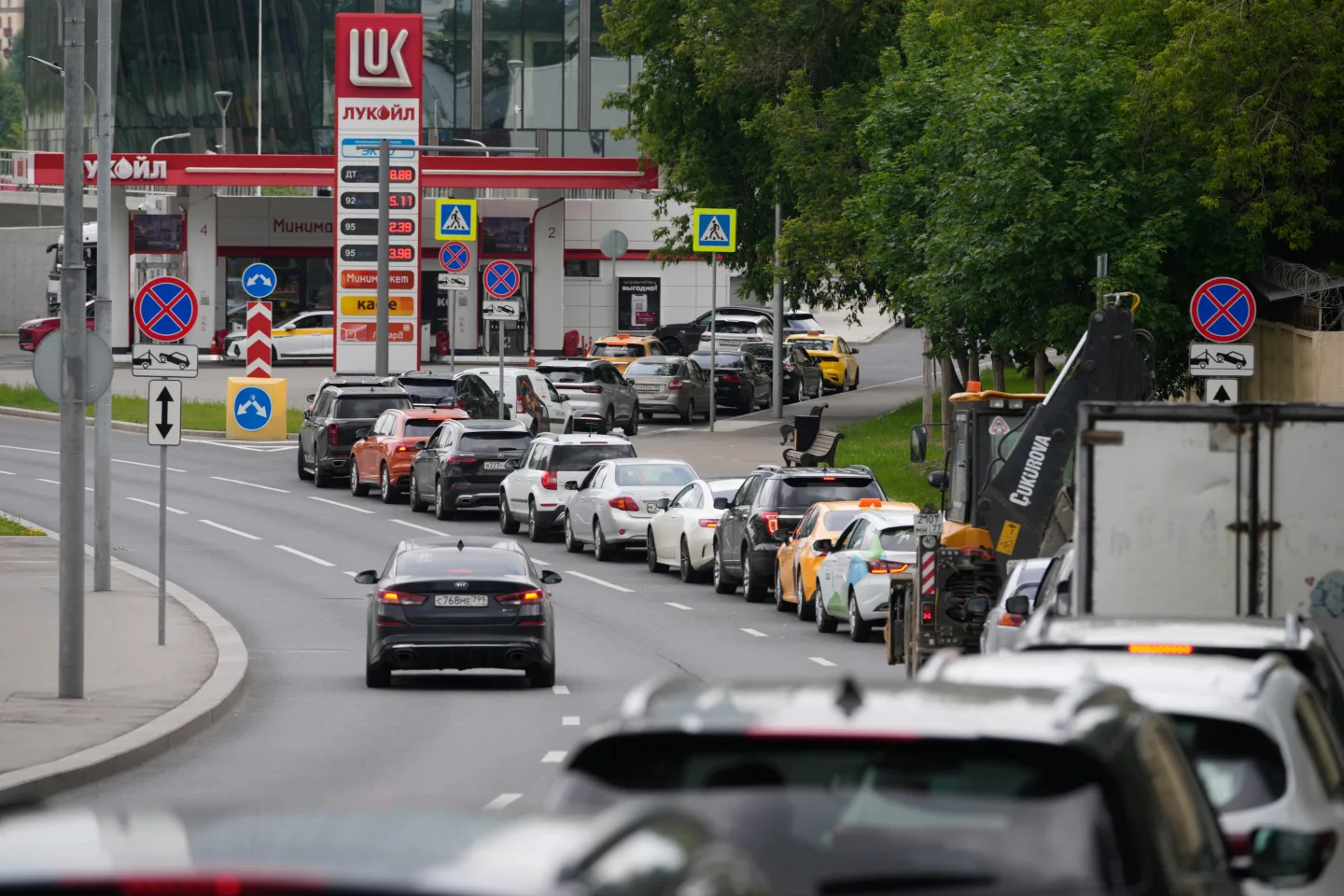
Russia is experiencing widespread fuel shortages after months of Ukrainian drone strikes damaged key oil refineries and energy infrastructure, disrupting fuel production and distribution across the country. The situation has led to fuel rationing in numerous regions, long queues at filling stations, and growing public frustration as the conflict’s economic effects become increasingly visible inside Russia.
The Associated Press reported that the shortages have emerged despite Russia’s status as one of the world’s largest energy producers. The supply disruptions have affected motorists across multiple regions, with local authorities responding by imposing purchase limits and taking emergency measures to manage long waiting lines at service stations.
Russian President Vladimir Putin acknowledged the difficulties during televised remarks, saying motorists and businesses continued to face challenges obtaining fuel. While he described the shortages as temporary and not critical, reports from several regions indicated that queues at gas stations persisted and some fuel grades remained difficult to obtain.

Ukrainian strikes disrupt refining capacity
According to an Associated Press review, Ukraine has launched more than 50 reported attacks on Russian oil refineries, storage depots, terminals, and other energy infrastructure since late March, including facilities in the illegally annexed Crimean Peninsula. Some installations have reportedly been struck multiple times.
Oil market analyst Gary Peach of Energy Intelligence told the Associated Press that Russia’s crude oil refining output fell to approximately 3.95 million barrels per day in June, about 25% below the level recorded a year earlier. He described the scale of refinery outages as unusually severe.
Gasoline production also declined significantly, falling to around 850,000 barrels per day from roughly 1.03 million barrels during the same period last year, according to the report.
Chris Weafer, chief executive of Macro-Advisory Ltd., estimated that roughly one-third of Russia’s refining capacity is currently offline. He said the estimate is based on oil industry sources and anecdotal evidence because refinery operators do not publicly disclose the full extent of damage sustained during attacks.
Pressure extends beyond targeted regions
The supply disruption has spread well beyond areas directly affected by Ukrainian strikes. Fuel rationing or purchase limits have been reported across more than half of Russia’s regions, while some gas station operators have imposed restrictions on individual purchases.
■ Related News



Authorities have attributed part of the pressure to panic buying and urged consumers to purchase fuel only when necessary. The government has also restricted exports of gasoline and aviation fuel while considering additional limits on diesel exports.
Kremlin spokesman Dmitry Peskov said Russia was discussing possible fuel imports with several countries as part of efforts to stabilize domestic supplies and reduce panic buying.
Economic impact reaches Siberia
The shortages have affected regions thousands of kilometers from damaged refineries, including parts of Siberia.
Business owner Viktor Shkurenko said limits on gasoline purchases in the Omsk region came unexpectedly because the area hosts one of Siberia’s largest oil refineries and had not been directly targeted by Ukrainian attacks. Although his businesses had not yet encountered refueling problems, he expressed concern about the broader impact on commercial operations.
Media reports from the Zabayakalye region indicated that fuel shortages disrupted some public services, including waste collection and bus operations. In Irkutsk, city authorities raised public transport fares, citing higher fuel costs, while portable toilets were placed near crowded filling stations to accommodate motorists waiting in lengthy lines.
Pavel Kharitonenko, acting head of the Irkutsk branch of the opposition Yabloko party, told the Associated Press he had stopped driving because obtaining fuel had become increasingly difficult.
Repairs expected to take months
Analysts said restoring damaged refining capacity is likely to be a lengthy process because many facilities require specialized equipment that is often sourced from abroad. International sanctions have complicated access to replacement components, making repairs more difficult and expensive.
Peach said some refineries may not return to their previous operating levels during the summer because of the scale of the damage. He also suggested that repairing certain facilities may prove impractical while they remain vulnerable to additional attacks.
Weafer estimated that repairs to the Moscow Oil Refinery, which previously supplied about 40% of the capital’s fuel needs, could require at least three months. Even if no further infrastructure is damaged, he said fuel shortages are likely to continue through much of the summer as agricultural demand increases and authorities work to redistribute available supplies across Russia.
The developments highlight how Ukraine’s long-range drone campaign has increasingly targeted Russia’s domestic energy infrastructure, creating logistical and economic pressures that extend beyond the battlefield while Russian authorities attempt to stabilize fuel supplies during the peak summer demand period.
Tags: Russia, Ukraine, Europe, Fuel Shortage, Oil Refineries, Drone Attacks, Vladimir Putin, Crimea, Energy Infrastructure, Russian Economy, Gasoline, Energy Security