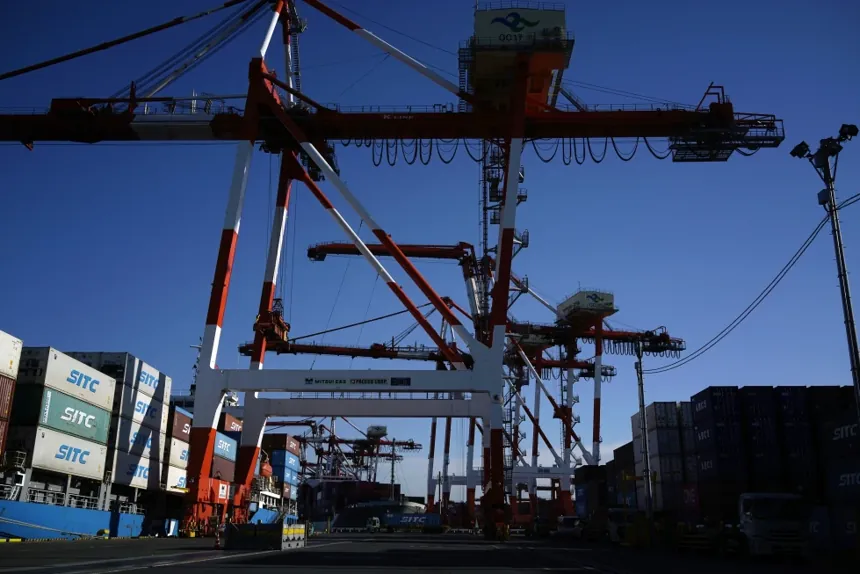
TOKYO, Japan – Business confidence among Japan’s largest manufacturers strengthened for a fifth consecutive quarter, according to the latest quarterly Tankan survey released by the Bank of Japan on Wednesday, signaling that many companies continue to view operating conditions positively despite inflationary pressures and currency challenges.
The central bank’s closely watched survey showed the diffusion index for major manufacturers rising to 22, up from 17 in the previous quarter. The index measures the difference between companies reporting favorable business conditions and those expressing a pessimistic outlook, making it a key gauge of corporate sentiment across Japan’s economy.
Confidence among large non-manufacturing businesses also improved modestly. The index for sectors such as services increased to 37 from 36 in the previous survey, suggesting continued stability in domestic business activity.

Manufacturers Face Higher Costs Despite Stronger Export Environment
The latest survey reflects a mixed operating environment for Japanese businesses.
While the depreciation of the Japanese yen has generally benefited export-oriented manufacturers by increasing the value of overseas earnings when converted into local currency, that advantage has increasingly been offset by higher import costs.
Japan remains heavily dependent on imported oil and natural gas, leaving businesses vulnerable to fluctuations in global energy markets. Higher fuel prices, driven in part by recent tensions involving Iran, have added to inflationary pressures, although crude oil prices have eased following an interim agreement between the United States and Iran aimed at reducing hostilities.
The yen continued to trade near multi-decade lows against the U.S. dollar on Wednesday, further increasing the cost of imported energy and raw materials for many domestic companies.
Monetary Policy Continues to Shift
The Bank of Japan has begun gradually moving away from the ultra-loose monetary policies that characterized much of the past three decades.
■ Related News



Last month, the central bank raised its benchmark interest rate to 1%, its highest level in roughly 30 years, citing persistent inflation and the economic effects of a weaker currency. The decision marked another step in the BOJ’s broader effort to normalize monetary policy after maintaining exceptionally low interest rates for many years.
Financial markets continue to monitor whether additional policy adjustments may be warranted if inflation remains elevated or the yen experiences further weakness.
Investment Remains a Bright Spot
Despite ongoing structural challenges, analysts say several indicators continue to point to resilience within Japan’s corporate sector.
Business investment plans remain relatively solid, particularly among large and medium-sized companies, supporting expectations for continued capital spending. However, smaller firms appear to face greater challenges as higher operating costs weigh more heavily on their financial performance.
Naomi Fink, Chief Global Strategist and Chief Economist at Amova Asset Management, said the latest Tankan results indicate that corporate sales remain relatively stable, particularly among larger enterprises, even as profitability is expected to soften. She also noted that fixed investment plans continue to show strength for large and mid-sized companies but are less robust among smaller businesses.
Long-Term Challenges Persist
Although business sentiment has continued to improve, Japan’s economy continues to face longer-term demographic challenges.
A shrinking and aging population has contributed to persistent labor shortages across multiple industries, creating constraints on workforce availability and long-term economic growth. Policymakers and businesses alike continue to explore measures aimed at improving productivity while addressing the country’s evolving demographic landscape.
The latest Tankan survey suggests that, despite these structural headwinds and ongoing inflationary pressures, many of Japan’s largest companies remain cautiously optimistic about current business conditions.
Tags: Japan, Bank of Japan, Tankan Survey, Business Sentiment, Manufacturing, Inflation, Japanese Yen, Interest Rates, Corporate Investment, Global Economy