WASHINGTON — The United States launched military strikes against targets in Iran on Friday after a drone attack on a commercial cargo ship in the Strait of Hormuz, escalating tensions just one week after Washington and Tehran reached an interim understanding aimed at ending months of conflict and reopening one of the world’s most important maritime trade routes.
U.S. President Donald Trump said the attack on the vessel violated the ceasefire arrangement between the two countries. Shortly after indicating that a response was forthcoming, U.S. Central Command announced strikes targeting missile and drone facilities as well as coastal radar installations inside Iran.
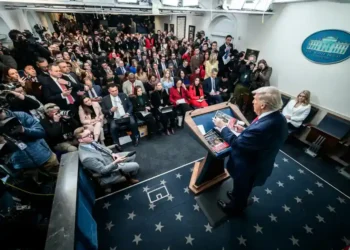
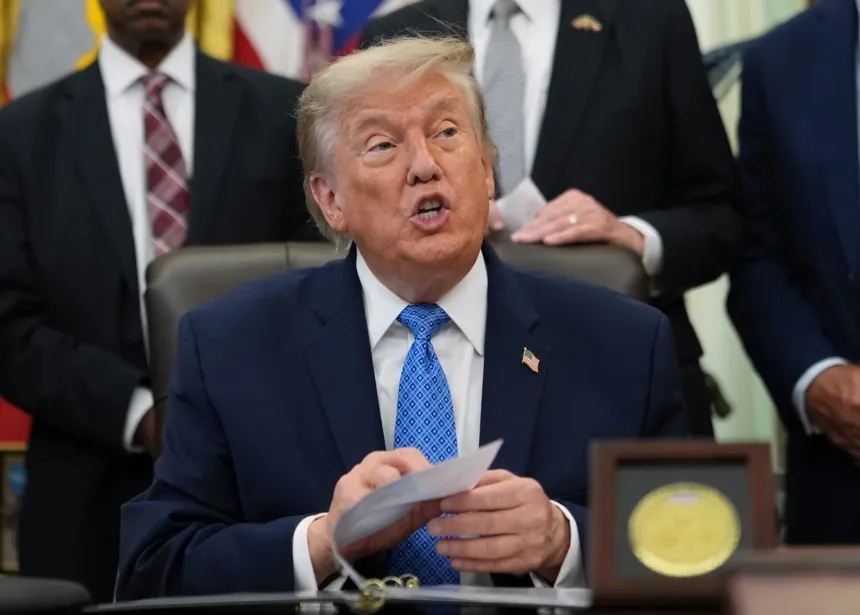
Before the operation, Trump told reporters at the White House that Iran had launched multiple attacks.

“I don’t like the fact that they took a shot yesterday, actually four of them,” Trump said before ending the briefing as reporters were escorted from the Oval Office.
Iran rejects ceasefire violation claims
Iran disputed the U.S. characterization of the incident.
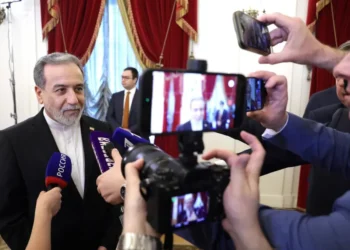
Ebrahim Azizi, chairman of the Iranian parliament’s national security commission, said on social media that the Strait of Hormuz falls under Iranian authority and urged the United States to respect what he described as the governing rules of the waterway.
“This is not a violation of the ceasefire; it is ceasefire management,” Azizi wrote.
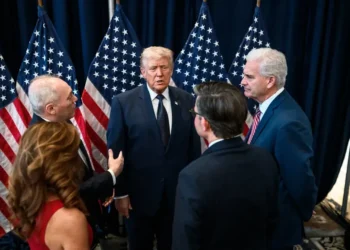
Later Friday, U.S. Vice President JD Vance urged Tehran to resolve disagreements through diplomatic channels while warning that further attacks would draw a military response.



“But violence will be met with violence,” Vance said in a social media post.
U.S. military operation ends after about an hour
A U.S. official familiar with the operation told The Associated Press that the strikes concluded roughly one hour after Central Command announced the military action. The official spoke on condition of anonymity because the operation was ongoing when the information was released.
The confrontation followed a projectile strike on a container ship off the coast of Oman on Thursday.
The United Kingdom Maritime Trade Operations center said the vessel was hit hours after Iran warned ships to stop using parts of the Strait of Hormuz. British authorities reported no injuries among the crew.
The incident occurred during delicate negotiations between Washington and Tehran over a permanent agreement intended to end the recent conflict and restore normal commercial shipping through the strategic waterway.
Shipping operations disrupted again
The latest attack interrupted efforts to restore maritime traffic through the Strait of Hormuz.
The International Maritime Organization had begun coordinating the movement of stranded commercial vessels using an alternative shipping corridor closer to Oman’s coastline rather than the center of the strait.
Following Thursday’s attack, the agency suspended those operations, saying evacuations would not resume until adequate security guarantees were in place.
According to International Maritime Organization Secretary-General Arsenio Dominguez, approximately 115 vessels had safely departed the strait in recent days, while roughly 500 ships remained in the area awaiting safe passage.
The reopening of alternative shipping routes had been viewed as an important step toward stabilizing global energy markets and reducing tensions during ongoing negotiations between the United States and Iran.
The two governments continue discussions over a broader agreement that includes maritime security and the future of Iran’s stockpile of highly enriched uranium. Under the interim arrangement, negotiators have 60 days to finalize a permanent framework.
Commercial shipping faces renewed uncertainty
Shipping analysts said the latest incident has slowed confidence among commercial operators that had begun returning to normal operations following the ceasefire.
Marine data company Windward said on social media that the attack represented the first significant challenge to improving commercial confidence in the Strait of Hormuz.
The company reported that 43 vessel transits occurred after the incident, indicating the waterway remained open, although traffic had slowed compared with recent days.
On Wednesday, before the cargo ship attack, 78 vessels passed through the strait—the highest daily total since the conflict began but still below prewar averages exceeding 130 ships per day.
According to maritime intelligence firm Lloyd’s List Intelligence, at least two oil tankers reversed course while using the U.N.-supported route near Oman after Iran instructed vessels to follow only approved navigation corridors.
Despite the disruption, more than two dozen commercial ships continued using the southern passage after the attack.
Israel and Lebanon announce framework agreement
Separately on Friday, Israeli and Lebanese officials announced a new framework agreement intended to reduce tensions following months of fighting between Israeli forces and the Lebanese militant group Hezbollah.
Lebanon’s ambassador to the United States, Nada Hamadeh, described the agreement as an important step toward allowing displaced residents to return home and improving long-term security.
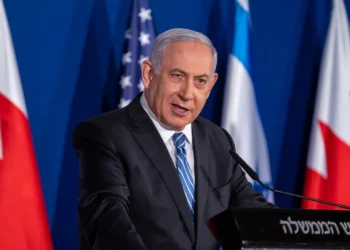
Israeli Prime Minister Benjamin Netanyahu welcomed the arrangement, saying it represented a significant achievement for Israel.
Netanyahu said Israeli forces would remain in the security zone in southern Lebanon until Hezbollah is disarmed and no longer presents what Israel considers a security threat.
Tags: United States, Iran, Strait of Hormuz, Donald Trump, U.S. Central Command, JD Vance, Israel, Lebanon, Hezbollah, International Maritime Organization, Maritime Security, Middle East