NEW YORK – Declining energy costs lift many sectors, but continued weakness in artificial intelligence shares limits broader market gains.
U.S. stocks finished Friday with mixed results as easing oil prices supported much of the market, while renewed selling in artificial intelligence-related companies prevented the major indexes from extending recent gains.
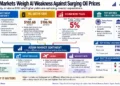
The S&P 500 closed little changed, slipping less than 0.1% to 7,354.02 and recording only its second weekly decline in the past 13 weeks. The Dow Jones Industrial Average fell 44.51 points, or 0.1%, to 51,876.11, while the Nasdaq Composite lost 60.99 points, or 0.2%, ending at 25,297.62.

Although a majority of stocks within the S&P 500 advanced, losses among some of Wall Street’s largest artificial intelligence companies continued to outweigh gains elsewhere because of their significant influence on the broader indexes.
Lower Oil Prices Support Broader Market
Investor sentiment improved after Brent crude, the international oil benchmark, declined 3.8% to $72.60 per barrel, falling below levels seen before military escalation involving Iran disrupted global energy markets.
Lower fuel prices benefited transportation companies and businesses with significant operating costs tied to energy consumption. American Airlines Group rose 1.7% as investors anticipated reduced fuel expenses.
Treasury yields also eased alongside oil prices, providing additional support for equities.
The yield on the 10-year U.S. Treasury note declined to 4.37% from 4.40% on Thursday.


Healthcare Sector Leads Market Gains
Healthcare companies ranked among the strongest performers after a committee of the European Medicines Agency recommended approval of several medicines and expanded therapeutic indications for additional treatments.
Eli Lilly posted one of the market’s strongest gains, climbing 7.1% following recommendations that included one of the company’s medicines.
The advance helped offset weakness in other sectors, though it was not enough to overcome declines among heavyweight technology shares.
AI Stocks Continue to Face Selling Pressure
Artificial intelligence-related companies remained under pressure as investors questioned whether future earnings growth can justify the substantial gains many of the stocks have experienced over the past year.
Micron Technology led declines within the S&P 500, falling 6.7%. The memory-chip manufacturer has been one of the year’s strongest performers as demand for AI hardware increased dramatically.
Investor concerns intensified after Apple announced higher prices for laptops and other products, citing increased memory costs. The development raised fears that rising component prices could eventually weaken consumer demand.
SpaceX Shares Swing During Volatile Trading
SpaceX experienced another volatile trading session following its highly anticipated public debut earlier this month.
The stock initially dropped as much as 2.9% before reversing course and briefly gaining 3.5%. It ultimately finished the session with a modest increase of 0.2%.
The company has attracted strong investor interest because, in addition to its space operations, it also owns Elon Musk’s artificial intelligence venture, xAI.
ON Semiconductor Posts Sharpest Decline
The steepest loss within the S&P 500 came from ON Semiconductor, whose shares tumbled 23.7% after announcing an agreement to acquire Synaptics in an all-stock transaction valued at approximately $7 billion.
The deal weighed heavily on the company’s shares despite broader optimism surrounding semiconductor demand.
Inflation Expectations Ease
Bond markets also reacted to fresh economic data showing U.S. consumers expect inflation over the next year to ease slightly.
A report indicated inflation expectations declined to 4.6% from 4.8% in May. While still elevated, the lower reading suggested some moderation in price expectations, potentially reducing concerns about a prolonged inflation cycle.
Lower Treasury yields generally support stock valuations, although expensive growth companies—particularly those benefiting from the AI boom—remain sensitive to changing interest rate expectations.
Asian Markets Decline on AI Weakness
The weakness in AI-related stocks extended into Asia.
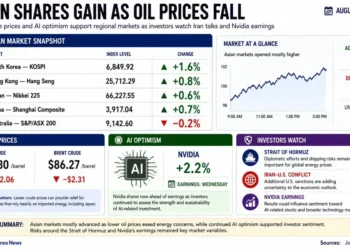
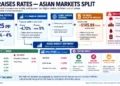
Japan’s Nikkei 225 index fell 4.2%, led by a 12.5% decline in SoftBank Group, a major investor in OpenAI. Investor sentiment weakened following a report that OpenAI is considering postponing its planned initial public offering until next year.
In South Korea, SK Hynix declined 8.4% while Samsung Electronics lost 5.3%, contributing to a 5.8% drop in the Kospi index.
The broad pullback reflected growing investor caution toward high-growth technology companies after months of exceptional gains driven by enthusiasm surrounding artificial intelligence.
Tags: Wall Street, S&P 500, Nasdaq Composite, Dow Jones Industrial Average, Artificial Intelligence, Micron Technology, Eli Lilly, Oil Prices, Treasury Yields, Global Markets