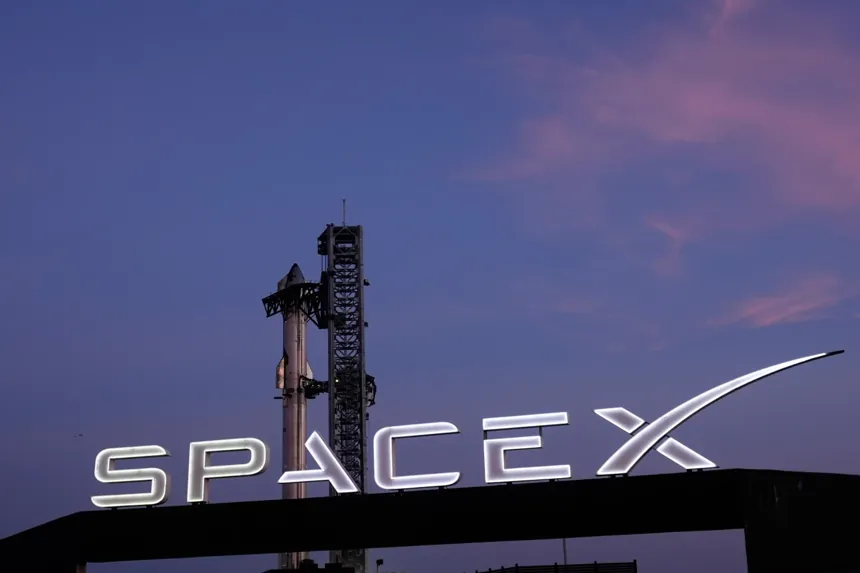
NEW YORK — SpaceX is set to begin trading on Wall Street Friday in what could become the largest initial public offering in history, marking a major milestone for Elon Musk’s aerospace company and potentially pushing the billionaire entrepreneur into unprecedented financial territory.
Investors purchased 555.6 million shares at $135 each ahead of the debut, generating approximately $75 billion in proceeds and positioning the company among the most valuable businesses ever to go public.
According to Forbes estimates cited in the source material, Musk entered the offering with a net worth of roughly $981 billion. A strong market debut could make him the world’s first trillionaire.

Capital Raise Supports Ambitious Expansion Plans
The public offering comes as SpaceX pursues an aggressive expansion strategy that extends far beyond its current launch and satellite businesses.
During a discussion on his social media platform X with JPMorgan Chase CEO Jamie Dimon, Musk said the company requires significant new capital to fund plans for deploying approximately 100,000 next-generation Starlink satellites and building artificial intelligence-related infrastructure in orbit.
Musk described space-based data centers as a major future growth opportunity that will require substantial investment over the coming years.
The company’s broader long-term objectives include supporting human missions to Mars and eventually establishing a permanent settlement on the planet. SpaceX has tied portions of Musk’s future compensation to achieving milestones related to creating a self-sustaining Martian colony.
Public Markets Bring New Scrutiny
While the IPO provides access to a larger pool of capital, it also introduces new obligations associated with being a publicly traded company.
■ Related News




SpaceX will now be subject to regular financial reporting requirements and increased oversight from investors and regulators. Public companies are generally required to provide detailed disclosures regarding financial performance, operational risks and corporate governance.
Critics of quarterly reporting requirements argue that such disclosures can encourage excessive focus on short-term results rather than long-term innovation and strategic planning.
At the same time, transparency requirements could provide investors with a clearer view into SpaceX’s operations and financial condition than was available while the company remained privately held.
Musk Maintains Tight Control
Despite becoming a public company, SpaceX’s governance structure will leave Musk with substantial authority over corporate decisions.
The company has created a special class of voting shares that grants Musk majority control over key strategic, financial and management matters. The arrangement effectively allows him to maintain significant influence over the company even after selling shares to public investors.
In regulatory disclosures, SpaceX described Musk as a central factor in the company’s growth and innovation. The company also acknowledged that replacing him would be difficult and could affect business performance, customer relationships and long-term strategy.
Wedbush Securities analyst Dan Ives summarized the dynamic by stating that Musk and SpaceX remain closely intertwined from an investor perspective.
Governance Concerns Draw Criticism
Not all investors are comfortable with the company’s governance structure.
Representatives of major public pension funds in California and New York have expressed concerns about several provisions included in the IPO, including enhanced voting rights, arbitration requirements for shareholder disputes and Musk’s extensive control over company affairs.
The concerns are particularly relevant because pension funds and institutional investors may eventually gain exposure to SpaceX through index funds that automatically purchase shares when companies are added to major market benchmarks.
Critics argue that concentrated voting power can limit shareholder influence and reduce accountability.
Starship Seen as Critical to Future Growth
A major component of SpaceX’s long-term strategy depends on the successful development of Starship, the company’s next-generation reusable rocket system.
Currently undergoing testing, Starship is expected to play a central role in reducing launch costs and enabling more frequent missions.
The company has indicated that delays or setbacks involving the program could affect plans to deploy additional satellites, expand space-based infrastructure and serve future customers.
Industry observers widely view reusable rocket technology as one of SpaceX’s key competitive advantages, helping the company establish a leading position within the commercial space sector.
AI Ambitions Add New Growth Narrative
SpaceX’s prospectus also highlights artificial intelligence as a potentially significant future business opportunity.
The company believes AI-related services could become one of its largest addressable markets, particularly following the merger of its xAI business earlier this year.
However, company filings also acknowledge that the AI segment currently lacks a clear path to profitability and faces intense competition from established technology firms and AI developers.
As with many companies investing heavily in artificial intelligence, investors will be watching closely for evidence that spending can eventually translate into sustainable earnings growth.
Index Inclusion Could Drive Demand
Wall Street is paying close attention to the IPO not only because of its size but also because of the potential impact on major stock indexes.
If SpaceX maintains its valuation after trading begins, it could become eligible for inclusion in the Nasdaq 100 relatively quickly under recently revised Nasdaq rules.
Entry into the index could trigger automatic purchases from investment funds that track the benchmark, including large exchange-traded funds that collectively manage hundreds of billions of dollars.
In contrast, inclusion in the S&P 500 would likely take longer because the index maintains stricter eligibility requirements, including a longer trading history before new entrants can be considered.
Market Outlook
SpaceX’s debut represents one of the most closely watched public offerings in recent years and may serve as a test of investor appetite for large-scale technology and artificial intelligence-related companies.
The company’s future performance will depend on its ability to execute ambitious plans involving reusable rockets, satellite networks, AI infrastructure and deep-space exploration.
For investors, the offering provides access to one of the world’s most recognizable private companies. For SpaceX, it marks the beginning of a new chapter under the heightened scrutiny and expectations that come with life as a public company.
Tags: SpaceX, Elon Musk, IPO, Wall Street, Nasdaq, Starlink, Artificial Intelligence, Space Industry, Investing, Capital Markets