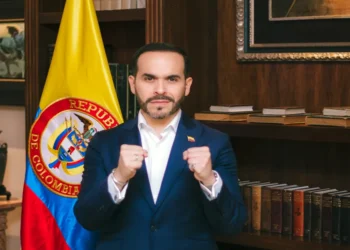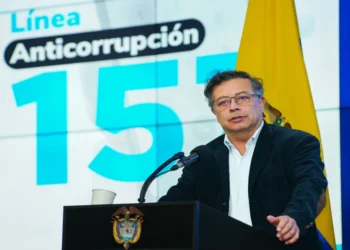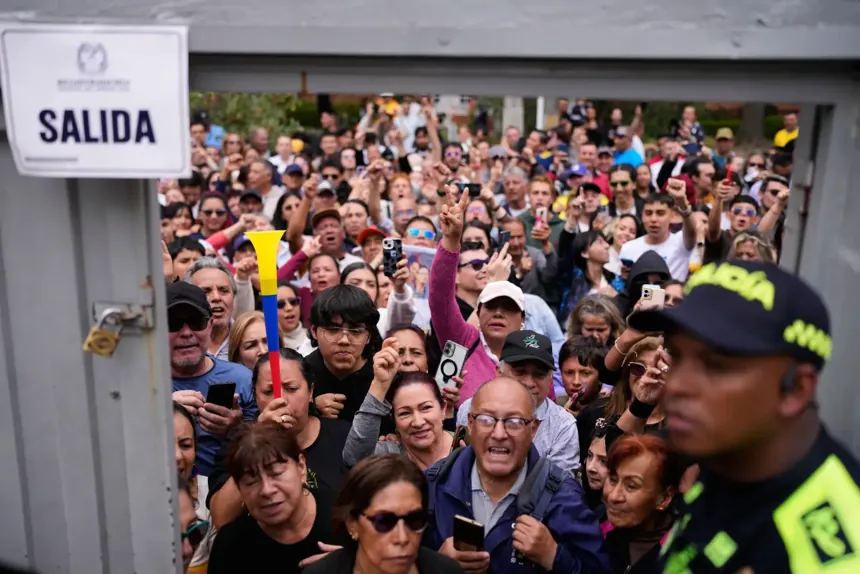
Colombians headed to the polls Sunday to choose a successor to President Gustavo Petro in a closely watched presidential election that could shape the country’s approach to security, peace negotiations and economic policy for years to come. Images from across the South American nation captured voters casting ballots, candidates participating in the electoral process and security forces deployed to safeguard polling stations.
The election was widely viewed as a referendum on Petro’s presidency and his efforts to pursue negotiations with armed groups under a policy known as “total peace.” Voters were asked to decide between competing visions for addressing rising insecurity, ongoing conflict and broader economic challenges facing the country.
Security Presence Reflects Election Tensions
Photographs from polling centers showed armed guards and police officers monitoring voting locations as citizens cast ballots across Colombia. The visible security presence reflected concerns about political violence and attacks by illegal armed groups that have intensified in some regions ahead of the election.

Authorities had increased security measures before the vote amid warnings that violence could affect turnout, particularly in conflict-affected areas where armed organizations continue to operate despite previous peace agreements.
Candidates Cast Ballots Across the Country
Among those photographed participating in the election were presidential candidates Iván Cepeda, Abelardo de la Espriella and Paloma Valencia. Images showed candidates greeting supporters and voting in their respective regions as Colombians awaited the outcome of one of the country’s most consequential elections in recent years.
The race highlighted sharply different approaches to governance and security. Cepeda, an ally of Petro, campaigned on continuing negotiations with armed groups, while de la Espriella advocated a tougher law-and-order strategy. Valencia represented a more traditional conservative platform focused on economic and security reforms.
Election Results Point to Runoff Contest
As vote counting progressed, election authorities reported that de la Espriella and Cepeda emerged as the leading candidates, setting up a runoff election later in June after neither secured enough votes to win outright in the first round. Preliminary results showed de la Espriella leading the field, with Cepeda close behind.
Images from campaign headquarters in Bogotá captured supporters watching projected results and reacting as the runoff picture became clearer. The photographs illustrated both the political stakes of the election and the deep divisions among voters over how to address Colombia’s security challenges and future direction.



A Defining Moment for Colombia
The election comes nearly a decade after Colombia’s landmark peace agreement with the Revolutionary Armed Forces of Colombia (FARC), a deal that raised hopes of ending decades of conflict. However, renewed violence in several regions has become a central issue in national politics and a major concern for voters.
The Associated Press photo gallery documented scenes of democratic participation from across the country, portraying voters, candidates and election officials during a pivotal day in Colombia’s political calendar. The images also highlighted the atmosphere of uncertainty and anticipation as Colombians selected the candidates who will compete for the presidency in the upcoming runoff vote.