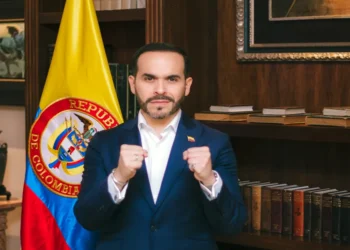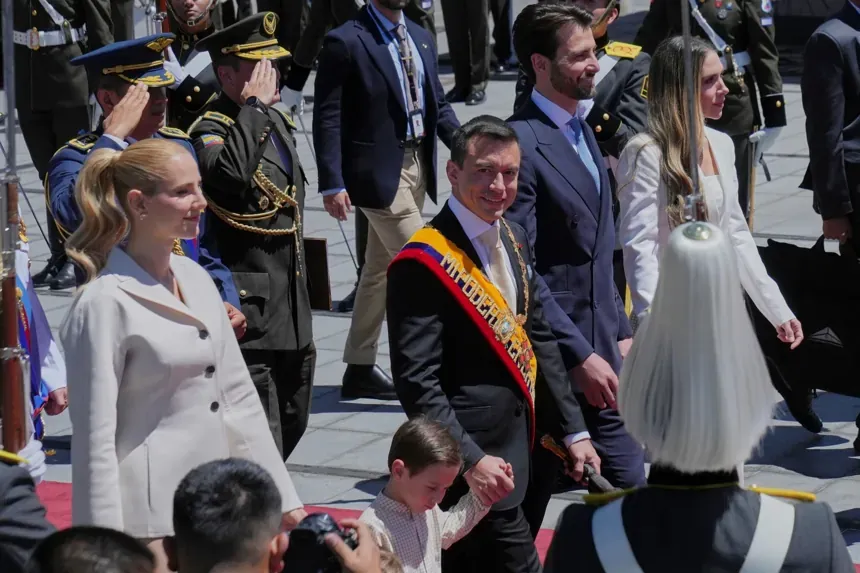
Ecuadorian President Daniel Noboa defended his government’s US-backed security strategy and pledged to intensify operations against criminal networks during his State of the Nation address in Quito.
Speaking before Ecuador’s National Assembly, Noboa highlighted the extradition of major gang leaders to the United States and the seizure of nearly 300 tons of narcotics as evidence of what he described as a decisive campaign against organized crime. He said the government would continue pursuing and extraditing wanted criminals as part of broader efforts to restore public security.
“We will seek them out, find them and extradite them,” Noboa said during the speech, arguing that Ecuador cannot achieve economic stability while citizens live under the threat of gang violence.

Ecuador’s Security Crisis Deepens
Ecuador has experienced a dramatic rise in violence since 2021 as transnational drug trafficking groups and local gangs compete for control of smuggling routes connecting neighboring Colombia and Peru, the world’s leading cocaine-producing countries.
Government figures cited in international reports showed Ecuador recorded a homicide rate of roughly 50 killings per 100,000 residents in 2025, one of the highest levels in Latin America. Criminal organizations have expanded influence across prisons, ports, and major cities, turning the country into a key transit corridor for cocaine shipments headed toward North America and Europe.
In response, Noboa has relied heavily on emergency security measures, including military deployments, warrantless property searches, curfews, and joint operations between armed forces and police units. Analysts said the strategy reflects a broader regional trend toward militarized anti-crime campaigns.
US Cooperation Expands in Anti-Drug Campaign
A major focus of Noboa’s speech involved Ecuador’s expanding security cooperation with the United States.
Earlier this year, Ecuadorian and US forces conducted joint operations targeting alleged drug trafficking camps near the Colombian border. According to international reports, the cooperation included intelligence sharing, logistics support, military training, and coordinated operations involving helicopters, drones, and naval assets.



Noboa has openly requested greater international involvement in Ecuador’s anti-cartel campaign and previously urged Washington to classify Ecuadorian criminal organizations as terrorist groups. US support has increasingly positioned Ecuador as a key regional partner in Washington’s broader anti-narcotics strategy across Latin America.
Diplomatic observers noted that the growing partnership also reflects wider geopolitical interests, including US concerns over transnational organized crime, migration, and strategic influence in the region.
Critics Warn of Human Rights Risks
Despite government claims of progress, civil society organizations and international analysts have questioned the effectiveness and legality of Ecuador’s aggressive security measures.
Human rights groups accused security forces of abuses including forced disappearances, arbitrary detentions, torture, and extrajudicial killings during anti-crime operations. Critics argued that militarization has placed civilians at greater risk while failing to significantly reduce violence levels nationwide.
Glaedys González of the International Crisis Group said the government’s optimistic narrative did not fully reflect the country’s deteriorating security environment. Analysts noted that organized criminal groups continue to maintain strong influence despite intensified military operations.
Recent reports also indicated that Ecuador remains one of the most violent countries in the region, with gang-related killings, disappearances, and prison unrest continuing across several provinces.
Noboa Highlights Economic Improvements
Alongside security issues, Noboa promoted what he described as signs of economic recovery.
The president told lawmakers that poverty levels declined from 26% to 21.4% in 2025, while extreme poverty reportedly dropped from 10.4% to 8.4%. Government officials said fiscal stabilization and security operations were intended to improve investor confidence and support long-term economic growth.
However, economists and opposition critics argued that many Ecuadorians continue to face unemployment, rising insecurity, and weak public services despite official claims of improvement.
Noboa first came to power in 2023 following a snap election and later secured a full four-year term after winning reelection in 2025. His presidency has become increasingly defined by the fight against organized crime and Ecuador’s growing alignment with US-led regional security initiatives.