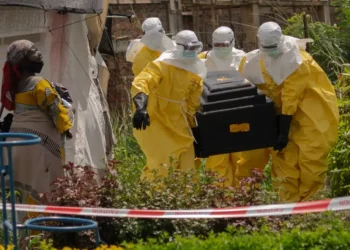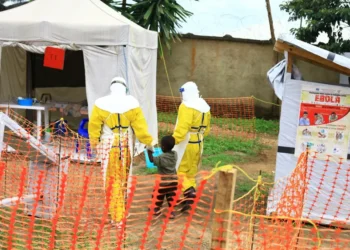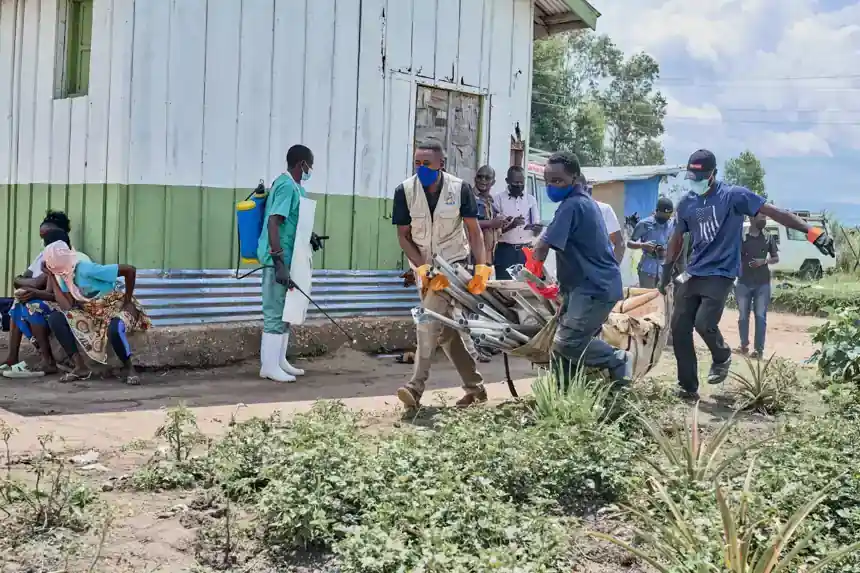
The World Health Organization has raised alarm over the accelerating spread of a rare Ebola outbreak in eastern Democratic Republic of Congo, where authorities say at least 134 people have died and more than 500 suspected cases have been identified in one of the region’s most fragile conflict zones.
WHO Director-General Tedros Adhanom Ghebreyesus said the agency is “deeply concerned” about the “scale and speed” of the outbreak, which involves the rare Bundibugyo strain of Ebola — a variant for which no approved vaccines or treatments currently exist. The outbreak has already spread into urban centers and crossed borders into neighboring Uganda, increasing fears of wider regional transmission.
Rare Ebola Strain Complicates Response
Health officials said the virus circulated undetected for weeks after early laboratory testing focused on the more common Zaire strain of Ebola and repeatedly returned negative results. According to international health experts, the delayed identification significantly slowed containment efforts during the outbreak’s early stages.

The Bundibugyo strain has historically been far less common than other Ebola variants and lacks licensed vaccines or approved antiviral treatments. WHO officials said experimental vaccines and therapies are being evaluated, but broad deployment could take months due to limited manufacturing and testing capacity.
Authorities confirmed that the outbreak is centered in Ituri province near the Ugandan border, although suspected infections have also been reported in North Kivu, an area heavily affected by armed conflict and displacement. The WHO has declared the outbreak a Public Health Emergency of International Concern, triggering an international coordination response.
Urban Transmission Raises Global Concern
Health officials expressed particular concern over the appearance of confirmed cases in urban areas, including Uganda’s capital Kampala, where two infections linked to travel from Congo were identified.
Tedros warned that significant population movement, regional instability, and infections among healthcare workers could accelerate transmission. WHO data indicates several healthcare workers have died after treating infected patients in eastern Congo, highlighting serious gaps in infection-control systems.
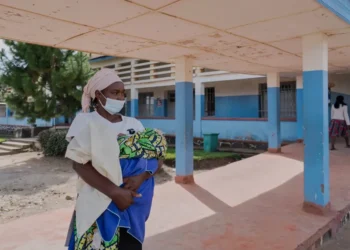
Aid organizations including Doctors Without Borders, UNICEF, and the Red Cross have expanded emergency operations in affected regions, although treatment centers are reportedly struggling to manage the growing number of suspected cases.
■ Related News



International health experts also warned that the actual scale of infections could be significantly larger than official figures due to limited laboratory capacity and difficult access to remote communities. WHO currently has only limited Bundibugyo testing capability available in the region.
Conflict and Funding Challenges Hamper Containment
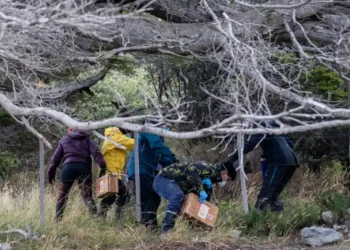
Containment efforts are being complicated by ongoing insecurity in eastern Congo, where armed rebel groups continue operating across several affected areas. Aid agencies said humanitarian access remains restricted in some districts, slowing medical response and surveillance operations.
Public health officials have also warned that international funding shortfalls are undermining outbreak preparedness and emergency response capacity. Reuters reported that recent reductions in global health funding have weakened disease surveillance systems and delayed emergency mobilization efforts.
Despite concerns, WHO officials said the outbreak does not currently meet the criteria for a pandemic-level emergency, though neighboring countries remain at elevated risk because of cross-border movement and trade links.
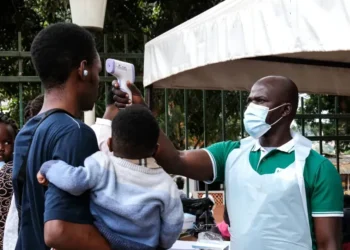
Authorities in Congo, Uganda, and international health agencies continue expanding border monitoring, contact tracing, and isolation efforts as researchers race to contain the outbreak before wider regional spread occurs.