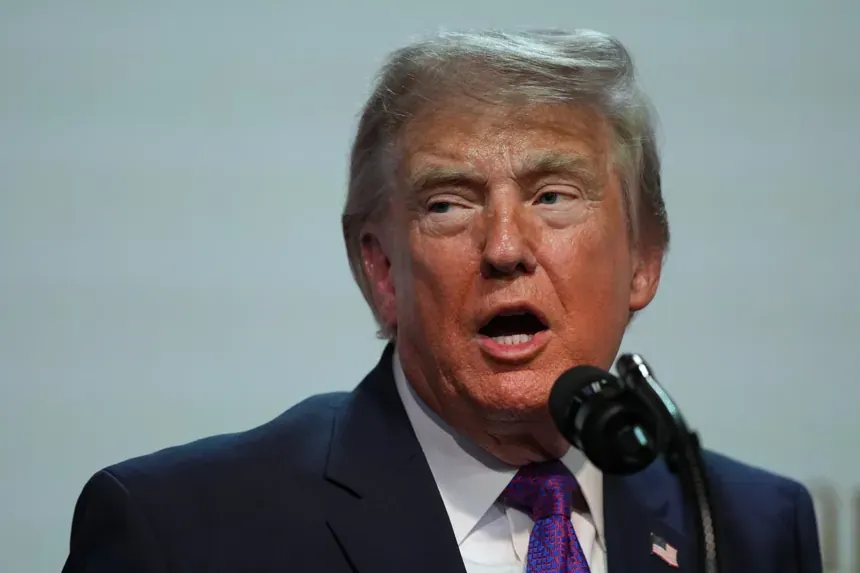
The U.S. government has agreed to permanently halt certain tax claims and examinations involving President Donald Trump, his family members and affiliated business entities as part of a broader settlement resolving Trump’s $10 billion lawsuit against the Internal Revenue Service over leaked tax returns.
The agreement, disclosed through Justice Department filings, marks an unusual intervention into federal tax enforcement and has triggered criticism from legal experts, former tax officials and Democratic lawmakers over the scope of executive authority involved. According to settlement documents, the government is “forever barred and precluded” from pursuing existing tax matters tied to Trump, his sons and the Trump Organization related to filings made before the agreement took effect.
The settlement centers on litigation filed after former IRS contractor Charles Littlejohn leaked confidential tax records connected to Trump and other wealthy Americans. Littlejohn previously pleaded guilty in federal court and was sentenced to prison in 2024, according to court records and prior reporting.

Beyond ending the lawsuit, the deal also establishes a nearly $1.776 billion “Anti-Weaponization Fund,” which administration officials said is intended to compensate individuals who claim they were unfairly targeted through politically motivated investigations or prosecutions.
Legal and regulatory concerns intensify
The broadened settlement has intensified scrutiny because of its implications for IRS independence and federal oversight standards.
According to documents signed by Acting Attorney General Todd Blanche, the agreement prevents the government from reopening or pursuing tax matters that “were raised or could have been raised” involving Trump-related entities before the settlement date.
Former IRS commissioners and tax policy specialists have questioned whether such an arrangement creates precedent for political interference in tax administration. Critics argue that shielding past tax examinations through executive settlement mechanisms could weaken institutional independence within federal enforcement agencies.
The Justice Department has maintained that the agreement lawfully resolves litigation exposure tied to the disclosure of confidential taxpayer information. Under separate settlement terms, Trump will receive a formal government apology but no direct monetary compensation.


Fiscal and governance implications
The creation of the compensation fund has also drawn broader governance concerns because of its size and oversight structure.
Administration officials said individuals who believe they were harmed through “weaponized” investigations may apply for compensation. However, lawmakers and ethics groups have criticized the fund’s transparency provisions and questioned how awards will be reviewed or disclosed publicly.
The fund’s value — approximately $1.776 billion — makes it one of the largest politically linked federal compensation structures announced outside traditional congressional appropriations frameworks. Analysts noted that the arrangement could face future constitutional or judicial challenges regarding executive authority and federal claims administration.
The settlement also arrives amid heightened political and regulatory debate over the independence of federal agencies, including the IRS and Justice Department, during a period of elevated scrutiny surrounding executive power and enforcement discretion in Washington.
Market and institutional implications
While the agreement does not directly affect financial markets, governance analysts said it could influence broader discussions surrounding institutional credibility, regulatory independence and political risk in the United States.
Legal experts noted that perceptions of weakened enforcement consistency can affect investor confidence in regulatory systems, particularly in sectors dependent on predictable federal oversight and compliance standards.
The case also underscores growing tensions between executive authority and administrative agencies at a time when corporate America continues to monitor regulatory stability across tax, antitrust and financial enforcement policy.