A surge in cartel violence in southern Mexico is forcing hundreds of Indigenous families to abandon their homes, exposing what humanitarian groups describe as an increasingly severe but underreported displacement crisis. The violence, centered in the conflict-ridden state of Guerrero, has intensified after criminal organizations used drones carrying explosives and heavy weapons against remote rural communities.
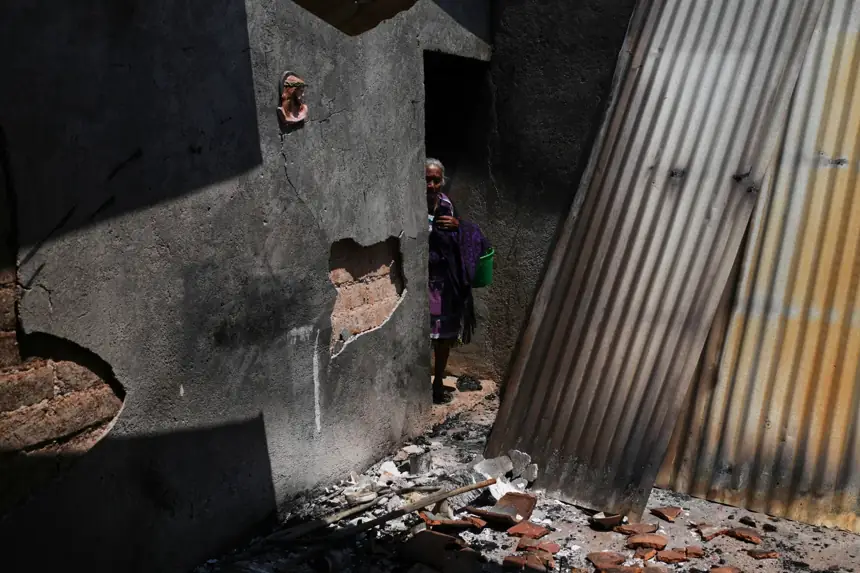
Residents from mountainous Indigenous villages said they fled under cover of darkness after armed attacks and aerial bombings destroyed homes and triggered panic across the region. According to Associated Press reporting, families escaped into nearby mountains or sought temporary refuge in public shelters, churches and neighboring towns with little access to food, medical care or government support.
Human rights organizations linked the violence to the criminal group Los Ardillos, which has been battling rival factions and community self-defense forces for territorial control in Guerrero. Community leaders said the attacks targeted villages associated with Indigenous self-defense groups that emerged after years of insecurity and weak state presence.

Indigenous Communities Face Growing Security Threats
The violence has disproportionately affected Náhuatl Indigenous communities living in isolated mountain regions where state institutions have historically had limited presence. Community organizations estimated that between 800 and 1,000 families may have been displaced in recent weeks, though official government figures remain substantially lower.
Videos circulating on social media reportedly showed women and children pleading for assistance as gunfire and explosions echoed through nearby villages. Witnesses described attacks involving improvised explosive devices dropped from drones — a tactic increasingly associated with organized criminal groups in Mexico.
Analysts said the use of drones demonstrates how cartel groups are adopting more sophisticated methods traditionally associated with armed conflict zones. Security experts warned that these tactics are complicating efforts by rural communities to defend themselves and deepening instability in already vulnerable regions.
Displacement Crisis Remains Largely Uncounted
Humanitarian groups have described forced displacement in Mexico as an “invisible crisis” because the country lacks a comprehensive national registry for internally displaced people. According to international and local rights organizations, many victims receive little long-term support after fleeing violence.
Recent academic studies cited by international reports suggested that nearly 250,000 Mexican households may have fled violence within a single year, highlighting the widening gap between official statistics and independent estimates. Experts noted that displacement linked to organized crime has expanded beyond isolated incidents into a broader national humanitarian issue.
■ Related News




Community leaders in Guerrero accused authorities of failing to provide adequate protection despite repeated warnings about escalating cartel activity. Some organizations also alleged that security deployments arrived only after communities had already been emptied by violence.
Mexico’s Security Strategy Under Pressure
The crisis is unfolding as Mexican President Claudia Sheinbaum’s administration continues a broader anti-cartel campaign under growing domestic and international scrutiny. Mexico has intensified military and National Guard deployments in several regions following recent waves of cartel violence and retaliatory attacks.
Authorities recently announced the deployment of more than 1,000 security personnel to parts of Guerrero affected by the latest violence. Government statements said officials were providing food, medical aid and security assistance to displaced residents while attempting to stabilize affected communities.
However, human rights groups warned that militarized responses alone may not resolve the underlying causes of displacement, including poverty, corruption and criminal control over rural territories. Indigenous organizations across Latin America have increasingly called for international attention to the growing intersection of organized crime, forced migration and Indigenous rights violations.
Regional Stability Concerns Expand
The displacement crisis in Guerrero reflects broader concerns over cartel influence across parts of Mexico, where organized criminal groups continue competing for control of trafficking corridors, extortion networks and local political influence. Analysts warned that sustained instability could further weaken public trust in state institutions and intensify migration pressures both within Mexico and toward the United States.
Security researchers also noted that Guerrero has long been one of Mexico’s most volatile states due to overlapping criminal conflicts, weak governance and deep social inequalities. Indigenous villages in the region have increasingly relied on community militias for protection as violence escalates.
For many displaced families, however, the immediate concern remains survival and uncertainty over whether returning home will ever be possible.