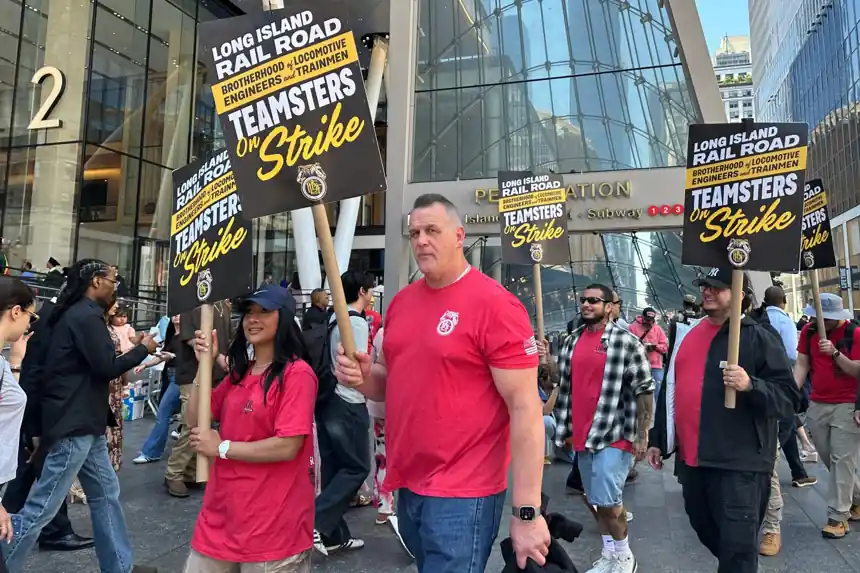
North America’s busiest commuter rail system shut down on Saturday after thousands of workers on New York’s Long Island Rail Road (LIRR) launched a strike following failed contract negotiations with transport authorities. The disruption has halted service for hundreds of thousands of passengers and intensified concerns over economic and infrastructure pressures in the United States ahead of the Memorial Day travel period.
The strike involves approximately 3,500 workers represented by five unions, including engineers, machinists and signal operators, according to union officials and reports from Reuters and Associated Press. The walkout marks the first major strike on the LIRR in more than three decades and has suspended operations across the commuter network connecting New York City with Long Island suburbs.
The Metropolitan Transportation Authority (MTA), which operates the rail line, said negotiations continued until shortly before the strike deadline but failed to produce an agreement on wages and benefits. Union representatives argued that workers had gone several years without sufficient pay increases while inflation continued to erode purchasing power.

Economic Pressure Expands Across New York Region
Transport analysts warned that the shutdown could trigger severe traffic congestion and broader economic disruption across the New York metropolitan region. The LIRR normally carries close to 300,000 passengers daily, making it one of the most critical commuter systems in North America.
State officials urged commuters to work remotely where possible, while limited shuttle bus services were introduced for essential workers. However, transportation experts noted that replacement services would be unable to absorb normal commuter volumes. Community discussions on transit forums also reflected concerns about gridlock and overcrowding on alternative routes.
The strike comes during a period of heightened pressure on urban transport systems in several major economies, where labor disputes have increasingly intersected with inflation concerns and post-pandemic commuting shifts. Analysts said the dispute highlights broader tensions between public-sector budget constraints and union wage demands in large metropolitan regions.
Political Fallout Intensifies
The labor dispute has also generated political tensions at both state and federal levels. New York Governor Kathy Hochul called for renewed negotiations and warned that a prolonged shutdown could significantly affect regional commerce and mobility.
Meanwhile, former US President Donald Trump criticized state leadership over the failed negotiations, while unions argued that recommendations from federal mediation efforts had not been fully implemented. Reports indicated that earlier intervention attempts by federal authorities failed to secure a compromise before the strike deadline.
■ Related News




The dispute is unfolding as political leaders face increasing scrutiny over infrastructure reliability and the rising cost of living. Economists warned that an extended shutdown could affect businesses, sporting events and regional tourism, especially with major public gatherings scheduled in New York City during the holiday period.
Regional Transport Stability Under Scrutiny
Transport specialists said the strike may influence future labor negotiations across other US transit systems, particularly as unions seek stronger wage protections against inflation. The shutdown also renewed debate over the resilience of commuter infrastructure in one of the world’s largest urban economies.
Union officials stated that the strike would remain in place until a revised agreement is reached, while the MTA said further negotiations were expected in the coming days.