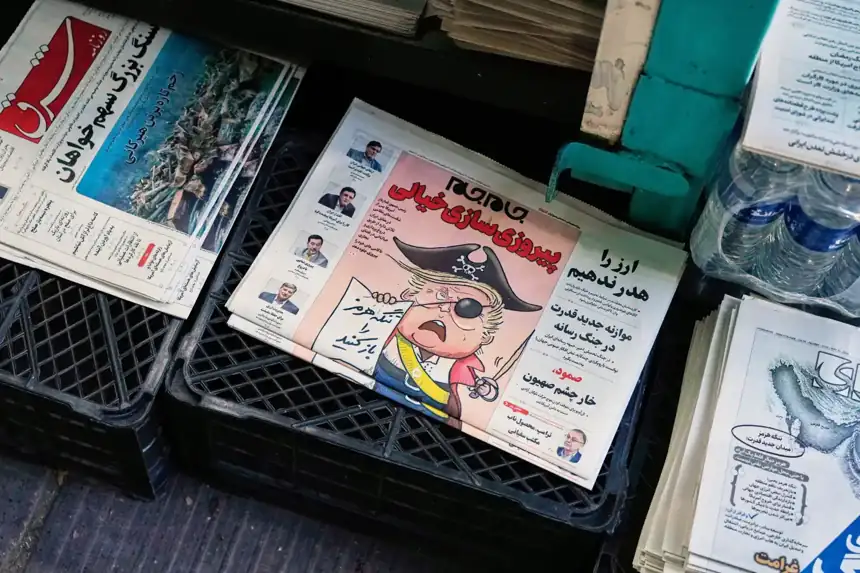
Efforts to secure a ceasefire between the United States and Iran suffered a major setback after President Donald Trump rejected Tehran’s latest response to a U.S.-backed peace proposal, raising new concerns over regional stability and global energy security in the Persian Gulf. Iranian officials transmitted their response through Pakistani mediators on Sunday, but Trump dismissed the proposal as “TOTALLY UNACCEPTABLE!” in a social media post without providing further details.
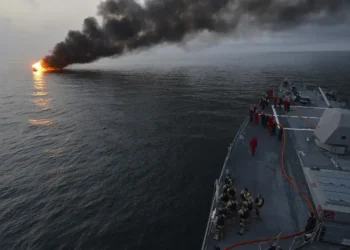
The diplomatic impasse comes as ongoing military tensions around the Strait of Hormuz continue to disrupt international shipping lanes and place pressure on global oil markets. The strategic waterway, through which a significant portion of the world’s crude exports pass, has remained partially restricted amid clashes involving U.S., Iranian, and allied regional forces.
Iranian state media indicated that Tehran’s response rejected elements of the U.S. proposal viewed as equivalent to capitulation, instead demanding war reparations, the lifting of sanctions, and recognition of Iranian authority over security operations in the Strait of Hormuz. The proposal also reportedly called for the release of frozen Iranian assets and broader negotiations aimed at ending conflict across multiple regional fronts, including Lebanon.

Reuters reported that Iran’s position emphasized a phased diplomatic process focused initially on halting military operations and restoring maritime access before broader discussions over Tehran’s nuclear activities. Washington’s proposal, by contrast, reportedly sought long-term restrictions on uranium enrichment and expanded oversight of Iran’s nuclear infrastructure.
Diplomatic Pressure Intensifies Across the Gulf
The failed exchange has heightened concerns among Gulf states already facing escalating security threats linked to drone activity and maritime disruptions. Authorities in Qatar, the United Arab Emirates, and Kuwait reported aerial security incidents over recent days, including drone interceptions and attacks targeting commercial shipping routes.
Regional governments have increasingly pushed for de-escalation, fearing prolonged instability could further damage trade, energy exports, and investor confidence. Analysts interviewed by international media outlets noted that Gulf Arab nations are attempting to avoid deeper involvement while simultaneously strengthening air defense coordination and maritime surveillance.
Pakistan and Qatar have continued to play intermediary roles in the negotiations, maintaining communication channels between Washington and Tehran despite repeated military exchanges in recent weeks. Diplomatic observers say the continued existence of indirect talks suggests neither side has fully abandoned the possibility of a negotiated settlement.
Strategic Stakes Rise Over Strait of Hormuz
The dispute over access to the Strait of Hormuz remains central to negotiations, reflecting the broader geopolitical struggle shaping the conflict. Iran has sought guarantees regarding shipping sovereignty and sanctions relief, while the United States and its allies continue pressing for long-term restrictions on Iran’s nuclear capabilities and regional military operations.
■ Related News


The confrontation has already contributed to volatility in global energy markets, with shipping insurers raising rates and commercial operators rerouting vessels to reduce exposure to military risks. Reuters previously reported that fuel prices have risen sharply since the conflict intensified earlier this year, adding pressure on major importing economies across Europe and Asia.
Israeli Prime Minister Benjamin Netanyahu has also signaled that military objectives remain incomplete, particularly regarding Iran’s uranium stockpiles and missile infrastructure. Tehran, meanwhile, has maintained that its nuclear facilities remain operational and defended under heightened military readiness.
International Mediation Faces Uncertain Path Forward
Despite the breakdown in the latest ceasefire effort, international diplomatic activity surrounding the conflict continues. Russia has floated proposals involving oversight of Iran’s enriched uranium stockpiles, while European governments are discussing expanded maritime security initiatives aimed at protecting shipping traffic through the Gulf.
Iran has warned against foreign naval deployments it views as escalatory, particularly a proposed French-British maritime initiative in the Strait of Hormuz. Western governments argue such missions are necessary to maintain commercial navigation and regional stability amid persistent threats to civilian shipping.
The current diplomatic deadlock leaves uncertainty over whether the conflict can be contained through negotiation or whether renewed military escalation could further destabilize one of the world’s most strategically significant energy corridors. International mediators are expected to continue efforts in the coming days as pressure mounts to prevent broader regional fallout.