China is intensifying diplomatic engagement over the Iran conflict days before a closely watched summit between U.S. President Donald Trump and Chinese President Xi Jinping, underscoring Beijing’s growing effort to present itself as a stabilizing force in the Middle East amid escalating geopolitical tensions.
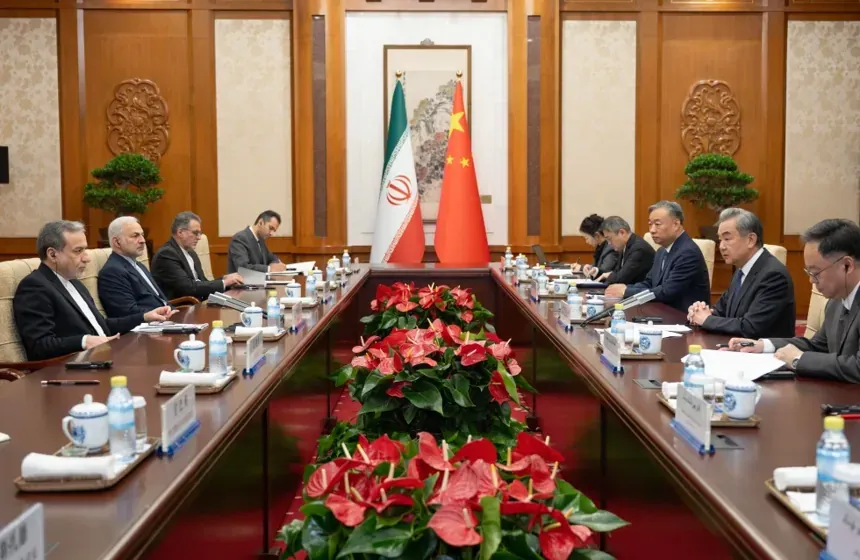
Chinese Foreign Minister Wang Yi hosted Iranian Foreign Minister Abbas Araghchi in Beijing this week, where Chinese officials called for a “comprehensive ceasefire” and renewed diplomatic negotiations tied to the ongoing Iran war. Reporting from Associated Press indicated that Beijing is seeking a larger behind-the-scenes role in mediation efforts while avoiding direct alignment with either Washington or Tehran.
The diplomatic activity comes as Trump prepares for a state visit to Beijing scheduled for May 14–15, the first U.S. presidential visit to China in nearly a decade. Analysts say the Iran conflict has significantly raised the stakes for the summit, which was originally expected to focus primarily on trade tensions, Taiwan, and technology restrictions.

China has attempted to frame itself as a neutral actor advocating regional stability, while also protecting its strategic interests in Middle Eastern energy supplies. Beijing remains Iran’s largest oil customer, and disruptions in the Strait of Hormuz have already affected Chinese imports and broader global energy markets. Reuters reported that Chinese oil imports linked to Gulf shipping routes fell sharply during the conflict, increasing economic pressure on Beijing to support de-escalation measures.
Diplomatic Competition Intensifies
The evolving crisis has created a new arena of competition between Washington and Beijing over international influence and conflict mediation. While the Trump administration has continued sanctions pressure against Chinese firms tied to Iranian oil trade, China has emphasized diplomacy and ceasefire initiatives rather than military deterrence.
Beijing’s diplomatic posture also reflects broader strategic ambitions. Since brokering a Saudi Arabia-Iran rapprochement in 2023, China has increasingly promoted itself as an alternative diplomatic power capable of shaping negotiations in regions traditionally dominated by U.S. influence. Analysts cited by the Associated Press noted that China’s leadership sees the Iran conflict as an opportunity to reinforce its image as a predictable and stabilizing global actor.
At the same time, Chinese officials have avoided direct confrontation with Washington. Public statements from Beijing continue to stress sovereignty, non-interference, and multilateral negotiations, allowing China to preserve ties with Gulf Arab states while maintaining relations with Tehran.
Strategic Stakes Rise Ahead of Beijing Talks
The Iran war is expected to dominate discussions between Trump and Xi alongside trade disputes and Taiwan-related security concerns. According to Reuters and other international reporting, Washington is pressing Beijing to use its economic leverage over Iran to help stabilize the Strait of Hormuz and prevent further disruption to global shipping and energy markets.
■ Related News

The summit also arrives at a moment when both governments are attempting to stabilize increasingly strained bilateral relations. Chinese officials view the talks as an opportunity to reduce economic uncertainty and prevent further escalation in tariffs and sanctions, while the White House is seeking cooperation on Iran without easing broader strategic competition.
Despite expectations for limited concrete breakthroughs, the meeting is widely viewed by diplomats and analysts as one of the most consequential U.S.-China engagements since Trump returned to office. The overlap of Middle East instability, global energy insecurity, and renewed superpower rivalry has transformed the summit into a broader test of how Washington and Beijing manage competing visions for international order.