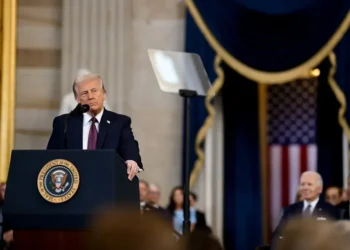
A renewed threat by U.S. President Donald Trump to reduce American troop levels in Germany has revived transatlantic tensions, raising questions about NATO cohesion and Europe’s long-term security posture.
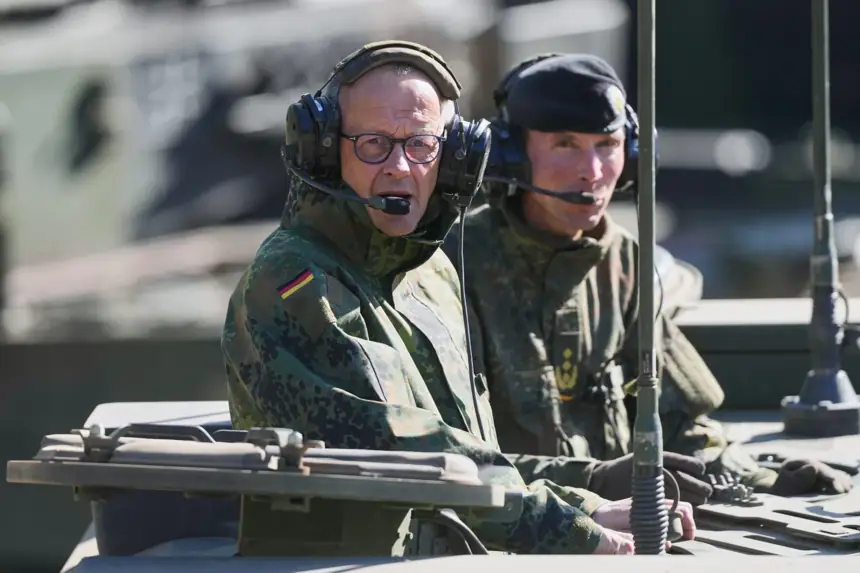
The warning follows a public dispute between Trump and German Chancellor Friedrich Merz, with Washington signaling it is reviewing the deployment of thousands of U.S. troops stationed across Germany. The move carries broader implications for NATO’s strategic balance, as the country hosts critical American military infrastructure supporting operations across Europe, Africa, and the Middle East.
Diplomatic Friction Tests NATO Cohesion
The latest threat emerged after Merz criticized U.S. policy toward Iran, prompting a sharp response from Trump, who suggested troop levels could be cut in response. European officials have responded cautiously, emphasizing continuity in defense cooperation despite the rhetoric.

Reporting from Reuters indicates that German leadership has reiterated its commitment to the transatlantic alliance, seeking to contain tensions while avoiding direct escalation.
Analysts note that such disputes reflect deeper disagreements over burden-sharing and strategic priorities within NATO, particularly as Washington continues to press European allies to increase defense spending.
Strategic Stakes Center on US Military Presence
Germany remains a central hub for U.S. military operations, hosting tens of thousands of personnel and key facilities such as Ramstein Air Base and major command headquarters. These installations underpin American logistical and operational reach beyond Europe, making any large-scale withdrawal complex and costly.
According to reporting from The Associated Press, approximately 36,000 U.S. troops are currently stationed in Germany, many of whom support global missions rather than purely regional defense.
Security experts say that relocating these forces would require significant financial investment and political approval in Washington, reducing the likelihood of rapid or substantial changes.



European Defense Autonomy Gains Urgency
The recurring nature of U.S. withdrawal threats has accelerated European efforts to strengthen independent defense capabilities. Policymakers across the continent increasingly view strategic autonomy as essential amid uncertainty over long-term American commitments.
European governments, particularly within NATO, are expanding military budgets and coordination mechanisms in response to ongoing regional challenges, including the war in Ukraine and tensions with Russia.
German officials have signaled readiness to adapt to potential shifts, while stressing that decisions on troop deployments should remain coordinated within NATO frameworks.
International Implications and Alliance Outlook
Despite the heightened rhetoric, experts widely consider a large-scale withdrawal unlikely in the near term, citing legal, logistical, and strategic constraints. Previous attempts to reduce troop numbers during Trump’s earlier presidency faced resistance in Congress and were ultimately reversed.
The latest developments nevertheless underscore persistent volatility in transatlantic relations, with allies wary of abrupt policy changes that could reshape the security architecture of Europe.
Looking ahead, the episode highlights a broader trend toward recalibration within NATO, as European states prepare for a future in which U.S. security guarantees may become less predictable, reinforcing the need for deeper regional coordination and resilience.