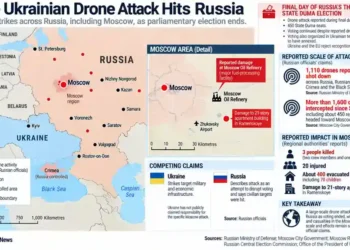
A new wave of drone strikes exchanged between Russia and Ukraine is reshaping the operational landscape of the conflict, underscoring growing instability across contested regions and raising concerns about the durability of current defensive postures. The latest incidents, involving civilian casualties on both sides, signal a shift toward sustained cross-border pressure with potential implications for regional security dynamics.
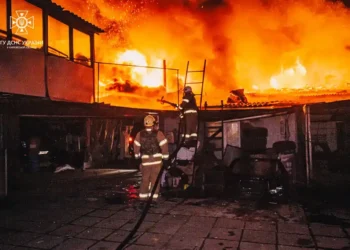
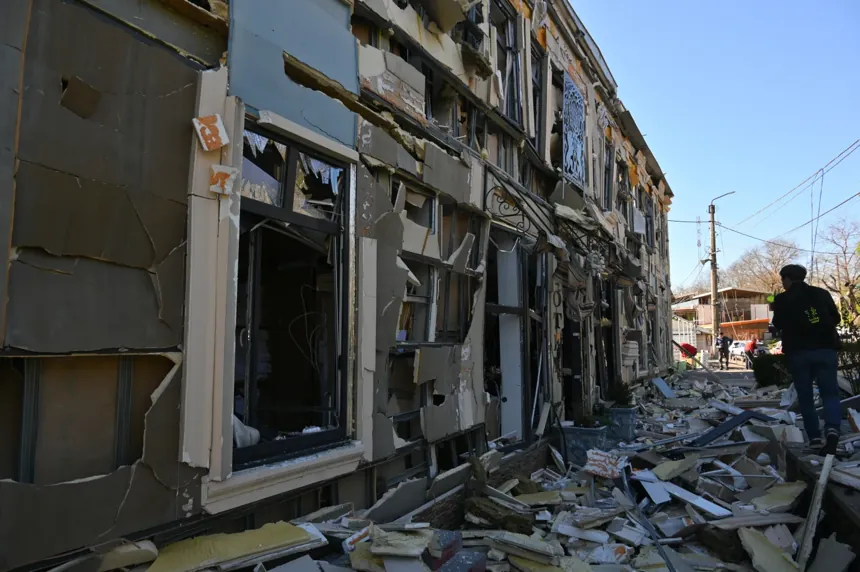
According to a report by The Associated Press, Russian forces launched a large-scale drone attack targeting southern Ukraine, wounding at least 14 people in the port city of Odesa. Ukrainian officials said residential areas and civilian infrastructure were hit, reinforcing concerns that urban centers remain exposed despite layered air defense systems.
Civilian Zones Increasingly Drawn Into Expanding Strike Patterns
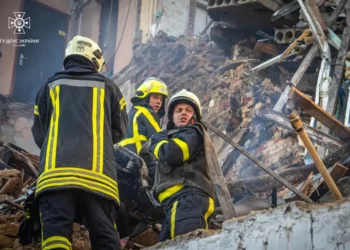
The intensification of drone warfare is pulling civilian areas deeper into the conflict’s operational envelope. Ukrainian authorities reported that multiple drones struck apartment buildings and public infrastructure in Odesa, igniting fires and damaging critical services. Local emergency teams were deployed overnight to contain the aftermath, highlighting the persistent vulnerability of densely populated zones.

While drone strikes have been a consistent feature of the war, their frequency and geographic spread suggest an evolving strategy aimed at stretching defensive resources. This pattern complicates efforts to shield population centers and maintain continuity in essential services.
Cross-Border Retaliation Signals Broader Instability Risks
In parallel, Ukrainian drone operations targeted Russian-controlled territory, where local officials reported at least two fatalities. The strikes, which reportedly hit areas under Moscow’s control, illustrate Kyiv’s continued reliance on asymmetric tactics to counterbalance Russia’s conventional advantages.
The reciprocal nature of these attacks reflects a widening operational scope, where front lines are no longer clearly defined. Instead, both sides appear increasingly willing to project force across contested and controlled zones, raising the risk of miscalculation and unintended escalation.
Air Defense Systems Face Mounting Pressure
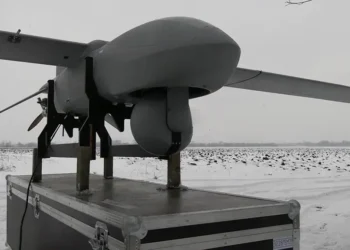
The sustained tempo of drone deployments is testing air defense capabilities on both sides. Ukrainian officials stated that several incoming drones were intercepted, but acknowledged that some penetrated defenses, causing damage and injuries.
This dynamic underscores a broader strategic challenge: maintaining effective interception rates against increasingly frequent and technologically adaptive drone swarms. The pressure on air defense networks may force recalibration of resource allocation, particularly as both sides continue to refine their aerial tactics.



Strategic Depth Erodes as Conflict Zones Blur
The expansion of drone strike ranges is gradually eroding the notion of strategic depth in the conflict. Areas previously considered relatively secure are now within reach of aerial attacks, altering both military planning and civilian risk assessments.
This shift has implications beyond immediate battlefield outcomes. As the conflict extends its reach, regional actors and neighboring states may face heightened uncertainty, particularly if strike patterns begin to intersect with critical infrastructure corridors or cross-border economic routes.
Diplomatic Pathways Narrow Amid Escalation
The continued exchange of strikes complicates already fragile diplomatic efforts aimed at de-escalation. Each new wave of attacks reinforces entrenched positions, making concessions politically and strategically more difficult for both Moscow and Kyiv.
While international actors have repeatedly called for restraint, the operational tempo on the ground suggests that neither side is prepared to reduce pressure in the near term. Instead, the conflict appears to be entering a phase where tactical escalation risks outpacing diplomatic engagement.
Forward Outlook: Entrenched Conflict with Expanding Risks
The latest developments point to a conflict increasingly defined by fluid front lines and persistent aerial threats. As drone warfare intensifies, the potential for broader regional destabilization grows, particularly if strike patterns continue to expand in scale and scope.
Absent a significant shift in military or diplomatic strategy, the trajectory suggests a prolonged period of instability, where incremental escalations carry disproportionate risks for both combatants and the wider region.