The United States has opted to prolong a temporary ceasefire with Iran, buying time for what officials describe as a narrowing diplomatic window—one that could determine whether the current pause evolves into negotiation or collapses back into confrontation.
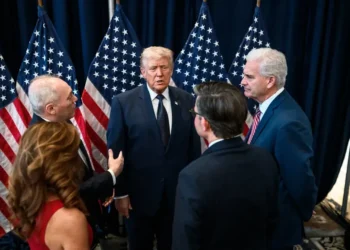
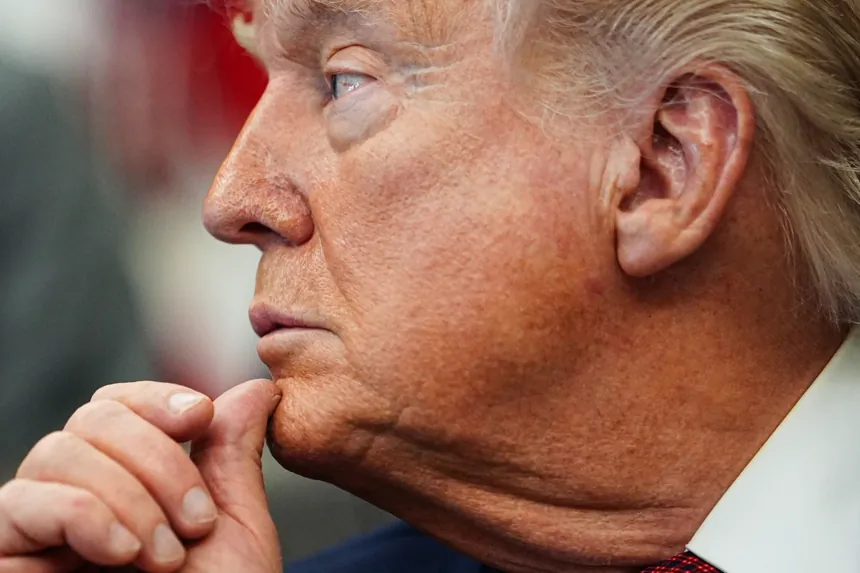
President Donald Trump confirmed the extension while emphasizing that Washington is awaiting a formal proposal from Tehran. The move, while outwardly measured, reflects a deeper calculation: sustaining operational restraint while testing Iran’s willingness to engage under mounting regional and economic pressure.
According to reporting by The Associated Press, the administration views the ceasefire not as a concession, but as a tactical pause designed to extract clarity from Iran’s leadership at a moment of heightened uncertainty.

Diplomatic Leverage Faces Compression
The extension places immediate pressure on Tehran to respond substantively rather than symbolically. U.S. officials have indicated that the absence of a concrete proposal could quickly erode the political space for restraint in Washington, particularly as domestic and allied expectations shift.
While the ceasefire reduces immediate military risk, it also compresses the timeline for diplomacy. Each additional day without Iranian engagement risks reframing the pause as strategic hesitation rather than controlled escalation management.
This dynamic introduces a dual challenge: preserving deterrence credibility while maintaining a viable path for negotiation.
Regional Calculations Begin to Shift
Across the Middle East, the ceasefire has triggered cautious recalibration among key actors. Regional governments, already navigating complex alignments, are closely monitoring whether the U.S. approach signals a broader de-escalation strategy or a temporary operational reset.
The uncertainty surrounding Iran’s next move has begun to influence security postures, particularly in areas where proxy dynamics remain active. A prolonged silence from Tehran could increase the likelihood of localized instability, even in the absence of direct confrontation.
■ Related News


The pause, therefore, is not neutral—it is actively reshaping expectations and risk assessments across the region.
Strategic Patience Tested in Washington
Within the U.S. policy apparatus, the decision to extend the ceasefire reflects an attempt to balance competing pressures: avoiding premature escalation while demonstrating resolve.
Officials have framed the move as a calculated extension rather than an open-ended delay. The distinction is significant. Strategic patience, in this context, is conditional—tied directly to Iran’s responsiveness.
Should Tehran fail to deliver a credible proposal, the current posture could shift rapidly toward renewed coercive measures, including military signaling or economic escalation.
Iran’s Silence Becomes a Strategic Variable
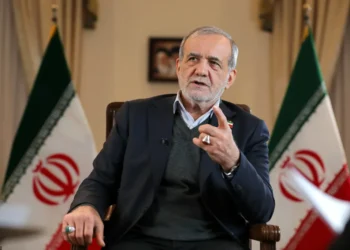
Tehran’s response—or lack thereof—has now become the central variable shaping the trajectory of the crisis. Iranian leadership faces its own internal and external constraints, complicating its ability to engage swiftly or decisively.
The absence of immediate communication may reflect internal deliberations, but it also risks being interpreted externally as reluctance or strategic ambiguity. In high-tension environments, such ambiguity can narrow diplomatic pathways rather than preserve them.
This places Iran in a position where timing is as consequential as substance.
A Narrowing Path Forward
The extension of the ceasefire underscores a broader reality: the current moment is less about de-escalation than about decision-making under constraint. Both Washington and Tehran are operating within tightening strategic margins, where delays carry increasing cost.
If a proposal emerges, the pause could evolve into a structured diplomatic process. If not, the existing calm may prove temporary—an interlude before renewed escalation.
For now, the ceasefire holds. But its durability depends less on its duration than on what follows next.