Global equity markets declined while oil prices advanced as uncertainty surrounding U.S.–Iran ceasefire negotiations unsettled investors, highlighting the sensitivity of financial markets to geopolitical developments in key energy regions.
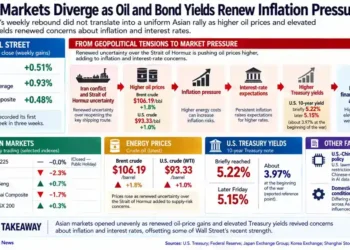
U.S. benchmark indexes closed lower, with the S&P 500, Dow Jones Industrial Average, and Nasdaq Composite each falling about 0.6%, according to market data reported by the Associated Press. The declines followed shifting signals around diplomatic efforts to extend a temporary ceasefire, raising concerns about potential disruptions to global energy supply.
Market Reaction Driven by Diplomatic Uncertainty
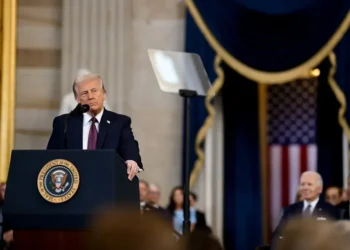
Equities reversed earlier gains after U.S. Vice President JD Vance canceled a planned trip to Pakistan, where negotiations with Iranian officials were expected to continue. The move introduced doubts about the near-term trajectory of ceasefire talks, prompting a pullback in risk assets.

Although U.S. President Donald Trump later indicated the ceasefire would be extended to allow further negotiations, the announcement came after market close, limiting its immediate impact on trading sentiment.
Despite the session’s decline, major indexes remain close to recent record highs, suggesting that investors still anticipate a resolution that avoids a prolonged economic shock.
Oil Prices Climb on Supply Concerns
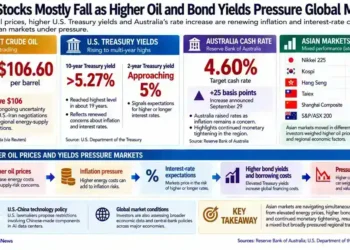
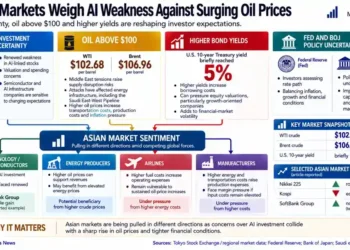
Energy markets reacted in the opposite direction, with crude prices rising as traders priced in the risk of renewed supply disruptions. Brent crude settled near $98.48 per barrel, reflecting a gain of more than 3% on the day, according to financial market reporting.
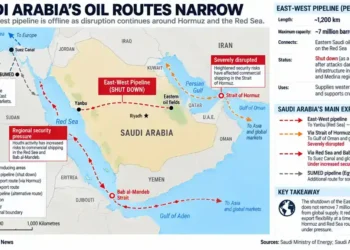
The upward movement reflects ongoing concerns about the Strait of Hormuz, a critical transit route for global oil shipments. Any escalation that restricts flows through the corridor could tighten supply conditions and exert upward pressure on prices.
While current price levels remain below earlier peaks during the conflict—when Brent crude briefly exceeded $119 per barrel—volatility continues to track developments in diplomatic negotiations and military positioning.




Broader Market Signals and Economic Data
Other financial indicators pointed to mixed macroeconomic signals. U.S. Treasury yields moved higher following stronger-than-expected retail sales data, suggesting continued resilience in consumer spending.
Corporate earnings also provided partial support to markets, with select companies reporting results above analyst expectations. However, these gains were insufficient to offset the broader risk-off sentiment driven by geopolitical uncertainty.
Strategic Outlook: Markets Sensitive to Energy and Geopolitics
The latest market movements underscore the central role of energy markets in shaping broader financial conditions. With roughly a fifth of global oil supply transiting through the Strait of Hormuz, disruptions linked to the conflict have implications for inflation, trade flows, and global growth.
Analysts note that market volatility is likely to persist as long as the outcome of ceasefire negotiations remains uncertain. While investors have shown resilience during earlier phases of the conflict, sustained instability in energy markets could present downside risks to both equities and economic outlooks.