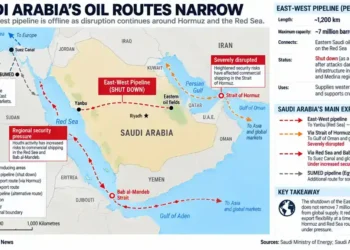
Global oil prices declined significantly while major U.S. stock indexes advanced to record levels after Iran signaled the reopening of the Strait of Hormuz, a critical maritime route for global energy shipments. The development eased concerns over potential supply disruptions, contributing to a broad-based rally across financial markets.
Brent crude futures dropped approximately 9% to below $80 per barrel, according to market data cited by Reuters, marking one of the steepest single-day declines in recent months. U.S. West Texas Intermediate crude followed a similar trajectory. The decline reflects a rapid unwinding of geopolitical risk premiums that had been priced into energy markets amid escalating tensions in the Middle East.
Equity markets responded positively to the easing of supply concerns. The S&P 500 and Nasdaq Composite both reached record highs, supported by gains in energy-sensitive sectors and broader investor optimism. Market data compiled by Bloomberg shows increased trading volumes alongside the rally, indicating strong institutional participation.

Energy Market Reaction
The Strait of Hormuz handles roughly one-fifth of global oil consumption, making it a key chokepoint for energy markets. Disruptions to the waterway typically result in immediate price spikes due to fears of constrained supply.
According to analysts cited by the Financial Times, the reopening reduced immediate risks to global energy flows, prompting traders to reassess short-term price expectations. Oil futures markets showed a sharp contraction in volatility, with options pricing indicating reduced expectations of further supply shocks.
Industry figures indicate that tanker traffic has begun to normalize, although shipping insurers and logistics firms remain cautious. Some companies have maintained elevated risk premiums, reflecting uncertainty over the durability of the reopening.
Equity Market Performance
Wall Street’s rally was led by technology and consumer discretionary stocks, sectors that tend to benefit from lower energy costs and improved economic outlooks. Lower oil prices can reduce input costs for businesses and increase disposable income for consumers, supporting corporate earnings growth.
According to data reported by The Wall Street Journal, energy stocks underperformed the broader market, reflecting the decline in crude prices. However, gains in other sectors more than offset these losses, pushing major indexes higher.




Analysts noted that the market reaction underscores the sensitivity of global equities to geopolitical developments, particularly those affecting energy supply chains.
Macroeconomic Implications
The decline in oil prices could have broader implications for inflation trends and monetary policy. Lower energy costs may ease inflationary pressures in major economies, potentially influencing central bank decisions in the coming months.
Economists cited by Reuters said that sustained lower oil prices could support economic growth by reducing costs for transportation, manufacturing, and logistics sectors. However, they cautioned that the outlook remains dependent on geopolitical stability in the region.
Strategic Outlook
While the reopening of the Strait of Hormuz has provided immediate relief to markets, analysts emphasize that risks have not been fully eliminated. The region remains a focal point for geopolitical tensions, and any renewed disruptions could quickly reverse recent market gains.
Market participants are expected to monitor shipping activity, diplomatic developments, and military movements closely. According to industry analysts, the durability of the current market rally will depend on continued stability in global energy supply routes.