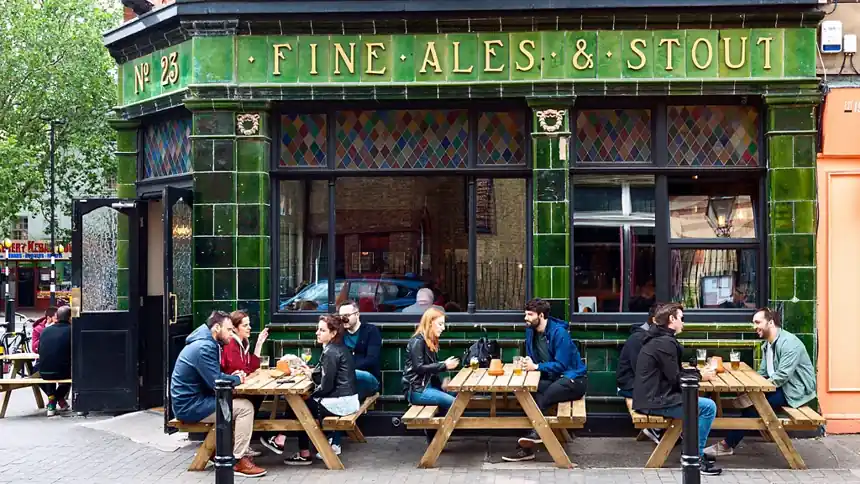
For first-time visitors, the British pub can appear informal, even chaotic. Yet beneath the absence of visible queues and the casual atmosphere lies a highly structured set of social conventions that shape how people order, share space and interact. The etiquette surrounding pubs offers a window into wider British social values, particularly fairness, reciprocity and respect for communal rituals.
What may seem like minor behavioural cues—waiting at the bar, taking turns buying drinks or knowing when to leave—carry social significance because the pub remains one of the UK’s most enduring civic spaces. Research and cultural reporting on British pub life consistently describe pubs as community anchors rather than simple drinking venues, helping explain why etiquette remains both persistent and widely understood.
The invisible queue and the culture of fairness
One of the most distinctive elements of British pub culture is the “mental queue.” Unlike many countries where customers form a visible line, pub-goers typically spread along the bar and rely on bartenders—and one another—to recognise who arrived first.

This system works because it mirrors a broader British social preference for informal fairness over rigid procedure. Cultural guides and long-standing reporting on pub etiquette note that patrons are expected to self-regulate, often signalling when another person was ahead of them. The ritual may seem unspoken, but it reinforces social trust in crowded public settings.
For visitors, the practical rule is simple: stand where staff can see you, make brief eye contact and wait without waving cash or calling out. The absence of a physical line does not mean the absence of order.
Why buying rounds matters socially
The tradition of buying drinks in rounds is less about efficiency than about reciprocity. In social groups, one person orders for everyone, and others take turns later in the evening.
Sociologically, this functions as a ritual of mutual obligation. It reduces repeated trips to the bar, but more importantly it signals inclusion and trust within the group. British social commentary has long framed round-buying as a quiet test of social participation, where failing to reciprocate can be interpreted as distancing oneself from the group dynamic.
That said, the norm is flexible. In larger groups or when someone plans to leave early, openly stepping out of the round is generally accepted so long as expectations are made clear.




The pub as a community institution
Understanding pub etiquette also requires understanding the venue’s social role. British Council cultural materials and academic commentary describe pubs as neighbourhood meeting places, informal civic rooms and longstanding sites of everyday conversation.
That explains why behaviour norms extend beyond ordering drinks. Speaking excessively loudly, occupying seemingly empty but clearly claimed seats, or treating the space like a high-turnover cocktail bar can feel culturally out of step.
In many traditional pubs, objects left on tables—a pint glass, a coat, a folded newspaper—serve as accepted territorial markers. These cues reflect a broader expectation that pub space is shared, but still socially negotiated.
Tipping and service expectations remain understated
Another point of confusion for international visitors is tipping. While digital payment systems have introduced gratuity prompts more frequently in recent years, British pub culture still treats tipping as optional and low-key rather than transactional.
The stronger expectation is efficient self-service: customers order and usually pay at the bar rather than opening tabs or waiting for table staff. This reflects the pub’s emphasis on speed, informality and minimal ceremony.
As with the invisible queue, the system depends on participants understanding the ritual rather than relying on explicit instructions.
Closing rituals and the meaning of “last orders”
Few traditions better capture the pub’s cultural continuity than “last orders,” the announcement shortly before closing time that signals the final opportunity to buy a drink.
Historically tied to licensing laws, the practice has evolved into a social ritual that structures the end of the evening. It also reflects the British preference for orderly endings in shared public spaces: once service ends, patrons are expected to finish up without negotiation or lingering disruption.
The ritual may appear quaint, but it remains one of the clearest examples of how tradition shapes everyday public behaviour.
A small ritual with wider cultural meaning
For travellers, learning pub etiquette is less about avoiding embarrassment and more about understanding how everyday institutions encode national habits.
The British pub remains a living example of how social rules can operate without formal signage or enforcement. Invisible queues, round-buying and last orders all illustrate how trust, politeness and shared expectations continue to organise public life.
In that sense, the pub is not merely a leisure venue. It remains one of Britain’s most revealing social spaces.