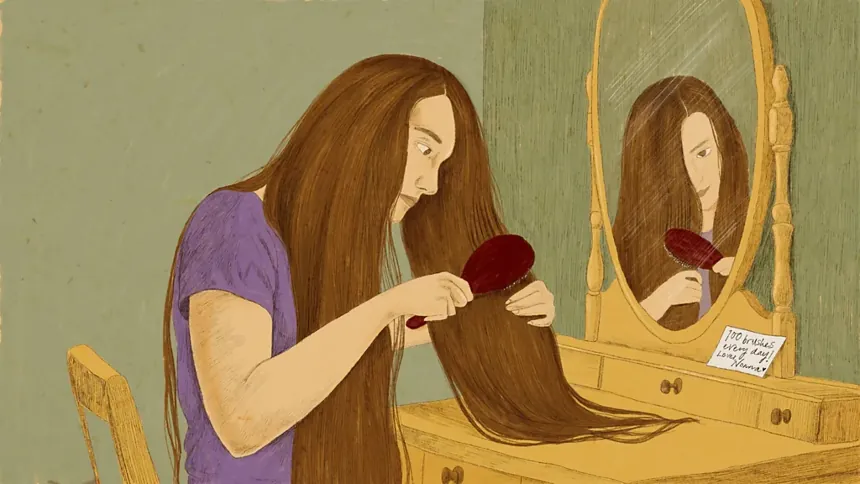
For generations, hair brushing has been surrounded by beauty advice passed down through families, from claims that 100 nightly brush strokes create healthier hair to beliefs that frequent brushing encourages faster growth. Yet current understanding of hair science suggests that healthy hair depends less on how often people brush and more on how they brush, the condition of their hair, and the tools they use.
A recent BBC Future report examining research and expert perspectives found that brushing remains an important part of hair care, but many long-standing assumptions about the practice are not supported by scientific evidence. Instead, hair specialists and researchers say the relationship between brushing and hair health is influenced by hair texture, moisture levels, and brushing technique.
A Grooming Practice With Deep Historical Roots
Hair grooming tools have existed for thousands of years. Historical records show that combs and brushes were used by ancient societies for both hygiene and appearance, making hair care one of humanity’s oldest personal-care rituals.

According to hair historian Rachael Gibson, the popular idea of completing 100 brush strokes each night likely emerged during the Victorian era, when long hair was strongly associated with ideals of femininity and social status. Women often used combs to remove debris and tangles before brushing with natural-bristle brushes designed to distribute oils throughout the hair.
The practice became more widespread after African American inventor and hairdresser Lyda Newman patented an improved hairbrush design with synthetic bristles in 1898, helping make brushes more accessible and easier to manufacture.
What Science Says About Brushing and Hair Damage
One of the most persistent beliefs in hair care is that brushing stimulates faster hair growth. However, salon professionals interviewed by BBC Future said there is no evidence that increased brushing accelerates hair growth.
Research examining hair fibers suggests that excessive mechanical stress can contribute to damage. Scientists studying how hair strands react when tangled and pulled apart found that repeated grooming can create structural weaknesses that may lead to split ends and breakage.
Engineering researcher David Taylor of Trinity College Dublin noted that the force applied during brushing appears to be more significant than the number of brush strokes themselves. Hair can experience strain when knots are aggressively removed, increasing the likelihood of damage over time.




At the same time, researchers emphasize that everyday brushing is only one factor among many. Chemical treatments, bleaching, heat styling, and other intensive hair practices generally have a greater impact on overall hair condition than routine brushing.
Why Regular Brushing Still Has Benefits
Despite concerns about overbrushing, experts interviewed in the report stressed that brushing itself is not harmful when done carefully.
Regular grooming helps prevent severe tangles from developing and can reduce the need for forceful detangling sessions that place stress on hair strands. It also assists in removing shed hairs, dead skin cells, and debris that can accumulate on the scalp.
For many people, the goal is not frequent brushing but consistent and gentle maintenance. Keeping hair manageable through routine care may help minimize breakage caused by large knots and matting.
Matching Technique to Hair Type
Experts cited in the BBC Future report highlighted that hair texture plays a major role in determining the best brushing routine.
People with straight or wavy hair are generally advised to brush regularly but avoid brushing when hair is wet, as moisture temporarily weakens the protective outer layer of the hair shaft and can increase vulnerability to breakage.
For those with curly, coily, or tightly textured hair, the guidance is often different. Researchers studying textured hair note that these hair types have distinct structural properties and may be more prone to dryness and tangling. As a result, detangling is typically recommended during washing or while hair is damp and conditioned rather than when it is dry.
Chemistry and biochemistry professor Michelle Gaines of Spelman College, whose work focuses on textured hair, has found that differences in hair structure may influence strength, moisture retention, and susceptibility to damage. She also emphasized the importance of using products that help reduce friction during detangling.
The Importance of Choosing the Right Brush
Hair-care specialists say the effectiveness of brushing depends not only on frequency but also on the brush itself.
Flexible detangling brushes are commonly recommended for wet hair because they reduce pulling and tension. For dry hair, softer bristle brushes can help distribute natural oils along the hair shaft while minimizing irritation to the scalp.
Modern brush designs continue to evolve as researchers and product developers seek ways to balance detangling efficiency with hair protection. The ongoing interest reflects a broader understanding that healthy hair care relies on reducing unnecessary stress on individual strands.
While myths about nightly brush counts remain part of beauty folklore, current research points toward a simpler conclusion: healthy brushing habits are less about numbers and more about understanding individual hair needs.
Tags: Hair Care, Hair Brushing, Hair Health, Beauty Habits, Hair Science, Split Ends, Hair Grooming, Curly Hair Care, Hair Brushes, Personal Care, BBC Future, Healthy Hair