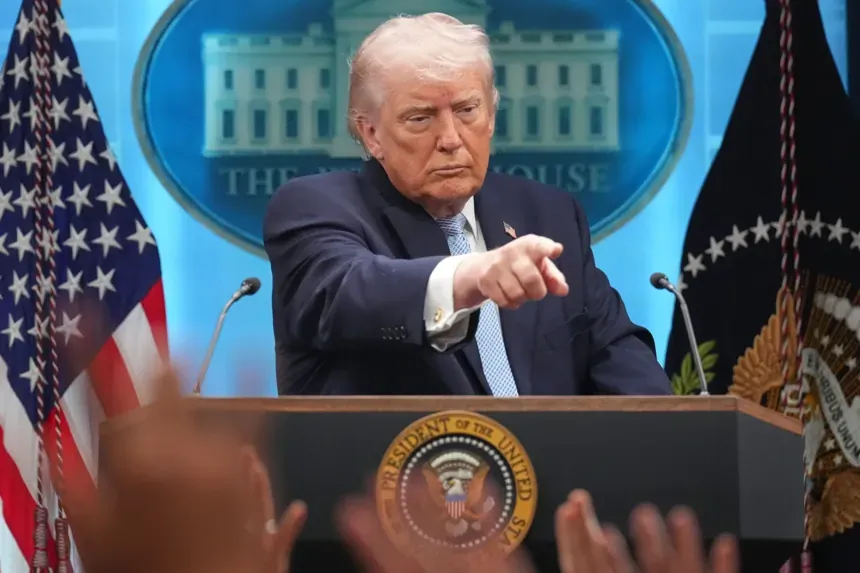
President Donald Trump’s abrupt shift from threatening devastating strikes on Iran to accepting a 14-day ceasefire has recast the crisis around international mediation efforts, with the immediate global stakes centered on the reopening of the Strait of Hormuz and the prevention of a wider regional war. The temporary truce, reached after urgent shuttle diplomacy involving Pakistan and quiet backing from China, eased fears of a direct U.S.-Iran military escalation that risked destabilizing energy markets and drawing in regional actors.
The ceasefire framework hinges on Iran allowing shipping traffic to resume through the narrow waterway, a corridor that carries roughly one-fifth of globally traded oil. Any sustained disruption would reverberate far beyond the Gulf, affecting fuel costs, inflation expectations, and maritime insurance markets from Asia to Europe. Early market reactions reflected that relief, with oil prices retreating as traders priced in lower immediate supply risk.
Diplomatic Pressure Builds Around Islamabad Talks
The diplomatic center of gravity has now shifted to Islamabad, where Vice President JD Vance is expected to lead U.S. talks with Iranian representatives in an attempt to convert the temporary ceasefire into a more durable framework. Pakistan’s mediation role has elevated the crisis from a bilateral confrontation into a broader international negotiation involving regional stakeholders concerned about maritime security and energy continuity.

Two original strategic realities appear to have driven Washington’s recalibration before the ceasefire was announced. First, a campaign to forcibly secure Hormuz would likely require a prolonged military commitment with substantial naval and ground support. Second, further escalation risked undercutting Trump’s longstanding political pledge to avoid another open-ended Middle East conflict.
That calculation also reflects pressure from U.S. allies and trading partners, many of whom depend on uninterrupted Gulf shipments. European and Asian governments have quietly signaled that a negotiated reopening of the strait is preferable to any military operation that could broaden into a multi-theater confrontation.
Regional Stability Faces Immediate Stress Tests
Despite the diplomatic breakthrough, the ceasefire remains fragile. Conflicting interpretations from Washington, Tehran and Israel over whether the arrangement extends to operations linked to Lebanon have already exposed the limits of the agreement’s wording. Continued Israeli military activity in Lebanon and renewed Iranian threats regarding shipping tolls or restrictions could quickly test the viability of the truce.
This ambiguity is geopolitically significant because it leaves multiple fronts active even as the main U.S.-Iran channel cools. A breakdown in one theater could rapidly spill back into maritime security, pushing oil prices higher and reviving fears of broader confrontation.
A second original analytical consideration is the role of external powers. China’s discreet support for mediation underscores Beijing’s direct interest in safeguarding energy imports, while Gulf states have strong incentives to prevent the conflict from disrupting shipping lanes or critical infrastructure.


Strategic Stakes Rise Beyond the Gulf
The ceasefire’s wider significance lies in whether it can evolve into a mechanism for strategic regional de-escalation. If successful, it could open space for broader discussions on sanctions relief, maritime transit guarantees, and proxy conflicts stretching from Lebanon to the Gulf.
If it fails, however, the episode may be remembered less as a diplomatic breakthrough than as a short operational pause before a more dangerous phase of confrontation. The next 14 days are therefore likely to shape not only U.S.-Iran relations but also the security architecture of one of the world’s most economically vital chokepoints.