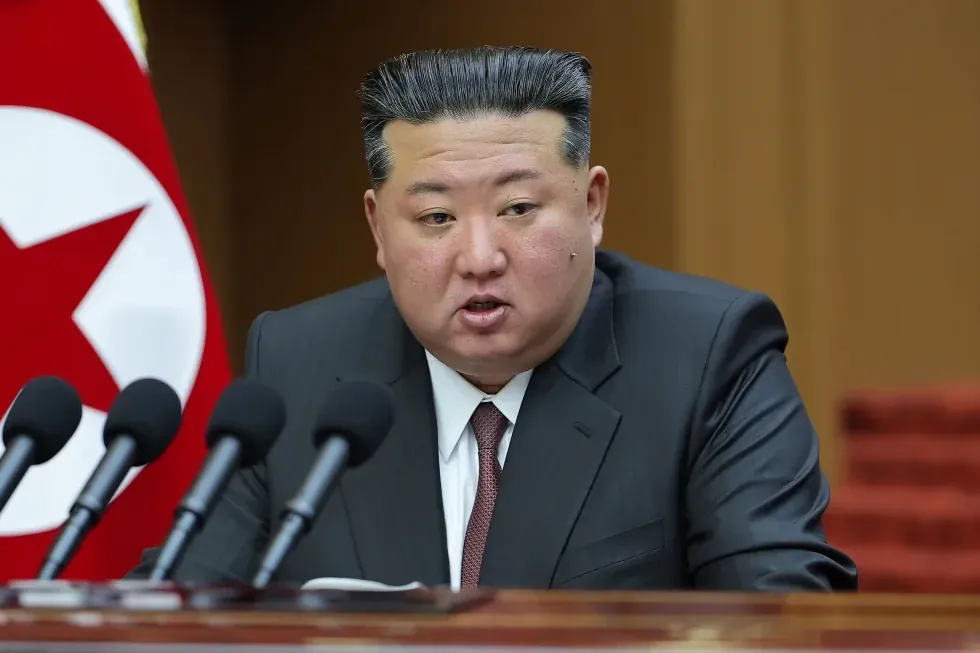
North Korea’s renewed push to formalize its nuclear status is intensifying regional instability, as leader Kim Jong Un pledged to make the country’s position as a nuclear power “irreversible” while labeling South Korea its “most hostile” adversary. The declaration, delivered during a key parliamentary session in Pyongyang, underscores a strategic shift with implications for security dynamics across Northeast Asia.
The remarks come at a time of heightened geopolitical friction globally, with Pyongyang linking its posture to broader conflicts and signaling a more assertive stance against the United States and its allies.
Regional Stability Tested by Nuclear Posturing
Kim’s address to the Supreme People’s Assembly reinforced North Korea’s long-standing commitment to nuclear deterrence but marked a sharper rhetorical turn against Seoul. According to reporting from The Associated Press, Kim accused the United States of “state terrorism and aggression” and framed North Korea’s military buildup as a necessary response to external threats.

By declaring nuclear status non-negotiable, Pyongyang is further narrowing the scope for denuclearization talks, a cornerstone of past diplomatic efforts. Analysts say this position complicates future negotiations and raises the risk of prolonged military tension on the Korean Peninsula.
At the same time, Kim avoided directly naming U.S. President Donald Trump and indicated that the path forward—whether confrontation or coexistence—would depend on Washington’s choices, suggesting that limited diplomatic channels remain open.
Diplomatic Channels Recalibrated
The latest rhetoric reflects a recalibration in North Korea’s diplomatic strategy, particularly toward South Korea. Once viewed as a potential intermediary in talks with Washington, Seoul is now increasingly portrayed by Pyongyang as an obstacle rather than a partner.
Analysts cited by The Associated Press note that this shift follows years of stalled diplomacy after the collapse of nuclear negotiations in 2019. Kim’s leadership has since moved to abandon the long-standing goal of peaceful reunification, signaling a structural change in inter-Korean relations.
This repositioning reduces the likelihood of trilateral engagement and places greater emphasis on direct U.S.-North Korea interactions, albeit under more rigid conditions set by Pyongyang.
■ Related News



Strategic Realignment Toward Global Flashpoints
North Korea’s messaging also reflects a broader alignment with geopolitical developments beyond the Korean Peninsula. Kim referenced global conflicts in criticizing U.S. foreign policy and signaled a willingness to join a wider front opposing Washington.
Recent cooperation with Russia highlights this evolving strategy. Pyongyang has reportedly supplied military support for Moscow’s war in Ukraine, potentially in exchange for economic assistance and technological cooperation, according to analysts.
This alignment may provide North Korea with alternative avenues for support, reducing its reliance on negotiations with the United States while strengthening its bargaining position.
Internal Control and Nuclear Legitimacy
Kim’s emphasis on nuclear capability is also tied to domestic considerations. By framing the expansion of nuclear weapons and missile programs as essential to national dignity and security, the leadership reinforces internal legitimacy while tightening political control.
State media reported constitutional revisions following the parliamentary session, though details were not disclosed. Observers had anticipated changes that would further institutionalize hostility toward South Korea and solidify North Korea’s nuclear doctrine within its legal framework.
Such measures would formalize the country’s strategic direction, making policy reversals more difficult and embedding nuclear development into the state’s long-term identity.
Strategic Stakes Rise for Global Security
The evolving posture presents growing challenges for international security frameworks. While Kim has left open the possibility of dialogue, his insistence on recognition as a nuclear state sets a high bar for any future negotiations.
Experts warn that recent global conflicts, including military actions involving Iran, may further entrench North Korea’s nuclear ambitions by reinforcing its perception of external threats.
As diplomatic pathways narrow, the risk of miscalculation increases, placing renewed urgency on international efforts to manage tensions and prevent escalation on the Korean Peninsula.