The deepening confrontation between the United States and Iran is beginning to strain Washington’s broader strategic posture, as China signals it will not intervene in efforts to reopen the Strait of Hormuz — a development that underscores shifting global leverage dynamics.
According to reporting by The Associated Press, Beijing has declined to directly support a U.S. request to help stabilize the critical maritime corridor, even as the conflict enters its third week and oil flows remain disrupted. The refusal highlights a widening gap between U.S. military commitments and its ability to mobilize international backing.
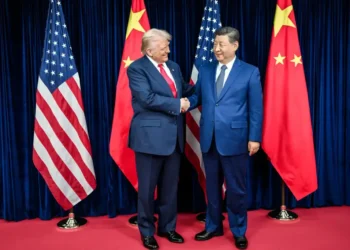
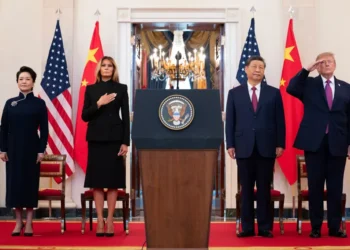
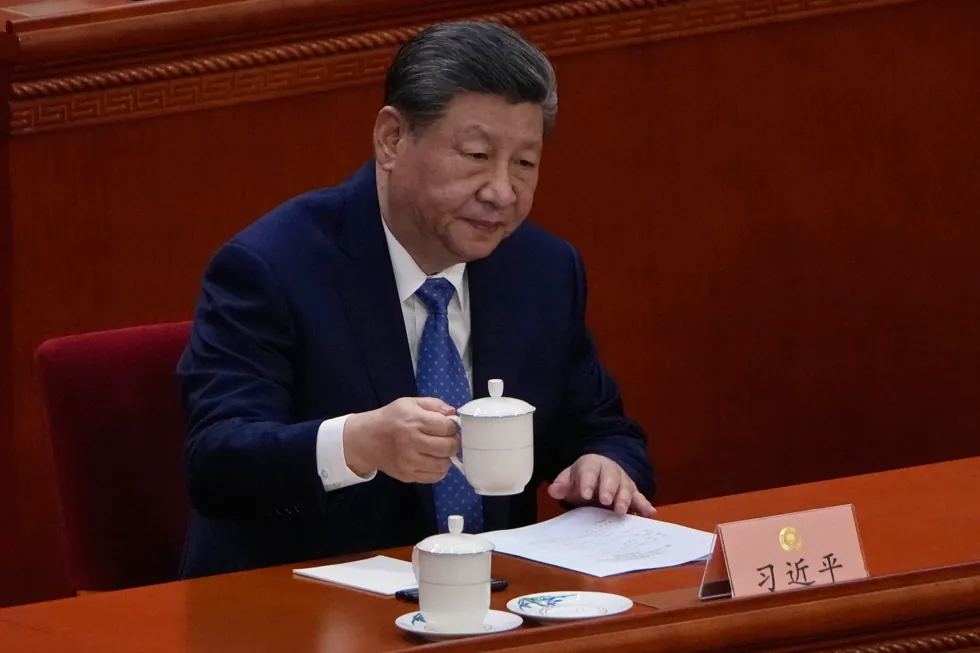
The decision comes as President Donald Trump delays a planned summit with Xi Jinping — a move that analysts interpret less as a scheduling issue and more as a reflection of mounting geopolitical strain.

Strategic Focus Begins to Fragment
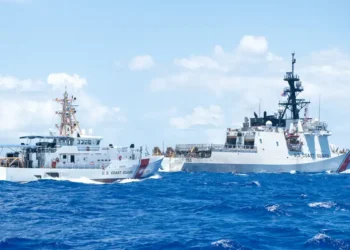
The ongoing conflict has forced Washington to divert military assets from the Indo-Pacific toward the Middle East, raising concerns among defense analysts that the U.S. is stretching its operational capacity across multiple theaters.
As deployments shift, questions are emerging over whether the U.S. can sustain its long-term strategic emphasis on Asia while managing an increasingly complex crisis in the Gulf. Analysts warn that prolonged engagement risks diluting deterrence in regions where Washington has sought to reinforce its presence in recent years.
This recalibration is not occurring in isolation. China, long identified as the United States’ primary strategic competitor, appears to be adopting a posture of calculated restraint — allowing events to unfold without direct intervention while maintaining diplomatic engagement across the Middle East.
Diplomatic Leverage Rebalances
Beijing’s response to U.S. overtures has been deliberately measured. Rather than committing to operational support in Hormuz, Chinese officials have reiterated calls for de-escalation and stability, positioning China as a neutral actor advocating restraint.
At the same time, Chinese diplomatic channels have remained active in the region, including humanitarian outreach efforts and engagement with regional governments. This dual-track approach allows Beijing to expand its influence without assuming the risks associated with direct military involvement.
■ Related News



The postponement of the U.S.-China summit further reflects this shifting balance. While both sides have indicated willingness to reschedule, the delay reduces immediate pressure on Beijing to engage substantively on contentious issues such as trade, technology, and regional security.
Economic Pressure Points Intensify
The closure of the Strait of Hormuz — a critical artery for global energy shipments — has amplified economic risks tied to the conflict. With oil flows halted, the situation introduces volatility into global markets and places additional pressure on U.S. allies already reluctant to participate in securing the waterway.
China, as one of the world’s largest energy importers, faces exposure to these disruptions. However, its current posture suggests a preference to manage risk diplomatically rather than through direct involvement, preserving flexibility while the United States absorbs the operational burden.
Meanwhile, stalled trade discussions between Washington and Beijing indicate that economic cooperation remains constrained, with structural disagreements unresolved. The summit delay effectively postpones any potential breakthroughs, extending uncertainty for global markets.
Regional Commitments Face New Scrutiny
The redistribution of U.S. forces has also triggered concern among Asian allies, particularly regarding Washington’s ability to uphold security guarantees in the Indo-Pacific.
Security analysts note that any prolonged diversion of resources could influence perceptions of U.S. reliability, especially in sensitive areas such as Taiwan, where defense support remains a central pillar of deterrence against Beijing.
The delay in high-level engagement between Washington and Beijing may also slow decision-making on arms transfers and broader security coordination, further complicating the regional balance.
Strategic Patience Versus Operational Strain
China’s current posture suggests a strategy centered on patience rather than confrontation. By avoiding entanglement while maintaining diplomatic visibility, Beijing may be positioning itself to benefit from a scenario in which the United States becomes increasingly absorbed by the Middle East.
For Washington, the challenge lies in managing a conflict that is beginning to ripple across its global commitments. The longer the crisis persists, the more it risks reshaping U.S. strategic priorities — not by design, but by necessity.
The trajectory of the Iran conflict now extends beyond the Gulf, influencing the broader architecture of global power competition. Whether the United States can recalibrate without further erosion of its strategic focus remains an open question.