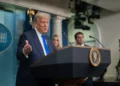
U.S. President Donald Trump has ordered what he described as a “total and complete blockade” of sanctioned oil tankers traveling to and from Venezuela, marking a significant escalation in Washington’s campaign to cut off the government of Nicolás Maduro from its primary source of revenue.
The directive, announced in a message posted on Trump’s Truth Social platform, effectively positions the U.S. Navy and other military assets deployed in the Caribbean as enforcers of a maritime pressure strategy aimed at disrupting Venezuela’s oil exports.
The move underscores a shift in emphasis from Washington’s previously stated focus on narcotics trafficking to a more explicit effort to constrain Caracas economically by targeting its energy trade.

Strategic Pressure Expands Through Maritime Enforcement
Trump stated that U.S. military deployments in the Caribbean will remain in place until the Venezuelan government returns what he described as “all of the oil, land, and other assets that they previously stole from us.”
The statement introduced new rhetoric linking Venezuela’s resource wealth directly to U.S. strategic interests, though it did not clarify what specific assets Washington expects Caracas to return or how such restitution would occur.
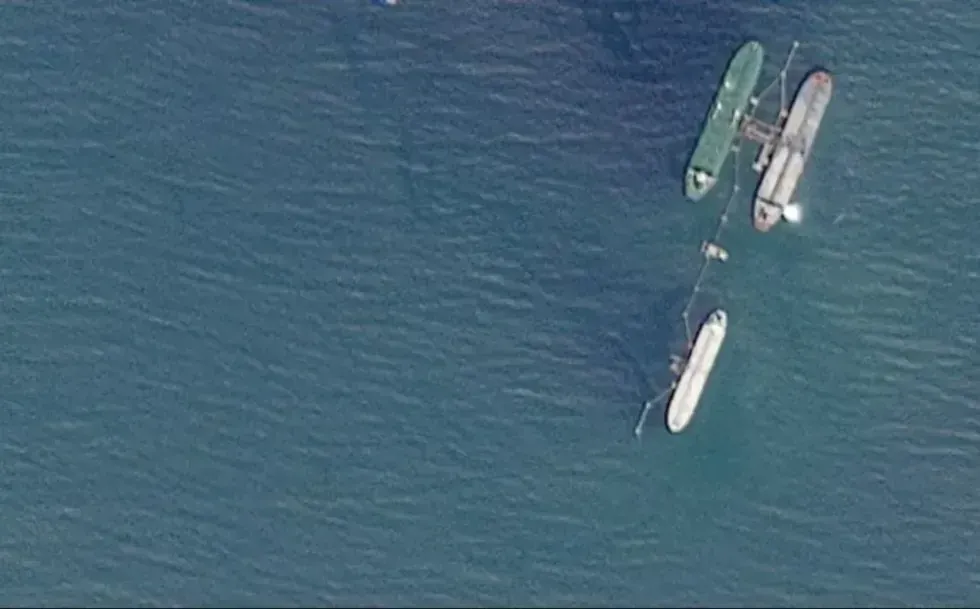
In practical terms, the blockade order builds on a series of maritime enforcement actions already underway. Nearly a week earlier, U.S. forces intercepted a Venezuelan-linked tanker near the country’s coastline in a highly publicized operation.
According to reporting by Reuters and The Associated Press, the U.S. Treasury Department subsequently imposed sanctions on several companies operating vessels accused of transporting Venezuelan oil through deceptive shipping practices.
Caracas Frames Blockade Order as Resource Seizure Attempt
The Venezuelan government responded within hours of Trump’s announcement, sharply condemning the move as a threat to national sovereignty.
■ Related News

In a statement issued by the administration of Nicolás Maduro, officials described the proposed blockade as “reckless” and accused Washington of attempting to seize Venezuela’s natural resources.
The statement argued that Trump’s remarks implied ownership over Venezuela’s oil and mineral wealth and called on international audiences to reject what it labeled an effort to “steal the wealth” of the country.
The exchange highlights how energy policy has become the central battleground in the long-running political conflict between Washington and Caracas.
Sanctions Campaign Targets ‘Ghost Fleet’ Supplying Asian Buyers
The blockade directive follows a broader crackdown on vessels suspected of transporting Venezuelan oil while evading sanctions.
U.S. authorities have sanctioned several shipping companies operating tankers registered under flags including the Marshall Islands, Panama, Hong Kong, and the Cook Islands.
These vessels are often described in maritime monitoring circles as “ghost ships,” a reference to tactics such as disabling tracking systems or broadcasting misleading location data to avoid detection.
Analysts say the network has allowed Venezuelan crude to continue reaching buyers—particularly in Asia—despite years of U.S. sanctions.
Regional Deterrence Tested by Largest Caribbean Deployment in Decades
The maritime crackdown is unfolding alongside one of Washington’s largest military deployments in the Caribbean in recent decades.
U.S. officials have previously justified the presence as part of counter-narcotics operations targeting drug trafficking routes in the region.
However, the expansion of enforcement actions against oil tankers suggests that energy interdiction is becoming a central component of the strategy.
Security analysts note that such a posture raises the risk of confrontation at sea, particularly if vessels attempt to challenge or circumvent interdiction efforts.
Oil Revenue at the Center of Venezuela’s Strategic Vulnerability
Venezuela’s economy remains heavily dependent on crude exports, with oil sales providing a crucial source of government revenue.
For Caracas, maintaining access to international markets—particularly buyers willing to navigate sanctions—has been essential to sustaining state finances.
Analysts say the blockade order therefore represents an attempt to tighten the economic vise around the Maduro government by targeting the very trade routes that have allowed the country’s energy sector to survive under sanctions.
Long-Standing U.S. Interest in Venezuelan Oil Resurfaces
Trump has repeatedly highlighted Venezuela’s vast oil reserves in past statements.
During a 2023 speech, he suggested that the United States had once been close to gaining access to those resources during earlier efforts to pressure the Maduro government.
Those remarks, resurfacing amid the new blockade order, reinforce the perception that energy security and geopolitical competition in the Western Hemisphere remain intertwined.
Forward Outlook: Escalation Without Direct Conflict
The blockade directive signals a further tightening of economic and strategic pressure rather than an immediate move toward direct military confrontation.
Yet by placing naval forces at the center of enforcement, the measure also increases the stakes in an already tense regional standoff.
How aggressively the United States applies the blockade—and how shipping networks and Venezuela respond—will likely determine whether the current strategy remains an economic containment campaign or evolves into a broader maritime confrontation.