KYIV, Ukraine (Journos News) – Competing battlefield claims in the Russia Ukraine war talks dispute are sharpening strategic uncertainty as diplomatic efforts stall and violence intensifies across the front line.
Both Moscow and Kyiv say they have gained ground in recent days, while negotiations previously facilitated by Washington have been postponed amid geopolitical distractions tied to escalating tensions in the Middle East. The pause has heightened concern among analysts that the war could drift toward prolonged military escalation rather than negotiated settlement.
Officials on each side are presenting conflicting battlefield narratives while attacks on cities and infrastructure continue.

According to reporting by the Associated Press, Ukrainian and Russian leaders are using recent operations to reinforce competing strategic messages at a moment when diplomacy appears increasingly fragile.
Battlefield Narratives Collide as Strategic Momentum Is Contested
Ukrainian military officials say their forces have regained significant territory in southeastern regions, pushing Russian units back in parts of the Dnipropetrovsk industrial corridor.
Maj. Gen. Oleksandr Komarenko told local outlet RBC-Ukraine that Ukrainian troops had reclaimed most areas seized during earlier Russian advances, retaking more than 400 square kilometers. Ukrainian commanders also report that breakthrough assaults have pushed Russian defensive lines back by roughly 10 kilometers in certain sectors.
Front-line officers cited supply challenges and logistical weaknesses among Russian units, arguing these vulnerabilities enabled Ukrainian counterattacks to generate momentum.
Independent verification remains limited. However, analysts at the Institute for the Study of War noted that the latest Ukrainian operations could disrupt Moscow’s expected spring–summer offensive campaign if sustained.


The competing narratives highlight how battlefield developments are increasingly tied to diplomatic leverage as both sides attempt to shape international perceptions of the war’s trajectory.
Moscow Signals Donbas Gains While Pressuring Kyiv on Negotiations
Russia’s leadership is simultaneously presenting a contrasting account of the military situation.
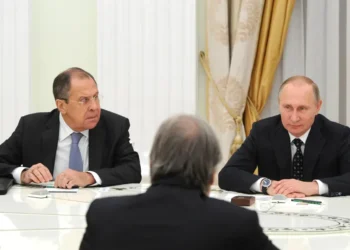
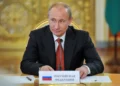
Vladimir Putin said Russian forces had extended their control across Ukraine’s eastern Donbas region, describing the advance as evidence that Moscow’s long-term objectives remain attainable.
Speaking during a meeting with Kremlin-installed Donbas administrator Denis Pushilin, the Russian president claimed that Ukrainian control over the region has shrunk significantly in recent months.
Six months ago Kyiv held roughly one quarter of the territory in Donbas, he said. That figure has now dropped to between 15% and 17%, according to the Kremlin’s estimate.
The claims could not be independently verified, but Russian officials are using them to argue that battlefield realities should push Ukraine toward negotiations.
Kremlin foreign policy adviser Yuri Ushakov said Putin conveyed the same message during a conversation with Donald Trump, asserting that Russian forces were “advancing rather successfully.”
The implication from Moscow is that military pressure should translate into diplomatic concessions from Kyiv.
Civilian Centers Remain Under Persistent Strike Pressure
While both governments highlight military gains, the conflict continues to impose heavy costs on civilian areas.
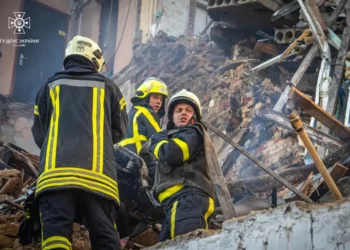
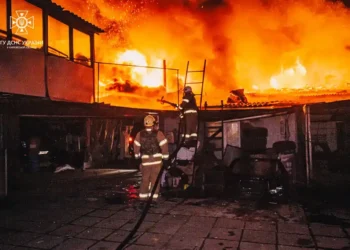
In the eastern Ukrainian city of Sloviansk, three Russian glide bombs struck central districts, killing four civilians and injuring at least sixteen others, regional officials said. Among the wounded was a 14-year-old girl.
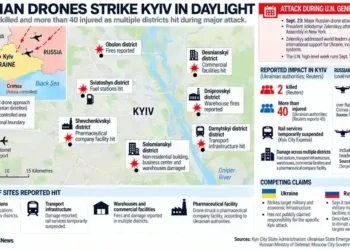
Overnight drone attacks across multiple Ukrainian cities also injured more than a dozen people, according to emergency services.
Ukraine’s air force said it intercepted 122 of the 137 drones launched during the assault, underscoring the scale of Russia’s continuing air campaign.
Ukraine has also expanded its long-range strike operations. Ukrainian missiles reportedly hit the Russian city of Bryansk, killing several civilians and damaging industrial infrastructure.
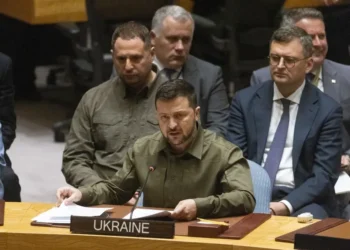
Volodymyr Zelenskyy said the strike targeted a facility producing control systems used in Russian missile technology. Ukrainian officials later indicated that British-supplied Storm Shadow cruise missiles were used in the attack on the Kremniy El microelectronics factory.
The exchange reflects an increasingly reciprocal pattern of deep strikes on both sides of the border.
Diplomatic Track Weakens as Global Attention Shifts
The escalation comes as the diplomatic track aimed at ending the war faces new obstacles.
Negotiations expected to resume this week in Turkey have been postponed after Washington shifted attention toward the growing conflict in the Middle East. Zelenskyy said U.S. negotiators informed Kyiv that the talks could be delayed until next week.
The pause has raised concern in Ukraine that international focus may drift away from the war just as Russia seeks to intensify military pressure.
Kyiv is also watching closely as Washington weighs potential adjustments to sanctions targeting Russian energy exports. Reports suggest the United States is considering easing certain restrictions on oil sales in order to stabilize global energy markets amid turmoil in the Middle East.
Zelenskyy warned that relaxing sanctions could undermine Ukraine’s strategic position by providing Moscow additional revenue to finance its military operations.
Global Strategic Calculations Expand Beyond the Battlefield
The widening geopolitical context is shaping how both sides approach the conflict.
Moscow could benefit from rising oil prices and shifting Western priorities if global crises stretch diplomatic and military resources. Analysts say such developments may reduce the urgency of coordinated Western support for Ukraine.
Kyiv is pursuing its own strategy to maintain international engagement.
Ukrainian officials have indicated they are prepared to share advanced battlefield drone technologies with U.S. and Gulf partners involved in Middle East operations. The move is intended to reinforce Ukraine’s strategic relevance while strengthening ties with Washington.
At the same time, Kyiv continues to request additional U.S.-supplied air defense systems to counter Russia’s expanding missile and drone strikes.
For now, the combination of stalled diplomacy, competing battlefield narratives, and widening geopolitical pressures suggests the war may remain locked in a prolonged and volatile phase.