GALLE, Sri Lanka (Journos News) – The destruction of the IRIS Dena in waters off southern Sri Lanka marks a decisive expansion of the maritime front in the ongoing U.S.–Iran conflict, underscoring accelerating Iranian naval losses and the growing reach of American operations across the Indian Ocean.
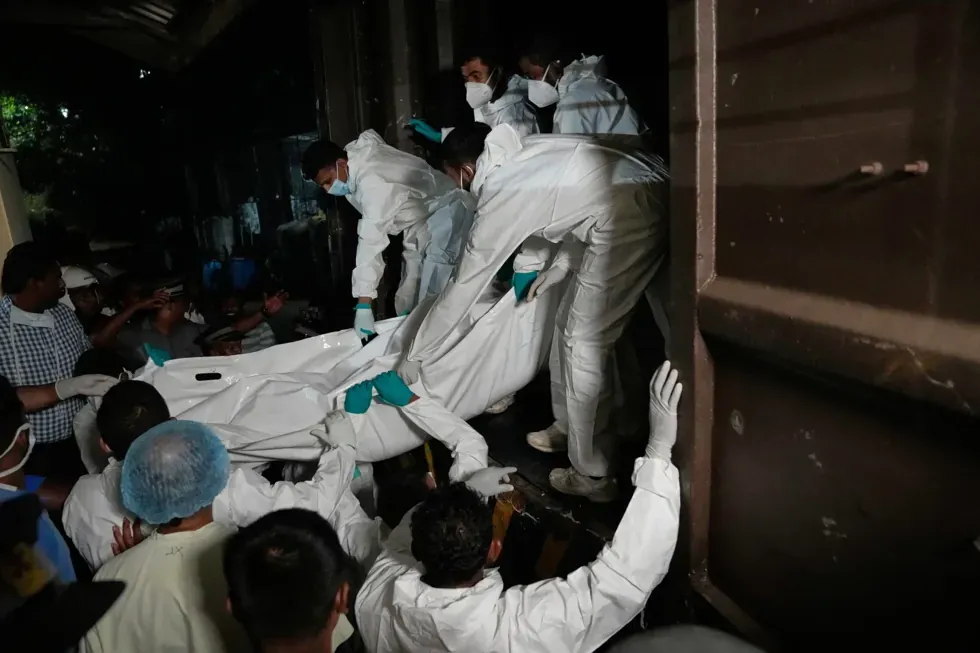
Sri Lankan authorities confirmed Wednesday that 87 bodies had been recovered after a U.S. submarine torpedoed the Iranian warship. Thirty-two survivors were rescued from open waters near Galle. The incident, first reported by The Associated Press, represents one of the rare instances since World War II in which a submarine has sunk a surface combatant.
U.S. Defense Secretary Pete Hegseth described the vessel as one of Tehran’s most significant naval assets. “An American submarine sunk an Iranian warship that thought it was safe in international waters,” he said during a Pentagon briefing.

The strike comes amid statements by U.S. President Donald Trump that degrading Iran’s naval capability is a central objective of the campaign.
Strategic Depth Shrinks Across Distant Waters
The sinking of the IRIS Dena — one of Iran’s newest warships — demonstrates how the conflict has moved far beyond the Persian Gulf. Operating in the Indian Ocean, the vessel had been part of Iran’s effort to project naval presence into deeper waters and expand its strategic depth.
The ship carried heavy guns, surface-to-air missiles, anti-ship missiles, torpedoes and a helicopter, reflecting Tehran’s investment in blue-water capabilities. Its destruction narrows Iran’s ability to sustain distant deployments and challenges its effort to signal deterrence outside the Gulf.
The U.S. military’s Central Command, led by Adm. Brad Cooper, has said at least 17 Iranian naval vessels have been destroyed since hostilities intensified — a cumulative toll that signals sustained attrition rather than isolated strikes.
For Tehran, the loss of a modern surface combatant in international waters raises questions about survivability and operational reach. For Washington, it signals that submarine warfare remains central to maritime dominance.
■ Related News



Regional Waters Drawn Into the Conflict
Sri Lanka’s navy launched rescue operations after receiving a distress signal from the Iranian vessel, which carried approximately 180 personnel. By the time Sri Lankan ships and aircraft reached the site, only oil slicks, debris and life rafts were visible.
According to Sri Lanka’s foreign minister, Vijitha Herath, survivors were transported to a hospital in Galle, where authorities established heavy security. Health officials reported one sailor in critical condition, several receiving emergency treatment and others treated for minor injuries.
The involvement of Sri Lanka — a state not party to the conflict — illustrates how the expanding maritime confrontation is drawing neutral regional actors into its humanitarian and security consequences. Even absent direct participation, coastal states now face operational spillover risks, including search-and-rescue missions, maritime traffic disruptions and diplomatic balancing pressures.
Economic and Sanctions Pressure Intersects With Military Campaign
The IRIS Dena had previously been sanctioned by the U.S. Treasury Department in 2023, alongside executives tied to an Iranian drone manufacturer accused of supplying weapons used in the Ukraine war. Its sinking now fuses sanctions pressure with kinetic military action, reinforcing a layered U.S. strategy.
The destruction of high-value naval assets compounds economic strain by increasing replacement costs and weakening maritime leverage. Warship losses are not easily replenished under sanctions constraints, particularly for vessels reliant on specialized components and systems.
The convergence of financial and military pressure suggests a campaign designed to erode both operational capacity and strategic signaling simultaneously.
Maritime Escalation Risk Intensifies
The strike reflects a widening battlespace and heightens the risk of further maritime escalation. Submarine warfare in international waters introduces unpredictability, particularly along major commercial sea lanes connecting Asia, the Middle East and Africa.
As naval attrition accumulates, pressure may grow within Iran’s leadership to respond asymmetrically, potentially targeting shipping lanes or regional military assets. Conversely, sustained losses may constrain Tehran’s ability to project force beyond coastal defenses.
The sinking of the IRIS Dena therefore represents more than a tactical event. It signals a structural shift in the conflict’s geography — from regional flashpoints to open-ocean confrontation — with implications for neutral states and global shipping routes.
Whether the campaign continues to intensify at sea will depend on strategic calculations in both Washington and Tehran. For now, the Indian Ocean has become an active theater in a conflict once confined to narrower waters.