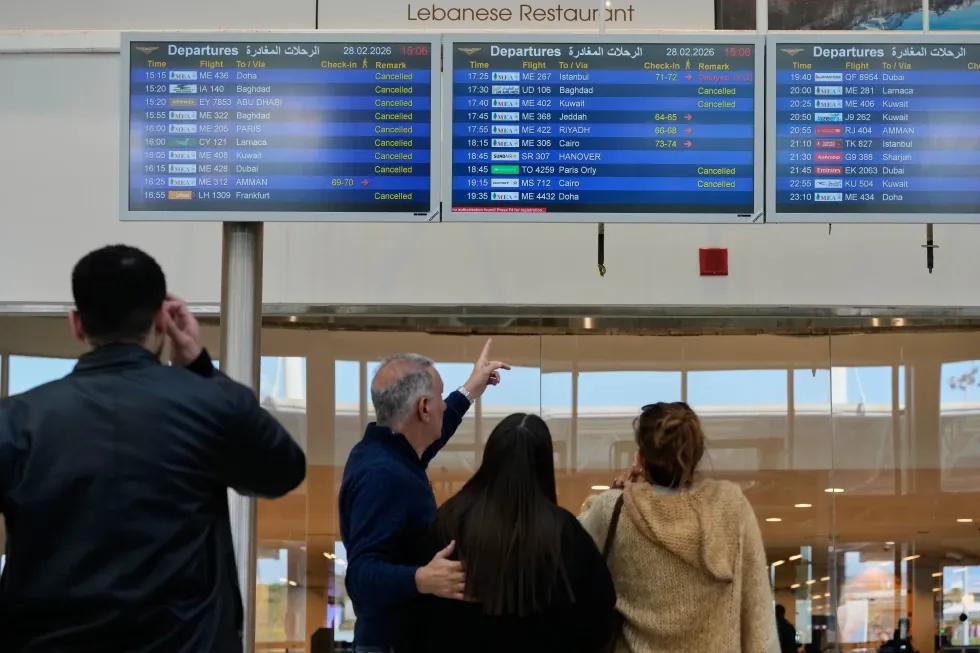
A broad closure of airspace across the Middle East in the wake of a joint United States and Israeli military strike on Iran has caused one of the most severe disruptions to global air travel in recent memory, leaving hundreds of thousands of passengers stranded, diverting flights and halting operations at critical transit hubs.
Europe‑Asia air traffic, which normally funnels through Gulf carriers and airports, was sharply curtailed after nations including Iran, Iraq, Kuwait, Israel, Bahrain, Qatar, and the United Arab Emirates shut or restricted their skies. Major airports in Dubai, Abu Dhabi and Doha — crucial links between Europe, Africa and Asia — were closed or heavily restricted, prompting widespread flight cancellations and lengthy reroutings.
Airlines and aviation analysts described the disruption as extensive and unpredictable, with continued closures and uncertainties over how long the restrictions will last.

Major Hubs Grounded, Passengers Stranded
With airspace closures spanning much of the Gulf region, key airports that normally carry tens of thousands of passengers each day fell silent. Dubai International Airport, one of the world’s busiest international travel hubs, suspended operations, and nearby Doha and Abu Dhabi hubs also halted flights, stranding passengers mid‑journey.
Flight tracking data showed skies over the UAE largely empty after a “temporary and partial closure” of its airspace, a move that cascaded through global airline networks reliant on Middle Eastern overflight paths.
Regional carriers including Emirates, Qatar Airways and Etihad, which together typically serve about 90,000 passengers daily through these hubs, had to cancel thousands of flights, aviation analytics firms said.
Officials in the United Arab Emirates reported incidents at two airports amid the military escalation, with injuries recorded at Dubai International and at Zayed International Airport in Abu Dhabi. Strikes were also reported at Kuwait International Airport, compounding safety concerns that underpinned the wide closures.
Safety Reroutes and Economic Ripples
Airlines that continued to operate sought alternate routing options, often flying south over Saudi Arabia to bypass restricted airspace. These detours add hours of flight time and extra fuel costs, potentially affecting ticket prices and airline scheduling in the coming days.
■ Related News


The disruption is particularly acute because Middle Eastern air corridors are central to east‑west routes between Europe and Asia. With restricted land in both east and west, airlines face limited alternatives, raising operational complexity and cost.
Analysts said airspace closures also deprive affected nations of overflight fees, a significant source of revenue for Gulf states that serve as aviation crossroads.
Airlines Adjust Services and Passengers Navigate Chaos
Major international carriers reacted by canceling or suspending flights to the region. Some, including Delta Air Lines and United Airlines in the United States, halted services to Tel Aviv and other Middle Eastern destinations through the weekend, while European and Asian airlines similarly adjusted schedules.
Numerous flights en route to destinations such as Tel Aviv and Dubai were diverted to airports in cities like Athens, Istanbul or Rome, while others turned back after take‑off. FlightAware data indicated that early Saturday dozens of flights were affected by these measures.
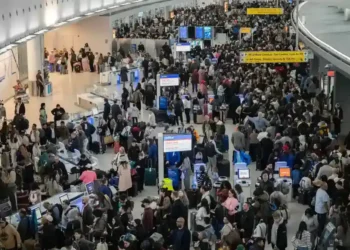
Airlines issued travel waivers allowing passengers to rebook without additional charges and advised travelers to check flight statuses before heading to airports. The uncertainty led to crowded terminals, long queues and passengers seeking information amid limited operational clarity.
Uncertainties and Wider Impacts
Experts are uncertain how long airspace restrictions will persist. In a previous episode of conflict between Iran and U.S.‑Israeli forces in 2025, disruptions lasted nearly two weeks, and analysts caution that similar patterns could recur.
“There’s no way to sugarcoat this,” said an airline industry analyst. “Travelers should prepare for delays or cancellations for the next few days as these attacks evolve.”
The evolving situation has underscored how geopolitical violence can quickly ripple through global infrastructure, exposing vulnerabilities in international aviation networks that depend on stable regional airspace for efficient operations.
Source: AP News – Hundreds of thousands of travelers stranded by flight disruptions after attack on Iran