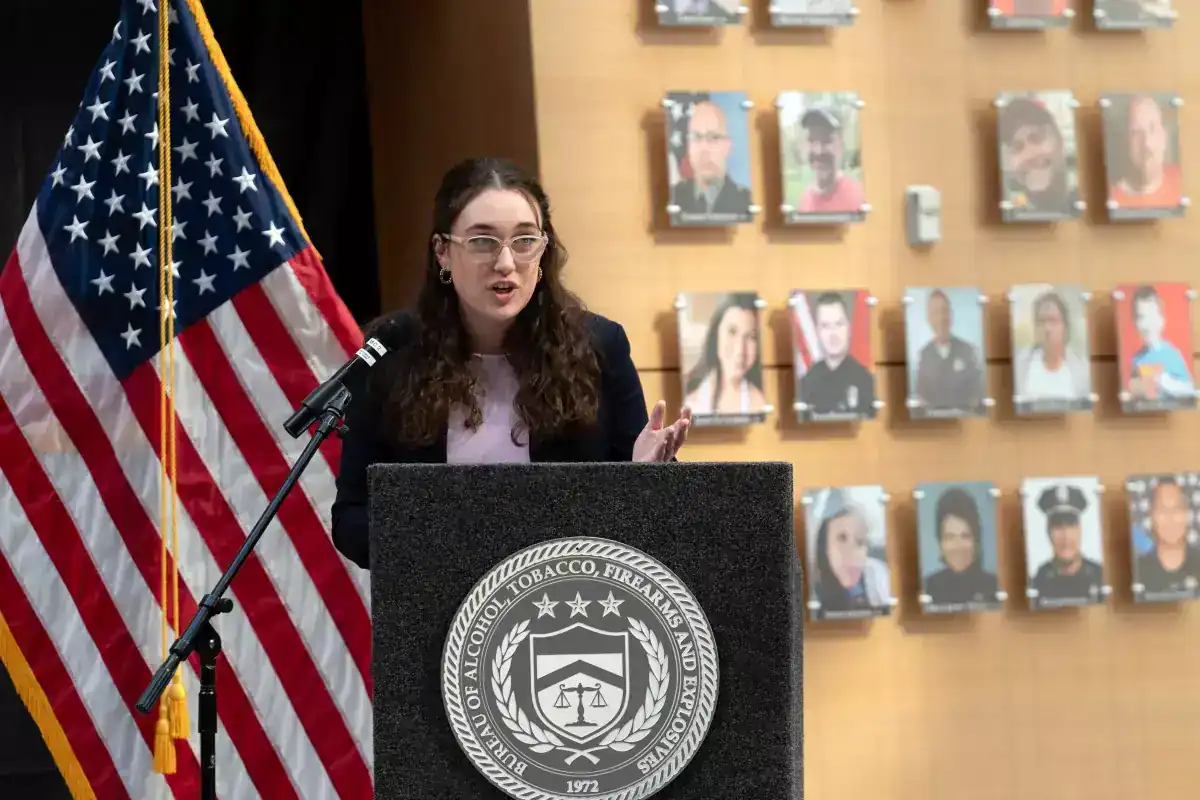
PROVIDENCE, R.I. (Journos News) – For Mia Tretta, the emergency alert that flashed across her phone during finals week at Brown University carried a grim familiarity. Nearly five years after she was shot in a classroom at Saugus High School in California, Tretta found herself sheltering in place again — this time as a college junior at Brown University.
By the end of the day, two people were dead and nine others injured in a shooting near the university’s engineering building in Providence. For Tretta, who was 15 when she was wounded in the 2019 attack that killed two classmates in Santa Clarita, the recurrence of campus violence felt both personal and emblematic of a wider pattern among her generation.
“No one should ever have to go through one shooting, let alone two,” Tretta said in a phone interview a day after the latest attack. “I never thought that this was something I’d have to go through again.”

A Generation Shaped by Lockdowns
Tretta’s experience reflects a broader reality confronting many American students who grew up practicing active-shooter drills and lockdown procedures. For some, those rehearsals have given way to repeated encounters with real violence.
In recent years, several survivors of the 2018 massacre at Marjory Stoneman Douglas High School in Florida have reported experiencing subsequent shootings after enrolling in college. The recurrence underscores how mass violence, once perceived as isolated tragedies, can mark students’ lives across different stages of education.
At Brown, the alerts on Saturday instructed students to lock down and stay away from windows. Tretta said she initially tried to dismiss the possibility that another shooting was underway. As the warnings continued, the language became unmistakable.
She had chosen Brown in part because it felt like a place where she could rebuild a sense of normalcy. “I chose Brown because it felt like somewhere I could finally be safe,” she said. “And it’s happened again.”
Personal Histories Collide
Tretta is not alone among her peers in carrying earlier trauma. Zoe Weissman, another Brown student, wrote on social media that she attended middle school in Parkland, Florida, adjacent to the high school where 17 people were killed in 2018. She recalled hearing gunshots and seeing first responders as events unfolded.
■ Related News



For Ben Greenberg, a sophomore at Brown, violence entered his life in a different way. In 2022, while he was in high school in Kentucky, a gunman opened fire at his father’s campaign office. His father, Craig Greenberg — now the mayor of Louisville — survived what authorities described as an assassination attempt.
Greenberg said the experience left him perpetually anxious about his family’s safety. When he moved to Providence for college, he believed some of that tension would ease. On Saturday, he was at home across the street from the building where the shooting occurred.
Fearing the possibility that the gunman might seek refuge nearby, he and his roommates barricaded their stairwell with a mini refrigerator and a bookcase. They placed bottles behind the makeshift barrier so that any disturbance would create noise.
“The impact of gun violence goes far beyond the individuals who are wounded or killed,” Mayor Greenberg said, reflecting on both the attack in Kentucky and the shooting in Providence. “Those impacts are real. They’re traumatic wounds.”
Advocacy and Research Interrupted
After surviving the 2019 shooting at Saugus High School, Tretta became active in gun-control advocacy. She rose to a leadership position with Students Demand Action, a youth-led group focused on tightening firearm laws. Her work brought her to meetings at the White House during the Biden administration and to discussions with then–Attorney General Merrick Garland.
Tretta has focused in particular on so-called “ghost guns” — firearms assembled from parts that can be difficult to trace — similar to the weapon used in the attack at her high school. Federal regulators have in recent years sought to clarify rules governing such kits, amid debate over enforcement and constitutional limits.
At Brown, Tretta studies international and public affairs and education. In a coincidence she described as unsettling, she had been preparing a paper examining the educational paths of students who have survived school shootings. The assignment was due within days of the latest attack.
Saturday marked the first time she had received an active-shooter alert at Brown. The familiarity of the language — instructions to lock down, silence phones, avoid windows — brought back memories she had hoped would remain in the past.
Enduring Questions
The Providence shooting adds to a continuing national debate over gun policy and campus security. While details of the suspect and motive were still emerging, the immediate toll was clear: two lives lost, nine people injured, and a campus community grappling with shock.
For students like Tretta and Greenberg, the episode reinforces a sense that the boundaries between high school and college — and between one tragedy and another — can blur.
Tretta said she had believed college would offer distance from the violence that shaped her adolescence. Instead, she found herself reliving familiar fears during what should have been an ordinary weekend of studying for exams.
“It didn’t have to,” she said quietly.
Source: LA Times – A Saugus High shooting survivor, now at Brown University, endures campus tragedy again