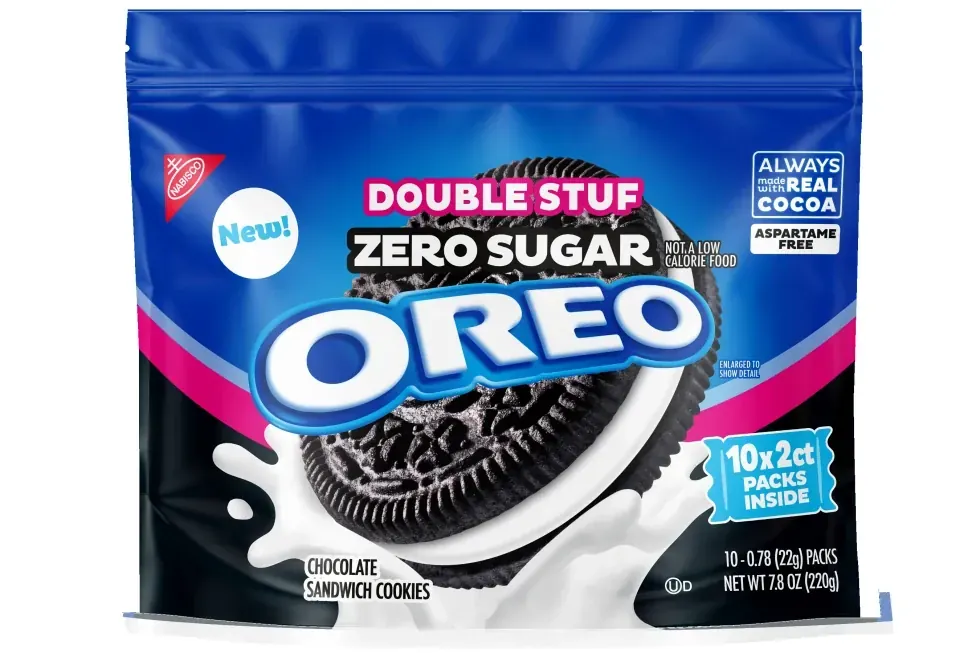
Oreo Zero Sugar cookies are set to arrive in U.S. stores in January, marking the first time the sugar-free version will be sold nationwide. The move reflects shifting consumer preferences toward lower-sugar options while maintaining familiar flavors. Parent company Mondelez International says the new products will become a permanent part of its portfolio.
As food manufacturers adapt to changing dietary habits, Oreo Zero Sugar cookies represent one of the most prominent brand extensions in the sweet snack aisle. Announced by Mondelez International, the new offerings will debut across the United States in January and include both Oreo Zero Sugar and Oreo Double Stuf Zero Sugar varieties.
The introduction places one of the world’s most recognizable cookie brands into the competitive sugar-free segment, where consumer expectations around taste and texture remain high. While sugar-free Oreos are already available in parts of Europe and China, this marks their first nationwide release in the U.S.

A response to “mindful indulgence”
Mondelez said the decision reflects growing consumer interest in what it describes as “mindful indulgence” — products that balance enjoyment with dietary awareness. Industry data has consistently shown rising demand for snacks perceived as healthier or more aligned with wellness goals.
Earlier this year, market research firm Circana reported that a majority of Americans are seeking snacks they consider “good for them.” Meanwhile, Conagra Brands, which produces items ranging from popcorn to meat snacks, said Millennials and Generation Z consumers are increasingly drawn to portion-controlled and wellness-focused options.
The broader beverage and confectionery market has seen similar trends. Coca-Cola reported that sales of Coca-Cola Zero Sugar rose 9% last year, compared with 2% growth for the original formula. In the confectionery sector, The Hershey Company offers zero-sugar versions of several flagship products, including Reese’s Peanut Butter Cups, while Voortman Cookies has built a presence around sugar-free wafer cookies.
Against that backdrop, Oreo’s entry into the U.S. sugar-free cookie segment fills what Mondelez describes as a gap in the sandwich cookie category.
Four years of development
Mondelez said it spent four years developing the zero-sugar Oreos to ensure they closely matched the flavor and texture of the original recipe. Replicating the distinctive taste of the classic cookie without added sugars required adjustments in sweetening and formulation.
■ Related News




The new cookies contain maltitol, a sugar alcohol commonly used in reduced-sugar products; polydextrose, a soluble fiber; sucralose, a sweetener derived from sugar; and acesulfame potassium, a synthetic sweetener. Such combinations are typical in sugar-free formulations designed to preserve sweetness and mouthfeel while lowering caloric and sugar content.
Product reformulation in established brands can carry reputational risk if consumers perceive a noticeable difference. Mondelez’s multi-year development effort underscores the commercial importance of maintaining brand consistency.
Comparing nutrition information
Direct comparisons between Oreo Zero Sugar and regular Oreos are not straightforward because the serving sizes differ.
A 22.6-gram serving of Oreo Zero Sugar contains 90 calories, 4.5 grams of fat and 16 grams of carbohydrates. By contrast, a serving of regular Oreos — defined as three cookies weighing 34 grams — contains 160 calories, 7 grams of fat and 25 grams of carbohydrates.
The most significant difference lies in added sugar content. A serving of regular Oreos contains 13 grams of added sugars, equivalent to 26% of the recommended daily amount. Oreo Zero Sugar contains no added sugars.
Nutrition labeling variations can influence consumer perception, particularly when serving sizes differ. Shoppers comparing products may need to review gram weights alongside calorie and sugar totals to make accurate assessments.
A competitive landscape
Mondelez’s move comes as large food companies increasingly compete in the better-for-you segment without abandoning core indulgent offerings. Brands with strong recognition face pressure to innovate while protecting established sales.
Oreo remains one of the company’s most globally recognized assets, and expanding into sugar-free variants may help broaden its consumer base. At the same time, the traditional product line continues to generate substantial sales.
By making Oreo Zero Sugar a permanent addition rather than a limited-time release, Mondelez signals confidence in sustained demand. Whether consumers embrace the new formula at the same scale as the original remains to be seen, but the launch reflects a wider recalibration within the packaged food industry.
As dietary awareness becomes more mainstream, manufacturers are increasingly balancing flavor, nostalgia and health considerations — a challenge that extends beyond any single product category.
Source: AP News – Oreo is bringing zero-sugar cookies to the US