The resurgence of British countryside dressing in 2025 has moved well beyond seasonal trend cycles. From waxed jackets and houndstooth tailoring to Fair Isle knits and kilts, rural-coded clothing has appeared on catwalks, celebrity wardrobes and city streets alike. What might once have been confined to equestrian events or country estates is now visible from London to New York.
The question is not simply why these garments are popular, but what their popularity indicates. The appeal of British country style intersects with questions of heritage, class aspiration, economic uncertainty and resistance to fast-moving digital trend cycles. Its endurance into 2026 appears less about novelty than about symbolism.
This analysis examines how cultural media, fashion houses, psychological drivers and shifting class narratives have converged to make countryside dressing one of the year’s most persistent aesthetics.

Royal Endorsement and Institutional Continuity
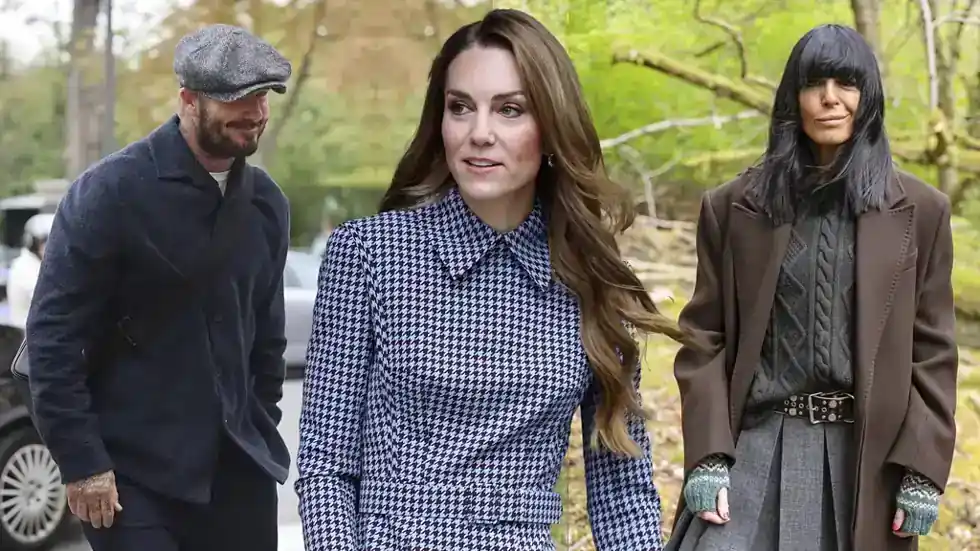
The British Royal Family has long functioned as a visual anchor for countryside style. The Princess of Wales has frequently appeared in tweed, riding boots and structured coats, often incorporating houndstooth—a pattern rooted in Scottish shepherd traditions—into formal engagements. Her recent appearance in a blue-and-black houndstooth design by Emilia Wickstead reinforced the continuity of this visual language.
The late Princess Diana similarly incorporated country tailoring into her wardrobe, embedding these textiles within a broader narrative of British aristocratic ease. Such visual continuity matters in fashion analysis: heritage garments gain renewed relevance when worn by figures associated with institutional stability.
Unlike celebrity-driven micro-trends that rise and fall within weeks, royal-adjacent style signals durability. That distinction appears central to its renewed traction.
Catwalk Translation: From Estate to Runway
Luxury fashion houses have reframed countryside codes for international audiences. Fendi’s autumn/winter 2024–25 menswear collection drew inspiration from the pragmatic elegance associated with Princess Anne, incorporating Barbour-style outerwear, leather wellington boots and tartan references. The collection did not reproduce rural clothing literally; rather, it elevated its silhouettes and fabrics into luxury contexts.
Meanwhile, Burberry creative director Daniel Lee referenced Britain’s “Friday night exodus” to the countryside in his autumn-winter 2025 presentation. The collection juxtaposed weatherproof materials with stately-home chintz, suggesting both functionality and inherited comfort.



French house Louis Vuitton similarly incorporated English pastoral motifs into recent collections. These gestures reflect an industry-wide recalibration: heritage codes provide narrative depth at a time when fashion brands seek authenticity amid consumer scepticism.
Perhaps most symbolically, Dior staged a major show at Drummond Castle in Scotland, collaborating with heritage textile producers such as Harris Tweed and Johnstons of Elgin. The decision to present in Scotland reinforced the legitimacy of these materials within global luxury.
This is not simply aesthetic borrowing. It is institutional alignment with craftsmanship traditions that predate modern fashion cycles.
Screen Culture and the Estate Imaginary
Television and film have amplified countryside aesthetics beyond fashion circles. Emerald Fennell’s Saltburn offered a stylised satire of British aristocratic life, foregrounding estate interiors and tailored country wardrobes. The series The Traitors, filmed in the Scottish Highlands and hosted by Claudia Winkleman, reinforced the visual link between dramatic landscapes and knitwear-heavy styling.
On streaming platforms, the Netflix documentary series Beckham spotlighted David Beckham adopting what social media has dubbed “Rich Autumn Dad” attire—tweed caps, flannel shirts and muted earth tones. The aesthetic blends approachability with implied wealth, presenting countryside dressing as relaxed authority rather than rigid formality.
Media representation matters because it shapes collective aspiration. The British estate—whether satirised or romanticised—functions as a symbol of permanence, lineage and insulation from volatility.
Reaction Against Micro-Trend Volatility
The resurgence of countryside style also coincides with fatigue around micro-trends accelerated by platforms such as TikTok. Short-lived aesthetics—from “balletcore” to hyper-specific seasonal themes—have compressed fashion cycles dramatically. According to fashion psychologists and industry observers, garments that signal longevity may operate as a counterbalance.
Waxed cotton jackets, tweeds and Fair Isle knits communicate durability. These fabrics are constructed for weather resistance and longevity rather than algorithmic virality. In a consumer landscape shaped by economic uncertainty and geopolitical instability, clothing that implies resilience may hold emotional appeal.
This does not necessarily indicate a wholesale rejection of trend culture. Rather, countryside dressing appears to offer symbolic stability within it. The garments suggest continuity with tradition, even when worn in urban environments far removed from fields and estates.
The Comfort Factor in Uncertain Times
Economic data across advanced economies continues to reflect inflationary pressures and uneven growth, according to reporting from Reuters and the Financial Times. In such contexts, consumption patterns often shift toward items framed as “investment” pieces—durable goods rather than disposable fashion.
Countryside fabrics reinforce this narrative. Tweed and waxed cotton are marketed as long-lasting; leather boots imply repairability rather than replacement. While luxury price points remain high, the underlying story centres on longevity.
Psychologically, textured natural fabrics may also evoke sensory comfort. Earth tones, heavy knits and layered tailoring correspond visually with ideas of shelter and insulation. In periods of instability, aesthetic cues associated with safety can gain traction.
Importantly, this comfort is symbolic as much as practical. Many urban wearers of barn jackets will not encounter rural weather extremes. The garments operate more as emotional signifiers than functional necessities.
The Class Paradox: Accessibility and Aspiration
Countryside dressing carries historical associations with British upper-class leisure—shooting weekends, inherited estates, Land Rovers parked outside manor houses. That symbolism introduces a tension: the aesthetic communicates privilege even when worn by those outside those social circles.
Fashion historically “aims upward,” borrowing codes from higher socioeconomic strata. However, the aspiration embedded in countryside style differs from youth-driven or celebrity-focused trends. It gestures toward lifestyle—space, land, quiet—rather than glamour.
The popularity of kilts from London-based brand Chopova Lowena, reinterpreted through punk and street influences, demonstrates how heritage garments can be subverted. When worn in East London or Brooklyn rather than rural Scotland, the kilt becomes commentary rather than costume.
Similarly, the ubiquity of Barbour jackets—originally functional outerwear—illustrates how context transforms meaning. On a country estate, it signals participation in rural tradition. In an urban creative district, it may signal irony, aspiration or appreciation of craftsmanship.
The ambiguity contributes to the trend’s flexibility. Countryside style can simultaneously reference privilege and critique it.
Globalisation of a Local Code
The appeal of British rural aesthetics in the United States reflects parallels between the UK’s country-house weekend culture and American equivalents such as summer migrations to coastal enclaves. The visual codes—earth tones, heritage patterns, structured tailoring—translate across contexts.
Fashion brands benefit from this portability. Heritage offers narrative consistency in a fragmented market. When global houses integrate British countryside motifs, they tap into a mythology already legible to international audiences through film and media.
That mythology is not static. It evolves through reinterpretation by designers and consumers. The presence of countryside codes in Paris and Milan suggests less a national revival than a globally circulating aesthetic language.
Durability or Cycle?
Whether countryside dressing represents a structural shift or an extended cycle remains uncertain. Fashion history demonstrates periodic returns to heritage aesthetics during times of social flux. The 1970s and early 1990s saw similar revivals of tweed and equestrian references.
However, the current iteration appears broader in scope, spanning luxury runways, high-street retailers and social media discourse simultaneously. Its endurance into 2026 will likely depend on macroeconomic stability and the persistence of nostalgia-driven storytelling in entertainment.
If economic conditions stabilise and digital trend velocity slows, the symbolic urgency of countryside dressing may diminish. Conversely, prolonged uncertainty could entrench its appeal as a visual shorthand for continuity.
What the Trend Ultimately Signals
British countryside dressing in 2025 functions less as costume and more as narrative. It suggests durability amid volatility, tradition amid fragmentation and understated privilege amid conspicuous consumption.
Its global reach underscores fashion’s ability to repackage local histories into transnational symbols. Yet its contradictions—comfort versus elitism, authenticity versus aspiration—remain unresolved.
Rather than declaring the trend ascendant or ephemeral, evidence indicates it occupies a moment shaped by cultural fatigue with speed and spectacle. Whether worn sincerely or subversively, countryside codes provide a framework through which consumers negotiate stability, identity and belonging.
In that sense, the question is not why tweed and waxed jackets are visible this year, but why the stories they tell resonate now.
Source: BBC – Why British countryside dressing has been big this year