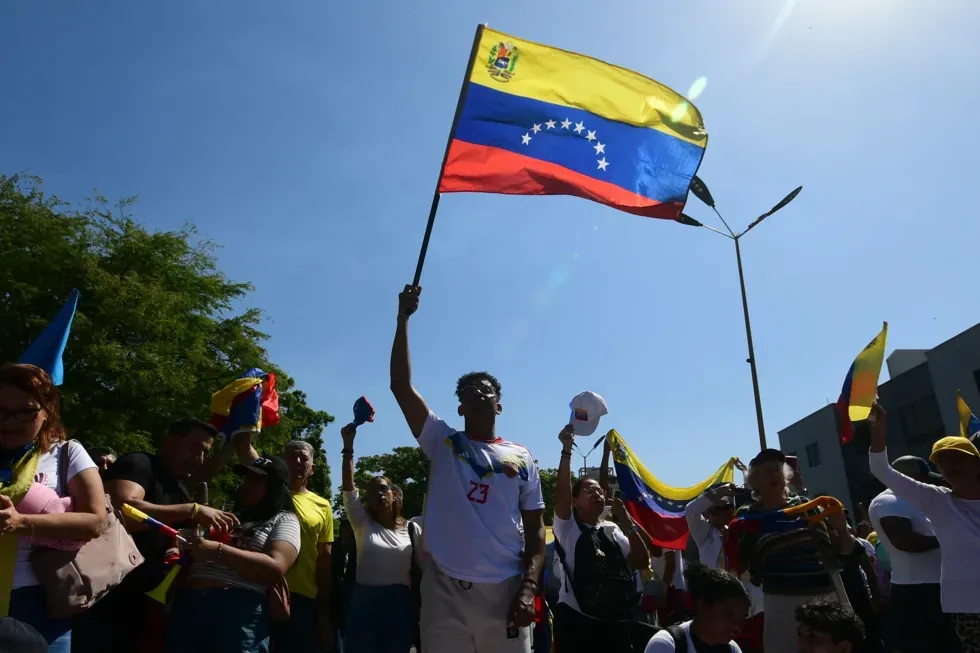
CARACAS, Venezuela (Journos News) – The United States and Venezuela have agreed to restore diplomatic relations, marking a major shift in ties between the two countries after the removal of former President Nicolás Maduro earlier this year.
The announcement, confirmed by the United States Department of State on Thursday, comes after months of political upheaval in the South American nation and a series of high-level U.S. visits aimed at shaping Venezuela’s post-Maduro transition.
Officials say the diplomatic reopening is part of broader efforts to stabilize the country and encourage a gradual move toward democratic governance following the January operation that forced Maduro from power.

The decision signals a dramatic recalibration in relations between Washington and Caracas after years of hostility, sanctions, and political standoffs.
Diplomatic Channels Reopen After Years of Estrangement
Diplomatic relations between Washington and Caracas were severed in 2019 after Venezuela’s government cut ties with the United States during a confrontation over legitimacy claims between Maduro and opposition leader Juan Guaidó.
At the time, the administration of Donald Trump publicly supported Guaidó as Venezuela’s interim leader, prompting Caracas to expel U.S. diplomats and forcing American personnel to relocate operations to neighboring Colombia.
According to the State Department, the renewed diplomatic engagement aims to establish conditions for what officials described as “a peaceful transition to a democratically elected government.”
The talks mark the first formal diplomatic thaw between the two governments in several years.
■ Related News


Strategic Engagement Expands Into Energy and Mining
Recent U.S. visits to Venezuela have focused heavily on economic recovery, particularly in the country’s vast energy and mineral sectors.
Doug Burgum, the U.S. Secretary of the Interior, concluded a two-day trip to Venezuela this week that centered on the nation’s mining industry. The visit followed a February mission by Energy Secretary Chris Wright, who held discussions related to Venezuela’s oil resources.
The country possesses some of the world’s largest proven crude reserves, and U.S. officials have suggested that reopening the sector to international investment could play a central role in Venezuela’s economic stabilization.
Analysts say Washington’s renewed engagement reflects broader strategic considerations, including global energy supply concerns and the possibility of reintegrating Venezuela into international markets after years of isolation.
Venezuelan Leadership Signals Openness to Cooperation
Venezuela’s acting president, Delcy Rodríguez, said on state television that restoring diplomatic ties could strengthen cooperation between the two countries.
In a later government statement, officials in Caracas said the move would help deepen mutual understanding and create opportunities for a “positive and mutually beneficial relationship.”
Rodríguez added that renewed ties should ultimately improve economic and social conditions for Venezuelans, many of whom have endured years of economic collapse and political conflict.
In recent months, Venezuela’s authorities have also taken steps aimed at easing international concerns, including approving an amnesty law that led to the release of numerous political detainees, activists, and lawyers.
Political Landscape Shifts as Elections Loom
The diplomatic reset comes amid significant changes within Venezuela’s political environment following Maduro’s ouster.
Opposition leader María Corina Machado — who was awarded the Nobel Peace Prize in 2025 — recently announced plans to return to Venezuela in the coming weeks. She also indicated that preparations are underway for new national elections.
Such developments represent a dramatic shift in the country’s political trajectory after years of entrenched power by the Chavista movement, commonly known as “Chavismo,” which dominated Venezuelan politics for decades.
Observers note that while restoring diplomatic relations marks a significant step, the long-term stability of Venezuela’s political transition will depend on credible elections, economic reform, and sustained international engagement.
Regional Stakes Rise as Transition Unfolds
For the United States and other governments in the Western Hemisphere, Venezuela’s political transformation carries implications that extend beyond bilateral relations.
The country’s economic recovery could influence regional migration patterns, energy markets, and geopolitical alignments across Latin America.
Diplomatic observers say the reopening of embassies and formal political dialogue may signal the start of a broader international effort to support Venezuela’s transition after years of sanctions, isolation, and political crisis.
Whether the rapprochement results in lasting stability will likely depend on how the country navigates its next phase — including the organization of elections and the rebuilding of state institutions.