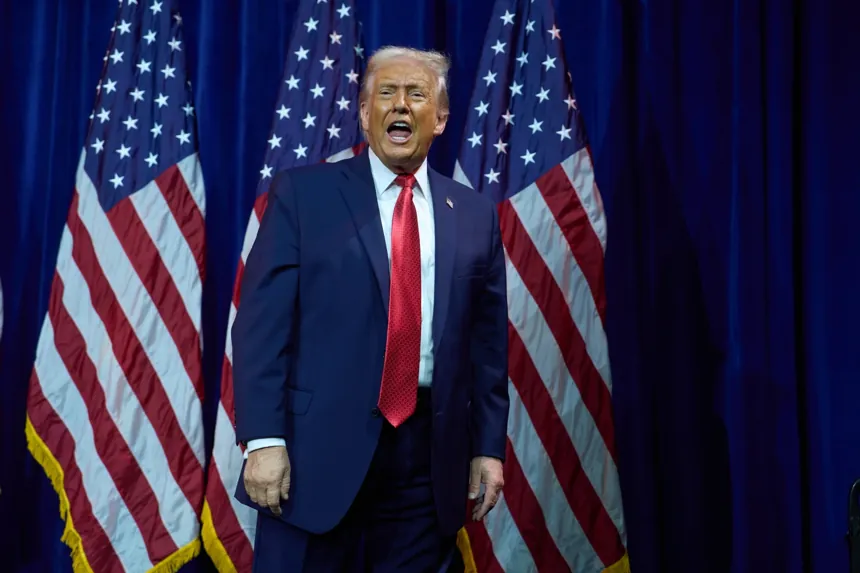
The United States is set to receive up to 50 million barrels of oil from Venezuela under a plan announced by President Donald Trump, marking a significant escalation in economic engagement following recent military actions in the country. The arrangement, involving sales at market prices, underscores a broader effort by Washington to reshape Venezuela’s energy sector while advancing strategic interests in the region.
The proposed transfer—equivalent to roughly two to three days of U.S. oil consumption—comes amid heightened geopolitical tensions after U.S. forces captured Venezuelan leader Nicolás Maduro in a controversial operation that has drawn international scrutiny. The development positions energy resources at the center of an evolving bilateral dynamic with global implications.
Officials speaking to The Associated Press said the oil would be sold at prevailing market rates, potentially generating up to $2.8 billion in revenue depending on price fluctuations. The White House has also scheduled discussions with major U.S. energy firms as part of a broader push to increase American involvement in Venezuela’s oil industry.

Strategic Control Over Energy Resources Expands
The plan reflects a shift toward direct U.S. influence over Venezuelan oil revenues, with Trump indicating that proceeds from the sales would be managed to benefit both nations. Analysts note that such an approach signals an unprecedented level of economic intervention tied closely to recent military developments.
Venezuela holds some of the world’s largest proven oil reserves, making it a critical asset in global energy markets. However, years of underinvestment and political instability have significantly reduced production capacity, limiting its current output despite vast reserves.
Political Tensions Deepen in Caracas
The announcement has been met with resistance from Venezuela’s interim leadership. Acting President Delcy Rodríguez publicly rejected external pressure from Washington, emphasizing national sovereignty amid ongoing political uncertainty.
The oil agreement follows a U.S. military operation that Venezuelan authorities say resulted in dozens of deaths, including security personnel. The incident has intensified domestic tensions and prompted calls for investigations, further complicating the political environment in Caracas.
Economic Stakes Rise for Global Energy Markets
Beyond bilateral relations, the proposed oil transfer carries implications for international energy markets. An influx of Venezuelan crude—if realized—could influence supply dynamics, particularly at a time of fluctuating global prices and geopolitical uncertainty.
■ Related News


Reporting from Reuters indicates that U.S. officials are seeking to involve major oil companies in rebuilding Venezuela’s struggling energy infrastructure, though industry leaders remain cautious about legal and political risks.
At the same time, the scale of the proposed shipment remains relatively modest in the context of overall U.S. demand, suggesting that its significance lies more in strategic positioning than immediate supply impact.
International Scrutiny Intensifies Over U.S. Role
The unfolding developments have drawn attention from global actors concerned about sovereignty, intervention, and resource control. Analysts interviewed by Financial Times suggest the situation may test international norms around resource governance in conflict or post-intervention settings.
The combination of military action and economic restructuring has prompted broader questions about the future of governance in Venezuela and the role of external powers in shaping its recovery.
Outlook Hinges on Stability and Implementation
As Washington moves forward with its plans, the success of the oil arrangement will depend on political stability in Venezuela and the willingness of international stakeholders to engage. Legal, logistical, and diplomatic challenges remain significant, particularly given the contested authority within the country.
The initiative signals a potential reordering of energy and political dynamics in Latin America, with implications extending beyond bilateral ties to the wider global system.