Journos News - Breaking News, World News, Top Stories, Todays Headlines and Flash Reports
Tuesday, September 1, 2026
  • Login
  • Home
  • World
    • Africa
    • Americas
    • Asia
    • Europe
    • Middle East
    • Oceania
  • Politics
  • Business
  • Technology
  • Health
  • Science
  • Sports
  • Entertainment
  • Culture
No Result
View All Result
  • Home
  • World
    • Africa
    • Americas
    • Asia
    • Europe
    • Middle East
    • Oceania
  • Politics
  • Business
  • Technology
  • Health
  • Science
  • Sports
  • Entertainment
  • Culture
No Result
View All Result
Journos News - Breaking News, World News, Top Stories, Todays Headlines and Flash Reports
No Result
View All Result
Home World News Middle East

U.S. Intel: Iran’s Nuclear Program Survived American Airstrikes

Despite Airstrikes, Iran’s Nuclear Capabilities Remain Largely Intact

The Daily Desk by The Daily Desk
June 20, 2026
in Middle East, World News
0
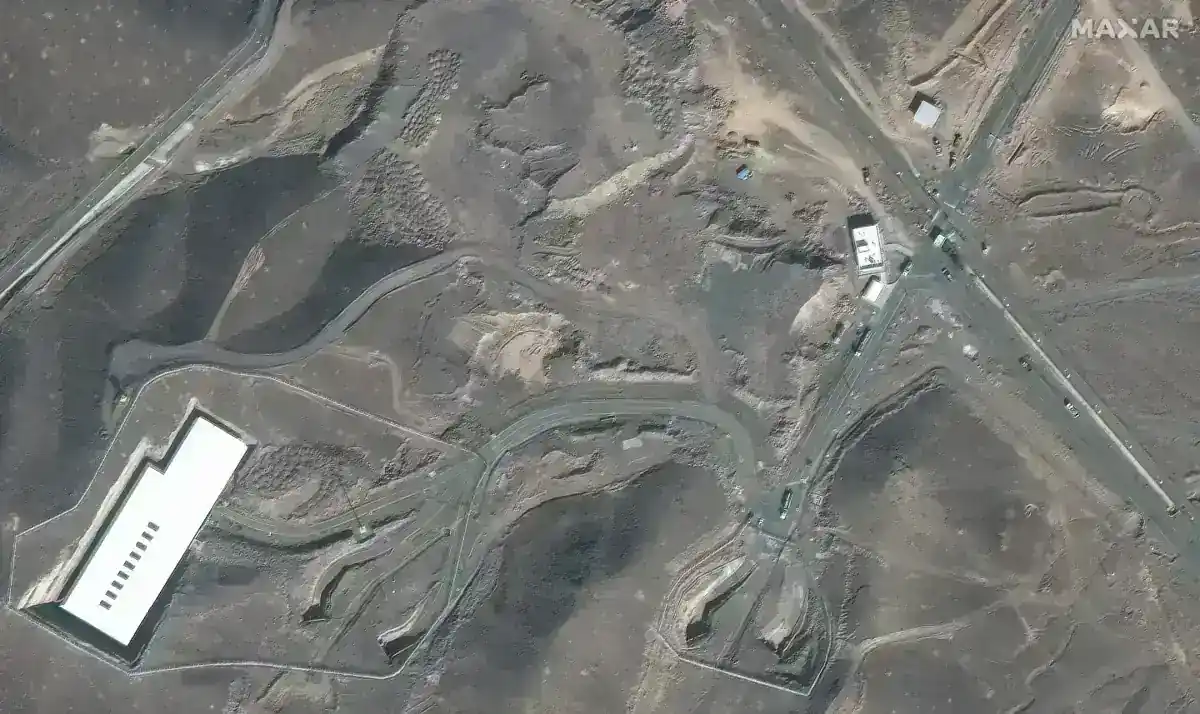
Leaked Intelligence Contradicts Trump on Iran Nuclear Strike Damage - Maxar Technologies via AP

Inside the U.S. Report Challenging Trump’s Claim on Iran Airstrikes - Maxar Technologies via AP

U.S. Intel: Iran’s Nuclear Program Survived Strikes, Set Back Only Months

Despite President Trump’s claims of “total obliteration,” a new U.S. intelligence assessment paints a much more measured picture of the damage done to Iran’s nuclear program following recent American airstrikes.

According to an early report from the Defense Intelligence Agency (DIA), the strikes—though damaging—set Iran back by only a few months. They didn’t destroy Iran’s nuclear infrastructure entirely, as both Trump and Israeli Prime Minister Benjamin Netanyahu have publicly claimed.

The findings, first reported by CNN and confirmed by two officials familiar with the classified report, challenge the public narrative pushed by the White House and raise concerns among experts that Iran may still retain the capability to eventually build a nuclear weapon.

Key Findings: What the U.S. Intelligence Report Reveals

  • Damage was significant but not total: The DIA report states that while U.S. bombers hit nuclear facilities at Fordo, Natanz, and Isfahan, these sites were not completely wiped out. Fordo’s entrance collapsed and infrastructure was damaged, but the underground enrichment facility remains largely intact.
  • Iran preserved key materials: Intelligence suggests Iran had moved some of its enriched uranium stockpile before the strikes. It also retained much of its centrifuge infrastructure, essential for enriching uranium to weapons-grade levels.
  • Minimal long-term disruption: Experts say the strikes set Iran’s program back only several months—far from the permanent destruction claimed by Trump and Netanyahu.
  • Missed opportunity? The report raises the possibility that Iran, anticipating a strike, strategically relocated key assets, including uranium and possibly centrifuges, making the airstrikes less effective than hoped.

White House Pushes Back, Trump Doubles Down

The White House quickly rejected the DIA’s assessment. Press Secretary Karoline Leavitt called the leaked report “flat-out wrong” and accused officials of trying to “demean President Trump” and the U.S. military.

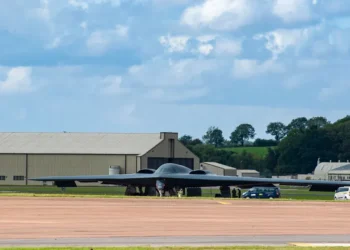
“Everyone knows what happens when you drop fourteen 30,000-pound bombs perfectly on their targets: total obliteration,” Leavitt said.

Trump’s special envoy, Steve Witkoff, who claims to have reviewed damage reports, echoed the president’s messaging and went a step further—calling the leak “treasonous” and demanding an investigation.

Trump has repeatedly insisted that the strikes left Iran’s nuclear program in ruins and that the country will “never rebuild” its facilities.

Netanyahu, too, took a victory lap, calling the strikes “historic” and declaring, “we brought to ruin Iran’s nuclear program.”


■ Related News

USS Abraham Lincoln aircraft carrier underway in the Atlantic Ocean during a U.S. Navy training exercise.

USS Abraham Lincoln to Stop in Thailand After Lengthy Middle East Deployment

August 27, 2026
Social Security Administration offices at 3971 South Research Park Drive in Ann Arbor, Michigan.

How to Avoid a Social Security Cut? Lawmakers Are Floating Ideas

August 27, 2026
U.S. President Donald Trump greets Chinese leader Xi Jinping before a bilateral meeting in Busan, South Korea.

Trump’s Iran Economic Campaign Faces a Test in China

August 26, 2026
Diorama at Hiroshima Peace Memorial Museum showing the city after the atomic bomb blast, with a red marker indicating the blast location.

Nagasaki Anniversary Highlights Japan’s Nuclear Policy Dilemma

August 10, 2026

What Experts and Satellite Images Suggest

Outside observers have long suspected Iran might attempt to hide its most sensitive materials. New satellite images appear to confirm that theory:

  • Trucks and bulldozers were seen at Fordo days before the attack, possibly moving enriched uranium or sealing tunnel entrances with dirt.
  • Maxar Technologies, a satellite imaging firm, confirmed that Fordo’s tunnels were sealed before the bombs hit, suggesting Iran had anticipated the strikes.
  • Eric Brewer, a former U.S. intelligence analyst, said it’s plausible that uranium enriched to 60% was removed and that some equipment, like centrifuges, may have also been relocated.

Could Iran Still Build a Bomb?

According to experts, the answer is yes—though with some caveats.

  • Iran holds enough enriched uranium to build several bombs if it chooses to enrich it further to 90% weapons-grade levels, according to the International Atomic Energy Agency (IAEA).
  • Vice President JD Vance defended the operation, saying that even if Iran kept some uranium, the strikes dismantled their ability to convert it into a weapon: “That is mission success.”
  • IAEA Director Rafael Grossi has repeatedly warned that Iran’s stockpile could enable weapon production if political leadership gives the order—something that has not yet officially happened.
  • Iran is also said to be constructing a third enrichment site in Isfahan, but after the joint Israeli-American strikes, the status of that site is now uncertain.

So Where Does This Leave Us?

The big takeaway: While the strikes were powerful and symbolic, they fell short of eliminating Iran’s nuclear potential.

Iran still retains a “solid foundation” for restarting its nuclear efforts, says Brewer, especially if it chooses to go covert. And with critical materials and knowledge still intact, the international community may soon face a more determined and less transparent nuclear Iran.

Kelsey Davenport, a nonproliferation expert at the Arms Control Association, warned that if Iran has already hidden centrifuges, it could enrich weapons-grade uranium at a secret facility with a small footprint.

However, Brewer notes that any covert effort would start at a disadvantage. Iran has lost some key equipment and personnel, and building a bomb won’t happen overnight.

The Bigger Picture

With tensions high and facts disputed, the truth likely lies somewhere in between public declarations and classified assessments.

Yes, the strikes hit Iran hard—but “obliteration” may be more political theater than military fact. And if Iran’s nuclear ambitions remain alive, the path forward could be even more complicated than before.

Source: CNN – Early US intelligence report suggests US strikes only set back Iran’s nuclear program by months

Tags: #BunkerBuster#DefenseIntelligence#DIAReport#Fordo#ForeignPolicy#Geopolitics#GlobalSecurity#IAEA#IntelReport#InternationalRelations#IranCrisis#IranEnrichment#IranNuclear#IranStrike#Isfahan#MiddleEastTensions#MilitaryNews#Natanz#NationalSecurity#NuclearProgram#NuclearThreat#NuclearWeapons#Tehran#TrumpAdministration#TrumpNews#USAirstrikes#USMilitary#USPolitics#WeaponsOfMassDestruction#WhiteHouse
The Daily Desk

The Daily Desk

The Daily Desk is a contributor at JournosNews.com covering politics, media, governance, and the evolving dynamics of public discourse. Stories published under this byline are produced in accordance with JournosNews' editorial standards, with an emphasis on verified reporting, accuracy, context, and impartiality.

Related Posts

An Iraqi Special Operations Forces armored personnel carrier drives along a street in Mosul during the battle against Islamic State forces.

Iraq Struggles to Balance U.S. and Iran as Regional War Intensifies

August 10, 2026
U.S. President Donald Trump meets Israeli Prime Minister Benjamin Netanyahu in the Oval Office to discuss a Gaza peace plan.

Israel Rejects Gaza Withdrawal Plan as Houthi Attacks Raise Regional Tensions

August 10, 2026
President Joe Biden speaks by phone with Indian Prime Minister Narendra Modi in the Oval Office at the White House.

Hunter Biden Says Joe Biden’s Cancer Has Spread to Bones and Is Causing Pain

August 9, 2026
Editorial explainer showing how paid political content moves from campaigns to creators and voters, and why disclosure matters in California.

California Weighs Fines for Creators Who Fail to Disclose Paid Political Posts

August 9, 2026
Former Taiwan President Tsai Ing-wen observes military personnel and equipment during the Han Kuang 32 military exercise in Pingtung County.

Taiwan Military Drills Highlight Closer U.S. Alignment as China Tensions Persist

August 7, 2026
Firefighters from Ukraine's State Emergency Service work among the rubble of a severely damaged building as smoke rises following a Russian attack in Kyiv.

Ukraine Expands Strikes on Russian Oil Facilities as Kyiv Seeks Stronger Air Defenses

August 7, 2026
A U.S. Navy sailor stands watch aboard a military vessel while transiting the Strait of Hormuz, monitoring nearby maritime traffic.

Iran Nears Strait of Hormuz Agreement as Israel Reports First Troop Deaths Since Lebanon Ceasefire

August 6, 2026
U.S. Army Staff Sgt. Allen Kemper welds metal pipes at the ARCENT Innovation and Manufacturing Center in Kuwait during manufacturing operations.

US Critical Minerals Firms Expand Domestic Supply as Defense Industry Cuts Reliance on China

August 4, 2026
Load More
Next Post
A New Era Begins: Lore and Rodriguez Finalize Timberwolves Purchase - AP Photo/Abbie Parr, File

NBA Approves $1.5B Sale of Timberwolves and Lynx to Lore and A-Rod

Anthropic’s Claude Gets Legal Boost, But Book Piracy Trial Looms - AP Photo/Richard Drew, File

Judge Says Anthropic’s AI Training Was Legal — But Piracy Claims Head to Trial

JournosNews logo

Journos News delivers globally neutral, fact-based journalism that meets international media standards — clear, credible, and made for a connected world.

  • Categories
  • World News
  • Politics
  • Business & Markets
  • Technology
  • Health
  • Science
  • Sports
  • Arts & Culture
  • Resources
  • Editorial Standards
  • Submit a Story
  • Advertise with Us
  • Syndication & Partnerships
  • Site Map
  • Press & Media Kit
  • Editorial Team
  • Careers

Join thousands of readers receiving the latest updates, tips, and exclusive insights straight to their inbox. Never miss an important story again.

  • About Us
  • Editorial & Trust Center
  • Contact Us
  • Privacy Policy
  • Terms of Use & Copyright Notice

© JournosNews.com All rights reserved.

Welcome Back!

Login to your account below

Forgotten Password?

Retrieve your password

Please enter your username or email address to reset your password.

Log In
JournosNews

Independent Journalism.
Verified Facts.

You're about to read a professionally edited article from JournosNews.com.

Every article is produced in accordance with our editorial standards, emphasizing factual accuracy, transparent attribution, fairness, editorial independence, and meaningful context.

Editorial Standards
No Result
View All Result
  • Home
  • World
    • Africa
    • Americas
    • Asia
    • Europe
    • Middle East
    • Oceania
  • Politics
  • Business
  • Technology
  • Health
  • Science
  • Sports
  • Entertainment
  • Culture

© JournosNews.com All rights reserved.

This website uses cookies. By continuing to use this website you are giving consent to cookies being used. Visit our Privacy and Cookie Policy.