TYRE, Lebanon – The Lebanese coastal city of Tyre is attempting to recover from weeks of Israeli airstrikes, but residents say uncertainty continues to overshadow daily life despite a recently announced ceasefire between Israel and the Iran-backed Hezbollah militant group.
While the latest truce has reduced the intensity of fighting, many residents remain skeptical that the calm will last. Previous ceasefires have collapsed, and ongoing diplomatic efforts involving regional and international actors have yet to provide assurances of long-term stability.
The conflict has inflicted widespread damage across southern Lebanon, where communities continue to grapple with displacement, destroyed infrastructure, and economic disruption.

Residents Remain Wary Despite Ceasefire
Tyre, one of Lebanon’s oldest cities and a major Mediterranean destination, would normally be crowded during the summer tourism season. Beaches, restaurants, archaeological sites, and waterfront attractions typically draw visitors from across the country and abroad.
Instead, many businesses remain closed, tourism activity has largely disappeared, and public spaces have been transformed by the needs of displaced families.
Ali Bazzi, whose home in the nearby town of Toura was destroyed in an Israeli strike, now lives aboard a tour boat in Tyre’s harbor. To support himself, he operates a small sandwich stand near the waterfront.
“Every day they tell us there’s a truce or ceasefire. Where is this truce? We can’t see it,” Bazzi said.
Like many residents displaced by the conflict, he says he is unwilling to return home until there is greater confidence that hostilities will not resume.
■ Related News


Damage Extends Across Historic City
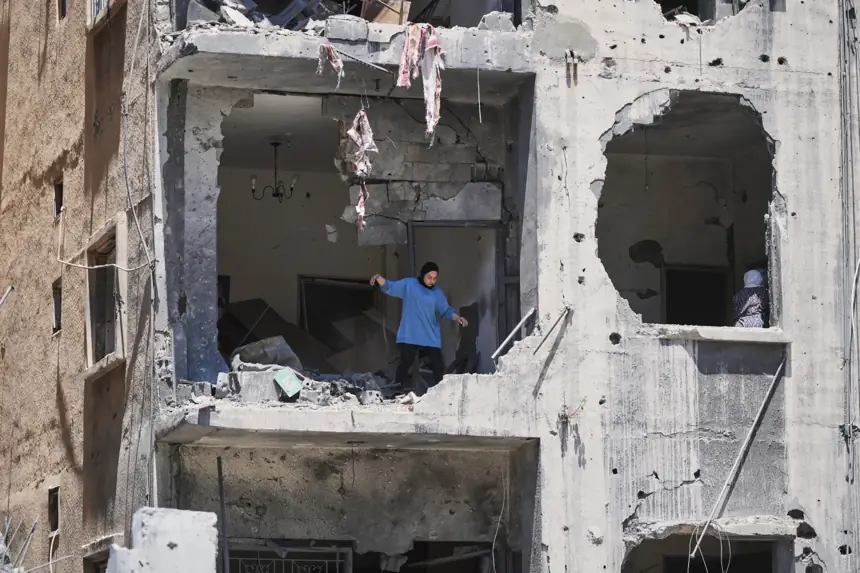
The effects of the conflict are visible throughout Tyre, where damaged buildings and memorials to those killed have become part of the urban landscape.
Residents say Israeli strikes intensified after warnings were issued in early June urging people to evacuate the city before military operations targeting Hezbollah positions.
Although parts of the city remain standing, many structures have suffered significant damage. Streets contain collapsed buildings, shattered facades, and signs of extensive destruction.
The conflict has also affected Tyre’s archaeological heritage.
Structures located near the remains of a second-century citadel were damaged, while debris reportedly struck sections of Roman-era ruins that form part of the city’s internationally recognized historical sites.
Adnan Istanbuli of Lebanon’s Directorate General of Antiquities said officials are awaiting an assessment to determine the extent of the damage.
“The city of Tyre is 5,000 years old, and what happened to it is huge,” he said.
Environmental Concerns Emerge Along Coast
Beyond urban damage, environmental advocates have raised concerns about the impact of military operations on ecologically sensitive areas south of the city.
The shoreline near Mansouri, known for wildlife conservation efforts and sea turtle habitats, has become inaccessible following Israeli strikes in the area.
Environmental activist Mona Khalil, who lived along the coast, died from injuries sustained in an earlier strike, according to reports from local residents and officials cited in the source material.
The situation has intensified concerns about the long-term effects of the conflict on protected coastal ecosystems.
Health Facilities Confront New Security Fears
Medical workers in Tyre say the conflict has altered perceptions of safety even within healthcare facilities.
At Jabal Amel Hospital, staff are repairing units damaged when an Israeli strike hit a nearby building. Hospital personnel described scenes of shattered windows, destroyed infrastructure, and emergency treatment efforts following the attack.
Khadeeja Yousef, a nurse working in the hospital’s intensive care unit, said staff members feel increasingly vulnerable after strikes occurred in close proximity to medical facilities.
“We used to be scared, but we’re a lot more scared now,” she said.
Cardiologist Mohammad Nassar is also dealing with the aftermath of the conflict after his private clinic was damaged. He said he has been searching through the debris for a personal collection of books accumulated over several decades.
Long-Term Stability Remains Uncertain
Despite the relative calm brought by the ceasefire, many residents believe the future remains unclear.
Negotiations involving Israel and Lebanon continue in Washington, while Hezbollah remains opposed to efforts aimed at disarming the group. At the same time, portions of territory south of Tyre remain under Israeli control near the United Nations-demarcated Blue Line separating the two countries.
Residents report that signs of ongoing military activity remain visible, including distant artillery fire and military positions overlooking parts of southern Lebanon.
For many in Tyre, the ceasefire has reduced immediate violence but has not eliminated concerns about what comes next. As reconstruction begins and displaced families weigh whether to return home, uncertainty continues to define life in one of Lebanon’s most historic cities.
Tags: Lebanon, Tyre, Israel, Hezbollah, Ceasefire, Southern Lebanon, Conflict, Humanitarian Crisis, Middle East,