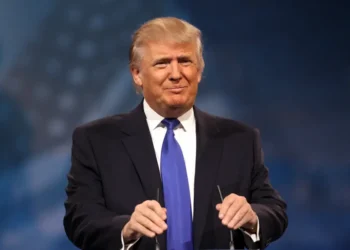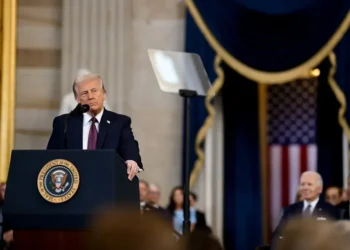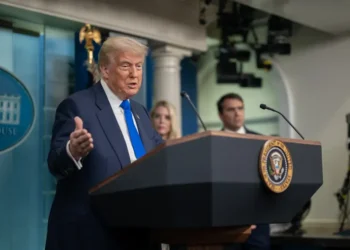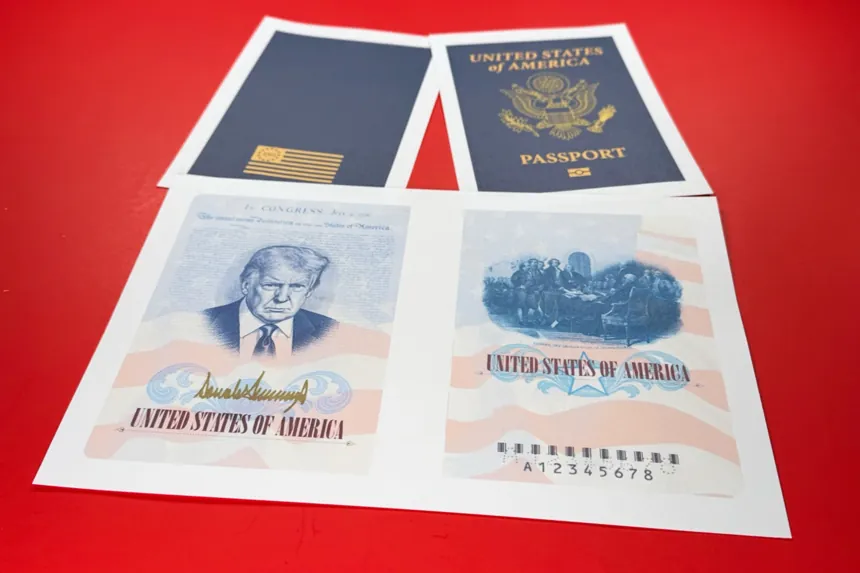
The United States is preparing to issue a commemorative passport featuring former President Donald Trump as part of events marking the country’s 250th anniversary of independence, a decision that underscores the political undertones surrounding the historic milestone.
The initiative, reported by The Associated Press, comes as federal agencies begin rolling out plans for the 2026 semiquincentennial, an event expected to draw global attention and diplomatic participation. Officials familiar with the program say the special-edition passport is intended as a collectible item rather than a replacement for standard travel documents.
The inclusion of Trump’s image has already introduced a layer of political sensitivity to what is typically framed as a unifying national celebration. While US commemorative materials have historically highlighted symbols such as founding figures or national landmarks, this move places a contemporary political figure at the center of an internationally visible document.

Political Symbolism Shapes National Commemoration
The decision reflects broader debates within the United States about how to represent national identity during major anniversaries. Analysts note that featuring a modern political leader—particularly one as polarizing as Trump—may influence how international audiences interpret the celebrations.
According to reporting from The Associated Press, planning for the 250th anniversary has involved multiple federal bodies tasked with coordinating events, cultural programs, and international outreach. The passport initiative is one of several efforts aimed at creating lasting memorabilia tied to the milestone.
Experts in diplomatic signaling suggest that such choices can carry implications beyond domestic politics. Commemorative items distributed during globally observed anniversaries often serve as soft-power tools, shaping perceptions of national unity and governance.
International Perception and Diplomatic Optics
With the anniversary expected to draw participation from foreign governments and international organizations, the design of official materials could influence diplomatic optics. Observers say the use of a political figure in official memorabilia may be interpreted differently across regions, particularly in countries where political neutrality in state symbols is emphasized.
Officials have not indicated whether additional commemorative passports featuring other figures or themes will be issued, leaving open questions about the broader representational strategy for the anniversary.




The US State Department, which oversees passport issuance, has not publicly detailed how widely the commemorative version will be distributed or whether it will be available to the general public.
Strategic Stakes Ahead of a Global Milestone
The 250th anniversary of US independence is expected to be one of the most significant international events hosted by Washington in decades, with planned summits, cultural exchanges, and economic forums. Governments often use such milestones to reinforce alliances and project national narratives to global audiences.
Analysts interviewed by international outlets, including Financial Times, note that the framing of the anniversary could influence how the United States positions itself amid shifting geopolitical dynamics. Decisions about symbolism, messaging, and representation are likely to be closely scrutinized by allies and rivals alike.
As preparations accelerate, the commemorative passport initiative highlights how even ceremonial elements of statecraft can carry broader geopolitical meaning. The coming months are expected to reveal whether the US will adopt a more inclusive historical narrative or continue to incorporate contemporary political figures into its global-facing commemorations.