Getting a tattoo is often impulsive, emotional, or deeply personal. Removing one, however, is rarely quick, cheap, or painless. As tattoo culture continues to expand globally, a growing number of people are discovering that erasing body art can be a far more intense experience than getting inked in the first place.
Celebrities such as Colin Farrell, Angelina Jolie, and Megan Fox have publicly undergone tattoo removal, reflecting a broader trend that extends well beyond Hollywood. From faded relationships to shifting identities, the reasons people seek removal are varied — but the process itself is consistently described as painful, expensive, and medically complex.
Tattoos have existed for thousands of years — removal nearly as long
Archaeological evidence suggests tattooing dates back at least 5,000 years. The oldest known tattoos were found on the preserved remains of a Neolithic man discovered in the Italian Alps, dating to around 3,000 B.C. Ancient Egyptian mummies and remains from Indigenous cultures across multiple continents also show evidence of tattooing.
Early tattoo removal methods were crude and often dangerous, involving scraping or cutting the skin to remove pigment. Modern laser removal emerged in the 1960s, when dermatologist Leon Goldman at the University of Cincinnati pioneered the use of laser technology to break down tattoo ink beneath the skin.
Today’s laser systems are far more precise, but they still rely on controlled skin trauma to disperse ink particles so the body can absorb and eliminate them.
Why people get tattoos — and why many later regret them
A 2023 Pew Research Center survey found that 32% of U.S. adults have at least one tattoo, with about 22% having multiple tattoos. Commemoration remains the most common motivation, with many people choosing tattoos to honor loved ones, mark recovery, or symbolize personal growth.
Yet the same survey found that nearly one in four adults regret at least one tattoo.
For Tracy Herrmann, a 54-year-old from Plymouth, Michigan, tattoos once served as emotional anchors during a difficult period of her life. Phrases such as “One step at a time” and “Surrender” helped her navigate personal challenges.
Years later, she decided some no longer reflected who she is today.
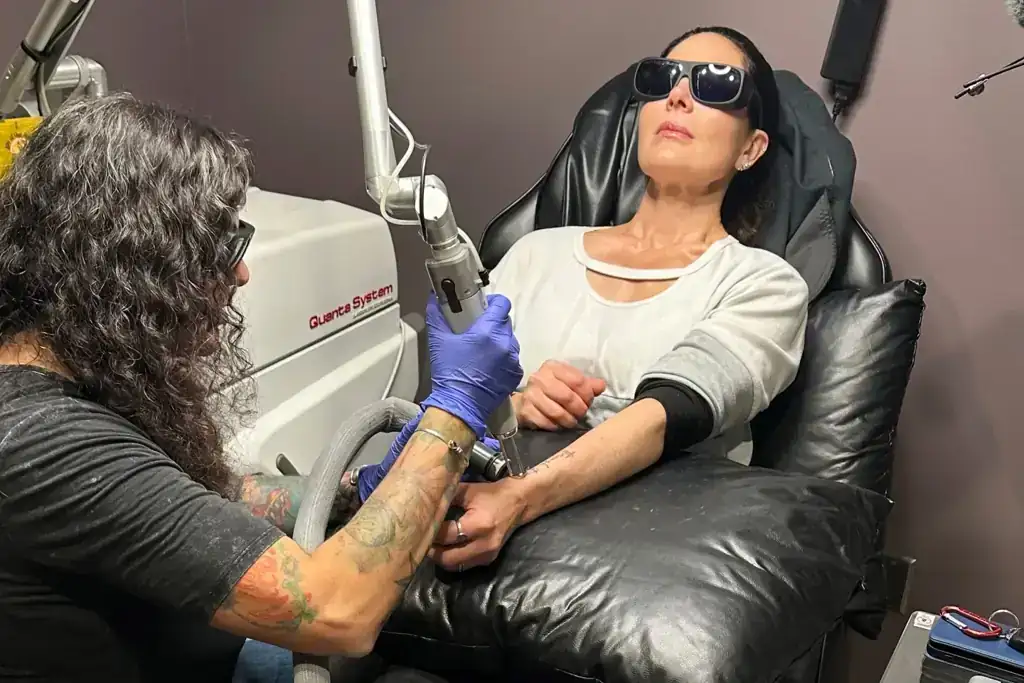
“They were pivotal at the time,” Herrmann said during a removal session at Chroma Tattoo Studio & Laser Tattoo Removal in Brighton, Michigan. “Now, I just want to move forward and return to the skin I was born with.”
Change, boredom, and reinvention drive removal decisions
Industry professionals say tattoo removal is rarely about hatred or embarrassment. More often, it reflects personal change.
Ryan Wright, a registered nurse and owner of Ink Blasters Precision Laser Tattoo Removal in Livonia, Michigan, says many clients remove older tattoos to make space for new ones or to update their appearance.
“A new tattoo can make old work look out of place,” Wright said. “People want a clean slate or something that fits who they are now.”
Chroma owner Jaime Howard notes that boredom also plays a role.
“Some people get tattoos on a whim,” she said. “Later, they realize it no longer represents them. It’s not rejection — it’s evolution.”
Laser tattoo removal is intensely painful
Despite technological advances, pain remains one of the most common surprises.
Most clinics use Q-switched lasers, which deliver high-energy pulses in fractions of a second. These bursts shatter ink particles beneath the skin but also create intense heat and impact.
“Nine out of 10 on the pain scale,” Wright said. “It feels like snapping a rubber band dipped in hot grease.”
Howard, who has undergone removal herself, describes lingering discomfort similar to severe sunburn. While sessions typically last under a minute per tattoo, the aftermath can involve swelling, redness, and soreness for days.
“It’s painful,” she said. “But if you really want it gone, you push through.”
Removal takes months — sometimes years
Tattoo removal is never a single-session procedure. Most tattoos require eight to twelve treatments, spaced weeks apart, depending on ink depth, color, skin tone, and immune response.
The laser breaks ink into microscopic particles, which the body gradually filters out. Healing time between sessions is essential, particularly if the goal is complete removal or a clean surface for a cover-up tattoo.
Herrmann, now several sessions into her process, says the pain is intense but manageable.
“It’s a 10 when it’s happening,” she said. “But it’s doable. And for me, it’s worth it.”
The financial cost adds up quickly
Cost is another major barrier. Clinics typically charge per session based on tattoo size rather than treatment time.
Howard’s studio charges a minimum of $100 per session, while Wright says costs rise with larger or more complex designs.
“You’re paying for the technology and the expertise,” Wright said. “Most treatments take under a minute, but improper use can permanently damage skin.”
Over multiple sessions, total costs can easily reach thousands of dollars.
Laser tattoo removal is not safe for everyone
Medical professionals caution that laser tattoo removal carries real risks. According to the U.S. Food and Drug Administration, potential side effects include skin discoloration, scarring, infection, and prolonged soreness.
Certain medical conditions increase risk. Wright says his clinic excludes clients with uncontrolled diabetes, autoimmune disorders, immune deficiencies, or those taking blood thinners.
Consultations are mandatory, and clients must acknowledge potential complications before treatment begins.
“This isn’t cosmetic play,” Wright said. “It’s a medical-grade procedure.”
This article was rewritten by JournosNews.com based on verified reporting from trusted sources. The content has been independently reviewed, fact-checked, and edited for accuracy, neutrality, tone, and global readability in accordance with Google News and AdSense standards.
All opinions, quotes, or statements from contributors, experts, or sourced organizations do not necessarily reflect the views of JournosNews.com. JournosNews.com maintains full editorial independence from any external funders, sponsors, or organizations.
Stay informed with JournosNews.com — your trusted source for verified global reporting and in-depth analysis. Follow us on Google News, BlueSky, and X for real-time updates.