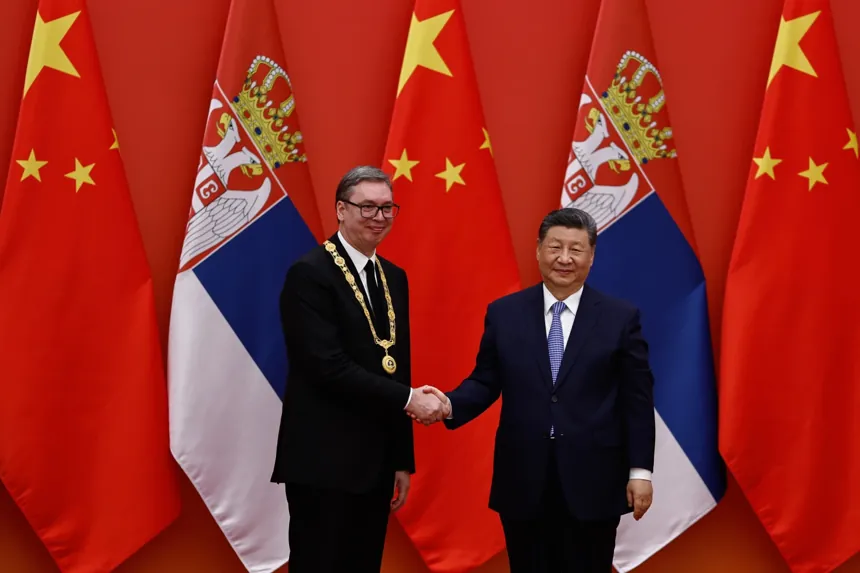
Serbian President Aleksandar Vučić deepened economic and political ties with China during a high-profile visit to Beijing this week, even as anti-government protests intensified at home and increased pressure on his administration. Chinese and Serbian officials signed more than 20 cooperation agreements covering trade, technology, education and infrastructure, according to state media and international reports.
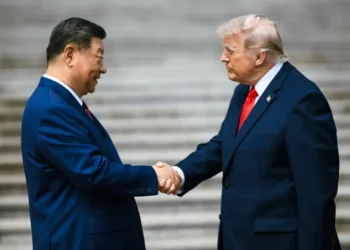
During talks in Beijing, Chinese President Xi Jinping reaffirmed support for Serbia’s strategic partnership with China and called for expanded cooperation in artificial intelligence, green energy and the digital economy. Vučić described relations with Beijing as increasingly important for Serbia’s economic development and foreign policy positioning.
The diplomatic outreach comes as Serbia faces one of its most sustained waves of political unrest in recent years. Tens of thousands of demonstrators gathered in Belgrade over the weekend demanding early elections, greater transparency and accountability from the government following months of anti-corruption protests.

Domestic Pressure Challenges Foreign Policy Strategy
The protests initially emerged after a deadly railway station canopy collapse in Novi Sad in late 2024 that killed 16 people and triggered allegations of corruption and poor oversight tied to major infrastructure projects. Critics have increasingly linked some of those projects to Chinese-backed investments under Beijing’s Belt and Road Initiative.
Although the main protest rally in Belgrade remained largely peaceful, clashes later erupted between groups of demonstrators and riot police near government buildings. Authorities detained multiple people after confrontations involving flares, rocks and bottles thrown at security forces.
Analysts said Vučić’s Beijing visit appeared designed to reinforce Serbia’s international partnerships at a time when his government faces growing scrutiny from both domestic opposition groups and European institutions concerned about democratic backsliding.
Serbia Balances Between East and West
Serbia officially remains a candidate for membership in the European Union, but Belgrade has continued to maintain close relations with both China and Russia. Western officials have repeatedly expressed concern over Serbia’s geopolitical balancing strategy, particularly its refusal to align fully with European sanctions against Moscow and its expanding economic ties with Beijing.
Chinese investment has become increasingly visible across Serbia in recent years, especially in transportation, mining and energy infrastructure. Government officials argue that Chinese financing has accelerated development projects and created jobs, while critics warn about transparency concerns and rising dependence on Beijing.
■ Related News


Vučić also used his Beijing visit to encourage stronger European engagement with China, arguing in published remarks that cooperation should not be driven by “fear or suspicion,” according to international reports.
Regional Stability Remains in Focus
The political tensions unfolding in Serbia are being closely watched across the Balkans, where concerns over governance, corruption and geopolitical influence continue to shape regional stability.
Observers noted that Serbia occupies a strategic position between Eastern and Western political spheres, making its relationship with China significant beyond bilateral trade. Beijing has increasingly expanded its presence in Southeast Europe through infrastructure financing and diplomatic partnerships, particularly in countries outside the European Union.
With further protests expected in the coming months and elections anticipated later this year, analysts said Vučić may face increasing difficulty balancing domestic political pressures with Serbia’s broader international ambitions.