Russia launched another large-scale overnight drone and missile assault across Ukraine on Monday, striking multiple regions as both sides intensify long-range attacks far beyond frontline battle zones in a rapidly evolving phase of the war.
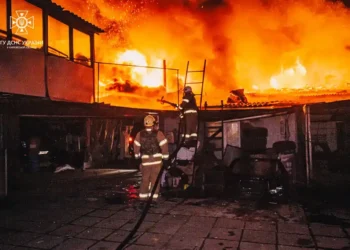
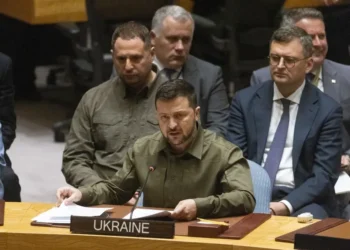
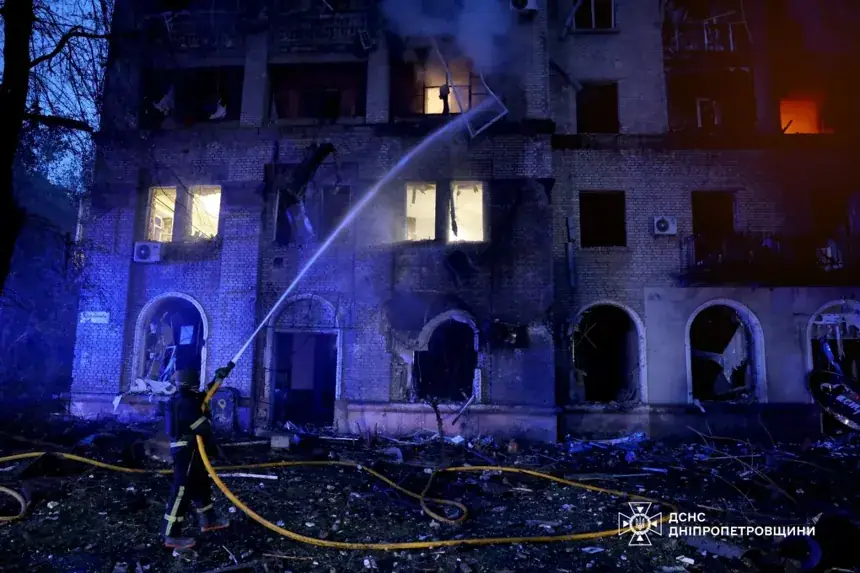
Ukrainian President Volodymyr Zelenskyy said Russian forces targeted at least eight Ukrainian regions using hundreds of drones alongside ballistic and cruise missiles, causing civilian casualties and widespread infrastructure damage. Officials reported that the central city of Dnipro was among the hardest-hit areas, with residential buildings and public facilities damaged during the assault.
The renewed attacks underscored how the conflict has increasingly shifted toward deep-strike aerial warfare, with both Moscow and Kyiv expanding their ability to target locations far from the front lines. Analysts said the growing scale of drone warfare is reshaping the strategic dimensions of the conflict entering its fifth year.

Civilian Areas and Infrastructure Hit
Regional authorities in Ukraine said dozens of civilians were wounded during the latest strikes, including children. In Odesa, drone attacks reportedly damaged residential buildings, a school, and parts of the city’s historic center, while infrastructure facilities in Dnipro and surrounding regions were also affected.
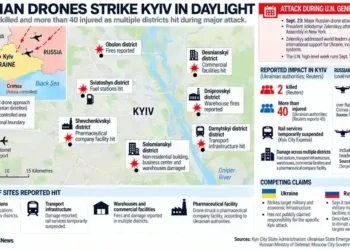
Ukraine’s air force stated that Russia launched more than 500 drones and over 20 missiles during the barrage, making it one of the largest aerial attacks in recent months. Officials said air defense systems intercepted many incoming targets, although several strikes penetrated defenses and caused damage on the ground.
Russia’s Defense Ministry claimed its forces had targeted military-industrial and logistical infrastructure using precision-guided weapons, though independent verification of all claims was not immediately available.
Ukraine Expands Deep-Strike Operations
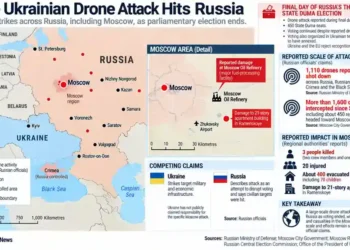
At the same time, Ukraine has intensified its own long-range operations inside Russian territory, increasingly targeting fuel depots, military-industrial facilities, and transport infrastructure linked to Moscow’s war effort. Ukrainian officials argue such attacks are intended to weaken Russia’s operational capabilities and pressure the Kremlin economically.
Recent Ukrainian drone raids reportedly disrupted airports and energy infrastructure in parts of Russia, including areas around Moscow and Belgorod. Russian authorities acknowledged civilian casualties and temporary disruptions caused by the strikes.




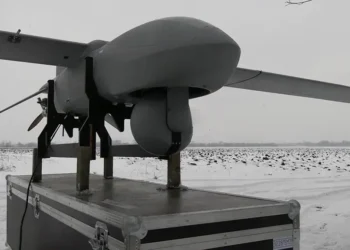
Security analysts noted that both countries are investing heavily in drone technology, electronic warfare systems, and long-range missile capabilities, transforming the conflict into one of the world’s most technologically intensive conventional wars.
Diplomatic Efforts Remain Stalled
The escalation comes despite renewed international diplomatic efforts aimed at reviving ceasefire discussions. However, no major breakthrough has emerged as both sides continue large-scale military operations and accuse each other of targeting civilians.
Western governments have continued supplying Ukraine with air defense systems and military assistance, while Russia has strengthened defense ties with strategic partners including China and other allied states. Observers say the expanding use of long-range strikes could further heighten regional security risks, particularly near NATO borders.
The conflict has increasingly affected civilian life far beyond frontline regions, with repeated aerial attacks disrupting transportation, energy infrastructure, and public services across both countries.