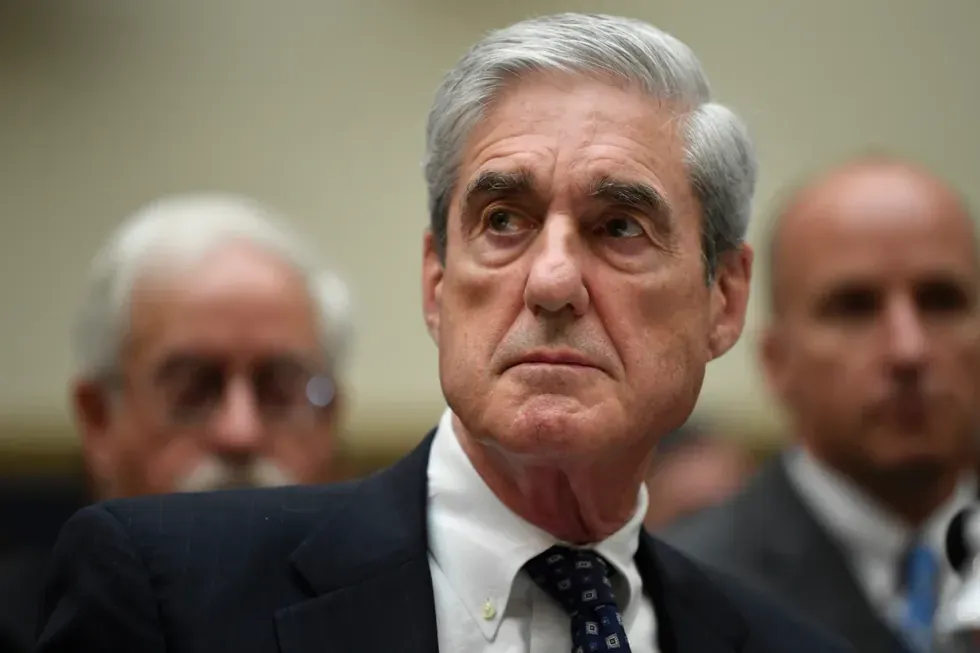
WASHINGTON — The death of former FBI Director Robert S. Mueller III has renewed global attention on the United States’ rule of law institutions, underscoring the international implications of investigations that shaped perceptions of American democracy. Mueller, who led the inquiry into alleged ties between Russia and Donald Trump’s 2016 presidential campaign, died at the age of 81, his family confirmed.
His passing comes at a time when US institutional credibility continues to be closely watched by allies and rivals alike, particularly in the context of election security and foreign interference. Analysts say Mueller’s work as special counsel and his earlier leadership of the FBI positioned him as a central figure in defining how democratic systems respond to external threats.
The investigation he led concluded that Russia interfered in the 2016 election, though it did not establish a criminal conspiracy between Trump’s campaign and Moscow. According to reporting by The Associated Press, the findings left a lasting imprint on transatlantic relations and prompted ongoing debates among Western governments about safeguarding electoral processes.

Strategic Stakes Rise Around Institutional Credibility
Mueller’s tenure as special counsel placed the US justice system under intense international scrutiny, as governments assessed the resilience of American institutions amid political pressure. His decision not to reach a prosecutorial conclusion on obstruction of justice — citing longstanding Justice Department policy — became a focal point for legal analysts worldwide.
Experts interviewed by Financial Times have previously noted that the investigation’s outcome illustrated both the strengths and limitations of institutional safeguards in politically sensitive cases. The episode also contributed to broader global conversations about executive power and judicial independence.
Mueller himself remained largely silent throughout the probe, maintaining a traditional prosecutorial stance that contrasted with the highly politicized environment surrounding the inquiry. This approach, while praised by some allies of the US, was criticized by others who argued it left key questions unresolved.
Diplomatic and Political Reactions Reflect Deep Divisions
Reactions to Mueller’s death highlighted enduring divisions within the United States, with potential international resonance. Former President George W. Bush, who appointed Mueller as FBI director, described him as a dedicated public servant, while Barack Obama praised his leadership in modernizing the bureau after the September 11 attacks.
In contrast, Trump, who had repeatedly criticized the Russia investigation, responded with sharply critical remarks following the announcement. Such polarized reactions reflect a broader pattern that foreign governments have monitored closely as an indicator of domestic political stability in the US.

International observers note that the handling of Mueller’s investigation — and the political responses to it — has influenced how democratic allies assess institutional resilience in the face of internal divisions and external interference.
Legacy of Security Reform Extends Beyond US Borders
Beyond his role as special counsel, Mueller is widely credited with reshaping the FBI into a counterterrorism-focused agency following the September 11 attacks. He assumed leadership just days before the attacks and oversaw a sweeping transformation that prioritized intelligence gathering and prevention.
According to AP reporting, this shift became a model for security agencies in several allied countries, which expanded cooperation with US intelligence services in the years that followed. The reorientation also contributed to the development of international counterterrorism frameworks that remain in place today.
While the reforms were not without controversy — including concerns over surveillance practices — they marked a significant evolution in global security coordination during the early 21st century.
Long-Term Implications for Global Democratic Norms
Mueller’s career, spanning military service, federal prosecution, and national security leadership, leaves a complex legacy that continues to shape international discourse on governance and accountability. His investigation into election interference, in particular, has had lasting repercussions for how democracies confront foreign influence operations.
Looking ahead, analysts suggest that the institutional questions raised during Mueller’s tenure — including the balance between executive authority and judicial oversight — will remain central to global discussions on democratic resilience. His death is likely to prompt renewed examination of those issues, particularly as geopolitical competition increasingly extends into the digital and electoral spheres.