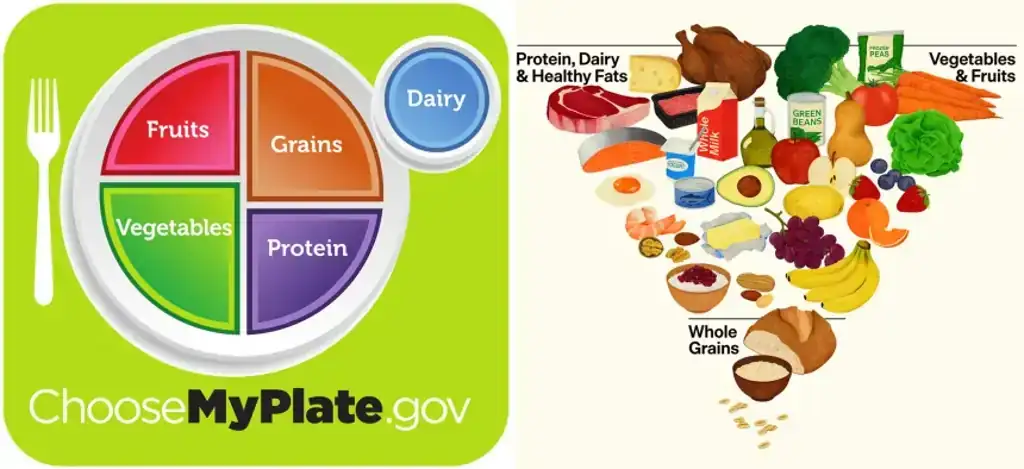
Updated U.S. Dietary Guidelines released this week largely preserve long-standing advice on fruits, vegetables and limiting ultra-processed foods, while introducing an inverted food pyramid that places meat, dairy and fats more prominently. The changes reflect Health and Human Services Secretary Robert F. Kennedy Jr.’s “Make America Healthy Again” agenda, but have drawn mixed reactions from nutrition experts over clarity and scientific alignment.
The 2025–2030 Dietary Guidelines for Americans, issued jointly by the Department of Health and Human Services (HHS) and the Department of Agriculture (USDA), reaffirm many familiar recommendations: eat more whole foods, limit added sugar and sodium, and reduce consumption of highly processed products. Yet the most visible change is symbolic. A redesigned, inverted food pyramid returns after more than a decade, giving animal protein, dairy and fats equal visual weight to fruits and vegetables at the top.
Supporters say the guidance modernizes dietary messaging and simplifies priorities. Critics argue the visual emphasis risks overstating the role of meat and dairy, potentially conflicting with decades of research linking plant-forward diets to better long-term health outcomes.

“There are some really good things about it that can really make a difference,” said Dr. Marion Nestle, professor emerita of nutrition, food studies and public health at New York University. But she described other elements as “muddled, inconsistent, ideological, retro and hard to understand.”
A brief history of the U.S. food pyramid
The original U.S. food pyramid debuted in 1992, adapted from a Swedish model developed in the 1970s. It visually ranked food groups by recommended intake, with fats and sweets at the narrow top and grains at the base. The model was updated in 2005 with vertical color bands and an added physical activity icon, but critics said it confused rather than clarified.
“None of that was intuitive or clear to people,” said Dr. Jerold Mande, a former senior policy official at the USDA and the Food and Drug Administration, now CEO of the nonprofit Nourish Science.
In 2011, federal agencies abandoned the pyramid in favor of MyPlate, a divided plate graphic designed to show portion balance in everyday meals. That approach remained until the latest update, which brings the pyramid back in an inverted form.
Under the new visual, animal proteins and fats—alongside plant-based fats—occupy the top tier with fruits and vegetables. Whole grains shift to the base. Officials say the graphic is meant to emphasize protein quality and whole foods rather than suggest dramatic changes in quantity.
The written guidelines still recommend roughly two to four daily servings of whole grains, three servings of vegetables and two servings of fruit.
Expert concerns over emphasis
Some nutrition researchers say the inverted pyramid’s message conflicts with a broad body of evidence.
“The emphasis on high intake of dairy foods and meat is inconsistent with the evidence,” said Dr. Walter Willett, professor of epidemiology and nutrition at Harvard T.H. Chan School of Public Health. He pointed to studies showing lower cardiovascular risk when plant-based proteins such as nuts, legumes and soy replace red meat.
Mande said the new visual may be simpler technically, but called its health implications “the most egregious aspect” of the update.
Whole foods remain central
Despite debate over the pyramid, experts broadly agree on one core message: prioritizing whole foods.
The guidelines encourage a diverse intake of fruits, vegetables, whole grains, nuts, seeds and legumes. Examples of high-quality whole grains include brown rice, oats, quinoa, farro and whole wheat. Previous guidelines recommended adults consume 22 to 34 grams of fiber per day, depending on age and sex.
Nestle noted that the new guidance appears to reduce recommended fruit and vegetable intake compared with earlier editions. “If you want a healthy microbiome, you need fiber,” she said, emphasizing its role in feeding beneficial gut bacteria.
Reducing ultra-processed foods
Another area of consensus is limiting ultra-processed foods, which research has linked to higher risks of obesity, type 2 diabetes, cardiovascular disease and some cancers. According to the UN Food and Agriculture Organization, such foods are typically made with industrial ingredients rarely used in home kitchens and are often low in fiber while high in added sugar, sodium and refined fats.
The guidelines advise consumers to read ingredient labels, cook more at home and pay attention to satiety. Whole foods, experts say, tend to be more filling and nutritionally dense.
Fats and dairy: nuance over limits
The update encourages inclusion of “healthy fats” from sources such as seafood, nuts, seeds, olive oil, avocados, eggs and dairy. It also lists butter and beef tallow as cooking options, though Nestle noted they are not meaningful sources of essential fatty acids.
“I don’t have any trouble with eating full-fat dairy products if you don’t eat too much of it,” she said.
Dr. Alison Steiber, chief mission and strategy officer at the Academy of Nutrition and Dietetics, said emerging research suggests whole-fat dairy may pose less cardiometabolic risk than once believed, particularly fermented products like yogurt.
However, the long-standing recommendation to limit saturated fat to no more than 10% of daily calories remains unchanged. For individuals with high cholesterol, hypertension or a family history of heart disease, Mande said low-fat or fat-free dairy may still be advisable. Willett added that high dairy intake has been associated in some studies with increased prostate cancer risk.
Protein intake rises—but is it needed?
The new guidelines raise recommended protein intake from 0.8 grams per kilogram of body weight to 1.2–1.6 grams. For a 68-kilogram (150-pound) adult, that translates to roughly 82 to 109 grams per day.
Nestle questioned the need for the increase. “Protein has never been an issue in American diets,” she said. Mande agreed, noting most Americans already meet or exceed previous targets.
Experts emphasize that both plant and animal sources can meet protein needs. Lean meats, poultry and seafood are included, but so are beans, lentils, chickpeas and tofu. While red meat appears more explicitly in the new guidance, many researchers still recommend limiting it to a few servings per week.
Sodium, sugar and alcohol
Recommendations on sodium remain unchanged, urging adults to consume less than 2,300 milligrams per day. The guidelines continue to encourage using herbs, spices and salt-free seasonings to enhance flavor.
On sugar, the message is blunt. “Everyone would be healthier eating less sugar,” Nestle said. The American Heart Association advises keeping added sugar below 6% of daily calories—about 36 grams for men and 26 grams for women.
Alcohol guidance is less specific, advising moderation without firm limits. The AHA continues to recommend no more than two drinks per day for men and one for women.
Applying the guidance
Experts stress that dietary advice is not one-size-fits-all. Age, health conditions, physical activity and personal goals all matter. Steiber said consulting a physician or registered dietitian is especially important before making major dietary changes.
While the inverted pyramid has reignited debate, most specialists agree on the fundamentals: eat mostly whole foods, limit ultra-processed products, and balance protein sources with plenty of plants.
This article was rewritten by JournosNews.com based on verified reporting from trusted sources. The content has been independently reviewed, fact-checked, and edited for accuracy, neutrality, tone, and global readability in accordance with Google News and AdSense standards.
All opinions, quotes, or statements from contributors, experts, or sourced organizations do not necessarily reflect the views of JournosNews.com. JournosNews.com maintains full editorial independence from any external funders, sponsors, or organizations.
Stay informed with JournosNews.com — your trusted source for verified global reporting and in-depth analysis. Follow us on Google News, BlueSky, and X for real-time updates.