Journos News - Breaking News, World News, Top Stories, Todays Headlines and Flash Reports
Tuesday, September 1, 2026
  • Login
  • Home
  • World
    • Africa
    • Americas
    • Asia
    • Europe
    • Middle East
    • Oceania
  • Politics
  • Business
  • Technology
  • Health
  • Science
  • Sports
  • Entertainment
  • Culture
No Result
View All Result
  • Home
  • World
    • Africa
    • Americas
    • Asia
    • Europe
    • Middle East
    • Oceania
  • Politics
  • Business
  • Technology
  • Health
  • Science
  • Sports
  • Entertainment
  • Culture
No Result
View All Result
Journos News - Breaking News, World News, Top Stories, Todays Headlines and Flash Reports
No Result
View All Result
Home Environment

Residents in Japan’s Northern Alps Face Growing Challenge from Monkeys

Local communities employ innovative strategies to manage macaque populations threatening homes and farms.

The Daily Desk by The Daily Desk
June 24, 2026
in Environment, General Environment
0
Residents in Japan’s Northern Alps Deploy Teams to Manage Monkeys Near Homes and Farms - AP Photo/Hiro Komae

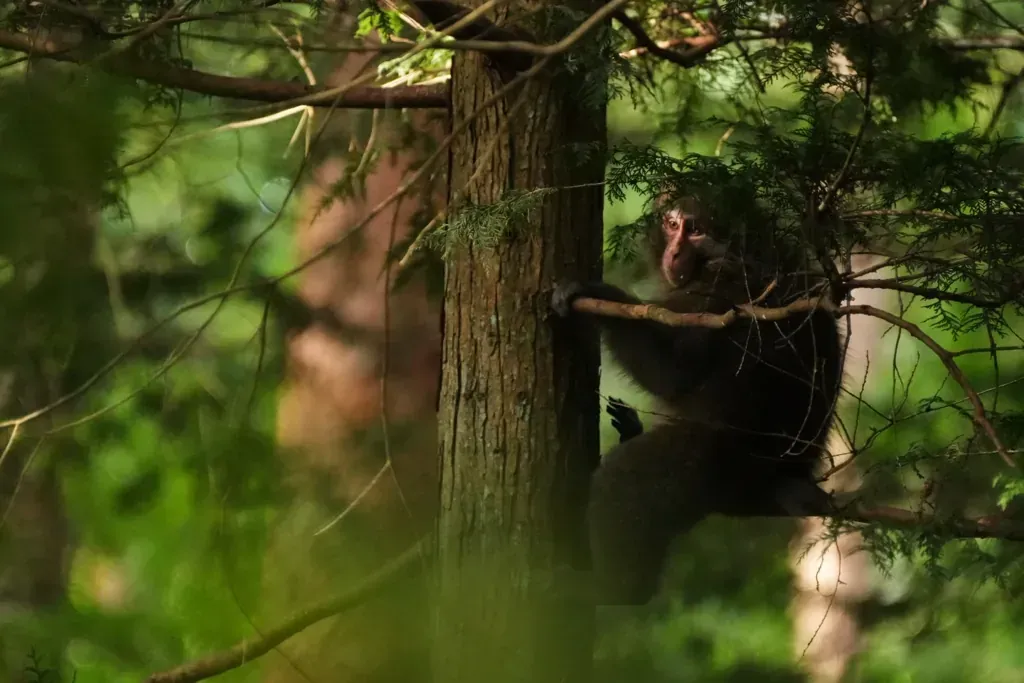
Japanese Macaques Challenge Northern Alps Communities, Prompting Innovative Management - AP Photo/Hiro Komae

Azumino Residents Combat Monkeys Encroaching on Homes and Farms in Japan’s Northern Alps

In Japan’s Northern Alps, residents are grappling with an unusual yet persistent challenge: wild Japanese macaques venturing into villages and farmland. As the monkeys increasingly raid homes, steal food, and damage crops, local authorities and volunteers are stepping up efforts to keep the animals in the mountains, balancing public safety with conservation concerns.

Despite their popularity with tourists at destinations like Jigokudani Monkey Park—where more than 200,000 visitors a year observe macaques bathing in hot springs—the monkeys are often unwelcome neighbors in communities such as Azumino city.

The Monkey Chasing Squad in Action

In Azumino, a team known as the Monkey Chasing Squad patrols the foothills, employing GPS trackers, radios, whistles, and walking sticks to herd monkeys back into the mountains. Wearing bright orange vests, the roughly 50 part-time civil servants coordinate to monitor and manage the macaque population, estimated at around 600 individuals within city limits.

“Naturally, the food in the village is more nutritious and tastier,” said Masaya Miyake, leader of the squad. “We’re just returning them to where they’re supposed to be. They’re not simply being mischievous; they’re just coming down to eat.”

The squad’s work has shifted the macaques’ habits: previously, nearly all monkeys lived within the town, but today about half remain in the hills—a change both Miyake and city officials attribute to the program’s efforts.

Bold: Human-Monkey Conflicts and Public Opinion

The crop damage caused by macaques is modest compared to losses from deer, boars, and crows, but it remains significant. Japan’s Agriculture Ministry reported in 2022 that wild animals—including monkeys—caused 15.6 billion yen ($100 million) in crop damage, with macaques contributing to roughly 70% of these losses alongside deer and boars.

While some residents call for culling, opinions are deeply divided. Takumi Matsuda, an Azumino local and wildlife observer, documents monkeys in their natural habitat, sharing images and videos on Instagram to foster appreciation for the animals’ behavior. “In Japan today, opinions have become polarized between ‘don’t kill a single one’ and ‘kill them all,’” Matsuda said. “I oppose the wasteful taking of life and want effective measures so we don’t have to keep killing monkeys forever.”

The Risks and Limits of Culling

Despite calls for culling, experts warn that removing entire monkey groups can exacerbate the problem. Ecologist Shigeyuki Izumiyama of Nagano’s Shinshu University explains that when troops are removed, neighboring groups move in, while smaller groups may venture deeper into farmland searching for food.

■ Related News

Slower, Greener, Better: A Wind-Powered Alternative to Air Travel - Ronan Gladu/TOWT

Sailing Green: A Wind-Powered Cargo Ship Now Takes Passengers Across the Atlantic

June 16, 2026
Inside Virachey: Cambodia’s Untouched Biodiversity Hotspot - Fauna & Flora/CNN Photo

Hidden Treasures of Cambodia: Rare Species Found in Virachey National Park

June 24, 2026
From Ashes to Action: Rebuilding Resilient Communities in California - John Locher/AP Photo

Living on the Edge: How Climate Change Fuels California’s Wildfires

June 24, 2026
How Ant Forest Turns Everyday Actions Into Environmental Impact - AntGroup via BBC/ Photo

Revolutionizing Sustainability: Ant Forest’s Digital Solution to Climate Change

June 24, 2026

“Part of the issue is that legislators don’t have enough time and are being asked to produce quick results,” said primate researcher Takayo Soma of Kyoto University. “But ecology doesn’t work that way. Macaques live about 20 years, so we need to take a long-term approach.”

Azumino City Councilman Yoichi Tsujitani noted that removing macaques entirely from human-adjacent areas could take two to three years. “A quick, painless death by someone skilled is the last kindness we can offer,” he said, reflecting the ongoing tension between humane treatment and practical management.

Alternative Strategies for Coexistence

Beyond chasing, residents employ multiple non-lethal strategies. GPS tracking, decibel meters, and electric fences help monitor and deter macaques from venturing into farmland. Apple farmer Kazuo Matsuda installed electric fencing to protect his orchard, though he acknowledged the high maintenance costs.

Dogs have also proven effective in discouraging monkeys, according to retired teacher and Monkey Chase Squad member Shigeru Maruyama. “When people chase them, the monkeys just taunt us,” said Takahiro Isomoto, who trains dogs to ward off wildlife including monkeys, boars, and deer.

Even with these efforts, macaques demonstrate remarkable adaptability. At a forest shrine, Miyake’s squad briefly stopped to rest, only to see the monkeys return within minutes to observe the humans from above. “Now it’s almost the opposite — like we’re the squad that doesn’t chase monkeys,” Miyake joked.

Finding Balance Between Wildlife and Human Needs

Japan’s macaques have protected status since 1947, established to rebuild populations after extensive hunting during World War II. Residents, local authorities, and researchers continue to explore ways to manage the growing interactions between humans and wildlife.

Experts emphasize that sustainable solutions require patience, scientific monitoring, and community cooperation. As Michael Johnson, a retired English professor and local resident, recounted after multiple raids on his home: “They didn’t get into the bourbon,” he said, highlighting both the nuisance and resilience of these primates.

The challenge in Azumino illustrates a broader issue for communities living alongside wildlife: balancing cultural appreciation, conservation ethics, and practical measures to protect homes, farms, and public spaces.

Source: AP News – In Japan’s Northern Alps, residents battle monkeys to protect homes and farms

Tags: #AnimalProtection#Azumino#CommunityConservation#CropDamage#Ecology#HumanWildlifeConflict#JapaneseMacaques#JapanWildlife#NorthernAlps#PrimateResearch#SustainableLiving#WildlifeManagement
The Daily Desk

The Daily Desk

The Daily Desk is a contributor at JournosNews.com covering politics, media, governance, and the evolving dynamics of public discourse. Stories published under this byline are produced in accordance with JournosNews' editorial standards, with an emphasis on verified reporting, accuracy, context, and impartiality.

Related Posts

Returning to Roots: The Revival of a Historic Farming Village in Hong Kong - Tom Booth/CNN

From Abandoned to Thriving: The Return of Lai Chi Wo Village

June 24, 2026
Sweden’s Growing Anti-Wolf Sentiment Sparks Debate on Conservation - Jonas Ekstromer/Scanpix Sweden/AP

Sweden’s Controversial Wolf Cull: Nearly 10% of Population to Be Killed

June 24, 2026
The 2025 Guide to Reducing Your Carbon Footprint - Getty Images

Seven Ways You Can Help the Earth Right Now

June 24, 2026
The Disappearing Clouds That Are Supercharging Global Warming

Why the Earth is Heating Up Faster: Scientists Point to Missing Clouds

June 24, 2026
“Gus” the Emperor Penguin: An Antarctic Visitor’s Incredible Journey to Australia

“Gus” the Emperor Penguin: An Antarctic Visitor’s Incredible Journey to Australia

June 24, 2026
Eco-Friendly Toothbrushing: Sustainable Choices for a Cleaner Planet

Eco-Friendly Toothbrushing: Sustainable Choices for a Cleaner Planet

June 24, 2026
The Climate Challenge – A Fight for Our Future

The Climate Challenge – A Fight for Our Future

June 24, 2026
Nature-Rich but Economically Poor: These Nations Need Support to Protect Their Resources”

Nature-Rich but Economically Poor: These Nations Need Support to Protect Their Resources”

June 24, 2026
Load More
Next Post
Teen Behind Louvre Viral “Fedora Man” Photo Reveals His Story and Style - AP Photo/Thibault Camus

Teen Behind Louvre “Fedora Man” Photo Becomes Global Sensation

Gaza High School Graduates Celebrate Amid War and School Destruction - Hamza Z. H. Qraiqea/Anadolu/Getty Images

Gaza’s Graduates Celebrate Amid Devastation of Schools and Universities

JournosNews logo

Journos News delivers globally neutral, fact-based journalism that meets international media standards — clear, credible, and made for a connected world.

  • Categories
  • World News
  • Politics
  • Business & Markets
  • Technology
  • Health
  • Science
  • Sports
  • Arts & Culture
  • Resources
  • Editorial Standards
  • Submit a Story
  • Advertise with Us
  • Syndication & Partnerships
  • Site Map
  • Press & Media Kit
  • Editorial Team
  • Careers

Join thousands of readers receiving the latest updates, tips, and exclusive insights straight to their inbox. Never miss an important story again.

  • About Us
  • Editorial & Trust Center
  • Contact Us
  • Privacy Policy
  • Terms of Use & Copyright Notice

© JournosNews.com All rights reserved.

Welcome Back!

Login to your account below

Forgotten Password?

Retrieve your password

Please enter your username or email address to reset your password.

Log In
JournosNews

Independent Journalism.
Verified Facts.

You're about to read a professionally edited article from JournosNews.com.

Every article is produced in accordance with our editorial standards, emphasizing factual accuracy, transparent attribution, fairness, editorial independence, and meaningful context.

Editorial Standards
No Result
View All Result
  • Home
  • World
    • Africa
    • Americas
    • Asia
    • Europe
    • Middle East
    • Oceania
  • Politics
  • Business
  • Technology
  • Health
  • Science
  • Sports
  • Entertainment
  • Culture

© JournosNews.com All rights reserved.

This website uses cookies. By continuing to use this website you are giving consent to cookies being used. Visit our Privacy and Cookie Policy.